
Stöbern
genialokal zum Startbildschirm hinzufügen
Installieren Sie die genialokal App auf Ihrem Startbildschirm für einen schnellen Zugriff und eine komfortable Nutzung.
Installieren Sie die genialokal App auf Ihrem Startbildschirm für einen schnellen Zugriff und eine komfortable Nutzung.
Tippen Sie einfach auf Teilen:
 Und dann auf "Zum Home-Bildschirm [+]".
Ihr gewünschter Artikel ist in 0 Buchhandlungen vorrätig - wählen Sie hier eine Buchhandlung in Ihrer Nähe aus:

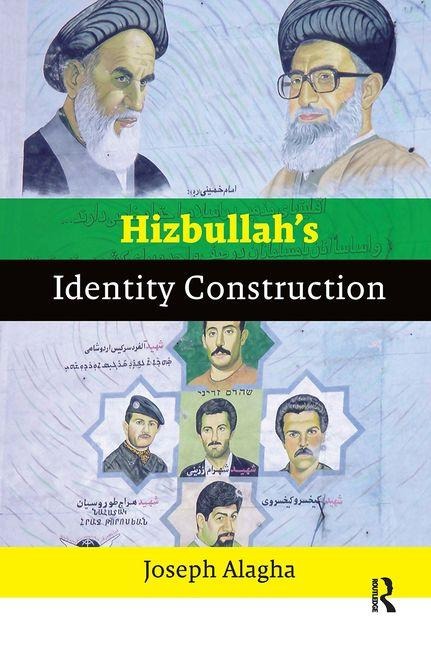
As the dominant political force in Lebanon and one of the most powerful post-Islamist organizations in the world, Hizbullah is a source of great controversy and uncertainty in the West. Despite the significant attention paid to this group by the media, the details of Hizbullah's evolution have frequently confounded politicians-and even scholars. In this important study, Joseph Alagha, a scholar with unprecedented access to the organization, exhaustively and objectively analyzes Hizbullah's historical evolution and offers a revolutionary new perspective on the political phenomenon of the organization.Hizbullah's Identity Construction is a timely examination of one of the world's most turbulent regions; a major contribution to the study of contemporary Islamic political movements in the Middle East; and a refreshing departure from the bland hagiographies and ad hominem attacks that are all too common in studies of Hizbullah's murky history. Superbly documented and argued, and rooted in broad knowledge of contemporary Islamist political thought, this study brings much-needed clarity to a hot-button subject.
Joseph Alagha is professor in Political Science & Intercultural Studies at Haigazian University, Beirut, Lebanon.
A Note on Transliteration, Acknowledgements, List of Abbreviations, Summary, Introduction and Analytical Framework, 1 Tolerance and Discrimination:Ahl Al-Dhimma in the Islamic Order, 2 Interpretation and Authority:Wilayat Al-Faqih, 3 Political Violence: Terrorismand 9/11, 4 Political Violence: Suicide Operations, 5 From Cooptation to Contestation to Political Power, 6 The Doha 2008 Accord and its Aftermath, 7 The Eighth Conclave: A New Manifesto (November 2009), 8 Epilogue: Future Prospects -Disarmament and the Peace Process, Afterword, Glossary, Additional Reading, Notes, Selected Bibliography, Index.