
Stöbern
genialokal zum Startbildschirm hinzufügen
Installieren Sie die genialokal App auf Ihrem Startbildschirm für einen schnellen Zugriff und eine komfortable Nutzung.
Installieren Sie die genialokal App auf Ihrem Startbildschirm für einen schnellen Zugriff und eine komfortable Nutzung.
Tippen Sie einfach auf Teilen:
 Und dann auf "Zum Home-Bildschirm [+]".
Ihr gewünschter Artikel ist in 0 Buchhandlungen vorrätig - wählen Sie hier eine Buchhandlung in Ihrer Nähe aus:
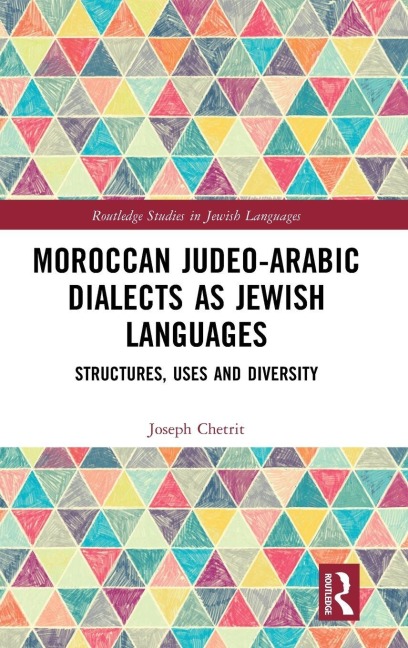
Moroccan Judeo-Arabic Dialects as Jewish Languages provides an in-depth analysis of the diachrony and synchrony of the Judeo-Arabic dialects formed in Morocco from the 16th onwards, their diversity, their constituents, their forms, their categories, and their uses in community and family life. Drawing on extensive linguistic data from a wide range of sources, including manuscripts and oral performances, this book examines the phonetics, phonology and morphology of the Judeo-Arabic dialects to offer insightful analyses and discoveries. Framed by a theoretical and methodological introduction, this book combines the findings of fieldwork with hundreds of informants from over 130 urban and rural Moroccan Jewish communities, for whom Judeo-Arabic is their mother tongue and primary language, with the advantages of modern linguistic, sociolinguistic, and socio-pragmatic analyses that allow for a better understanding of natural dialectal phenomena and their interpretation. The book will be relevant to scholars of Arabic dialectology, sociolinguistics, and Jewish languages.
Joseph Chetrit was formerly Head of The Center for the Study of Jewish Culture in Spain and Islamic Lands and Dean in the Faculty of Humanities at the University of Haifa, Israel. Prof. Chetrit has taught in the fields of Jewish Languages, Judeo-Arabic, Hebrew Linguistics, French Linguistics and North-African Jewish Poetry at various institutions across his career.
Foreword Phonologic and phonetic characters 1. A. Foundations of a socio-pragmatic model of language 1. Introduction 2. Elements of a linguistic and discursive socio-pragmatics 3. The socio-pragmatic functions of language through discourse 4. Conclusion B. Formation and diversity of Jewish languages and Judeo-Arabic in North Africa 1. Introduction 2. Unity and diversity of Jewish languages 3. The Diversity of Judeo-Arabic dialects in North Africa: Lects, polylects, and sociolects 4. Conclusion C. The long ethnographic investigation on Judeo-Moroccan oral and linguistic traditions 1. Materials and objectives of the Study 2. Linguistic and Discursive Investigation 3. Conclusion 2. Judeo-Arabic Dialects in Morocco: Their Diglossic and hybridized structures 1. Introduction 2. The constitution and development of the Judeo-Arabic dialects in Morocco 3. Semantic-syntactic hybridization - The -ar- as a global intertextual hybridization 4. The intra-linguistic diversity of Judeo-Arabic dialects 5. Conclusion 3. Morpho-Phonological and Morphologic Structures in Moroccan Judeo-Arabic dialects 1. Introduction 2. The various groups of consonantal sounds 3. The vowel system 4. The morphology of the Judeo-Arabic Dialects and their syllable structures 5. Conclusion 4. Characteristics and specificities of the main three categories of Judeo-Arabic dialects qal, kjal, -al 1. Introduction: the autonomy of the Judeo-Arabic dialects and their connections with the diverse communal cultures 2. Dialects in the Marrakech and southwest regions - the qal dialects 3. Dialects in the Tafilalet and Southeast Region - the kjal dialects 4. The dialects of the mixed communities - the -al dialects 5. Conclusion 5. The Judeo-Arabic dialects Kal of the northern Moroccan Jewish communities 1. Introduction 2. Linguistic features according to written poetic texts 3. Consonants and their realizations in the various texts 4. The vowel system of Judeo-Arabic in the communities of northern Morocco: Vowels and their realizations 5. Judeo-Arabic as a constituent component of the -aketíya 6. Conclusion