
Stöbern
genialokal zum Startbildschirm hinzufügen
Installieren Sie die genialokal App auf Ihrem Startbildschirm für einen schnellen Zugriff und eine komfortable Nutzung.
Installieren Sie die genialokal App auf Ihrem Startbildschirm für einen schnellen Zugriff und eine komfortable Nutzung.
Tippen Sie einfach auf Teilen:
 Und dann auf "Zum Home-Bildschirm [+]".
Ihr gewünschter Artikel ist in 0 Buchhandlungen vorrätig - wählen Sie hier eine Buchhandlung in Ihrer Nähe aus:

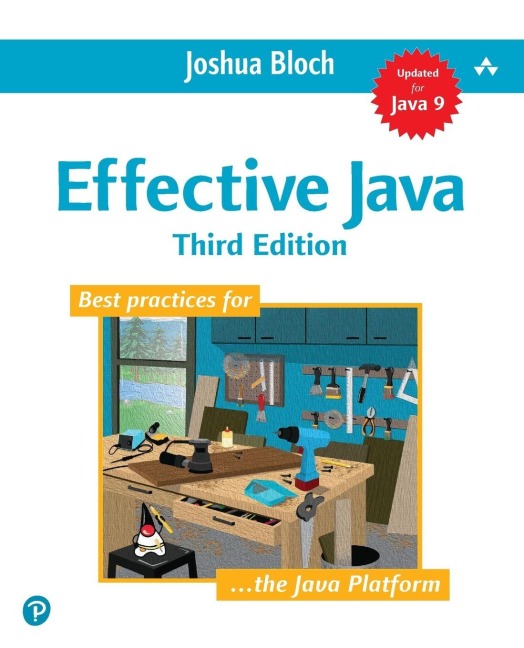
Since this Jolt-award winning classic was last updated in 2008 (shortly after Java 6 was released), Java has changed dramatically. The principal enhancement in Java 8 was the addition of functional programming constructs to Java's object-oriented roots. Java 7, 8, and 9 also introduced language features, such as the try-with-resources statement, the diamond operator for generic types, default and static methods in interfaces, the @SafeVarargs annotation, and modules. New library features include pervasive use of functional interfaces and streams, the java.time package for manipulating dates and times, and numerous minor enhancements such as convenience factory methods for collections. In this new edition of Effective Java, Bloch updates the work to take advantage of these new language and library features, and provides specific best practices for their use. Java's increased support for multiple paradigms increases the need for best-practices advice, and this book delivers.
Joshua Bloch is a professor at Carnegie Mellon University. He was formerly the chief Java architect at Google, a distinguished engineer at Sun Microsystems, and a senior systems designer at Transarc. He led the design and implementation of numerous Java platform features, including the JDK 5.0 language enhancements and the Java Collections Framework. He holds a Ph.D. in computer science from Carnegie Mellon University and a B.S. in computer science from Columbia University.
Chapter 1: Introduction Chapter 2: Creating and Destroying Objects Chapter 3: Methods Common to All Objects Chapter 4: Classes and Interfaces Chapter 5: Generics Chapter 6: Enums and Annotations Chapter 7: Lambdas and Streams Chapter 8: Methods Chapter 9: General Programming Chapter 10: Exceptions Chapter 11: Concurrency Chapter 12: Serialization References Index