Und dann auf "Zum Home-Bildschirm [+]".

Stöbern
genialokal zum Startbildschirm hinzufügen
Installieren Sie die genialokal App auf Ihrem Startbildschirm für einen schnellen Zugriff und eine komfortable Nutzung.
Installieren Sie die genialokal App auf Ihrem Startbildschirm für einen schnellen Zugriff und eine komfortable Nutzung.
Ihr gewünschter Artikel ist in 0 Buchhandlungen vorrätig - wählen Sie hier eine Buchhandlung in Ihrer Nähe aus:

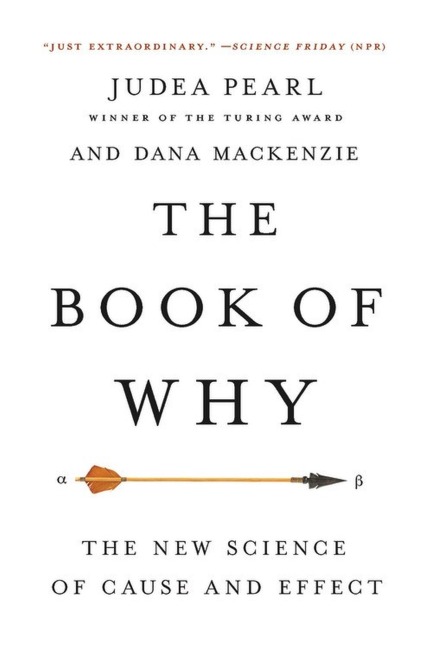
An argument for how understanding causality has revolutionized science and will revolutionize artificial intelligence. "Illuminating." -New York Times "Extraordinary." -Science Friday "Correlation is not causation." This mantra, chanted by scientists for more than a century, once led to a virtual prohibition on causal talk. Today, with causal analysis taking center stage in AI and other applications, the old taboos are a thing of the past. The causal revolution, instigated by Judea Pearl and others, established causality on a firm scientific basis. Pearl showed how intuitive models can interface with data to help answer causal questions, such as whether a drug will cure an illness or, counterfactually, whether an illness would have persisted absent the drug. These models provide a blueprint for causal AI to learn and take responsibility for its mistakes. Updated with a new preface and summary of recent advances, The Book of Why outlines the basics of cause and effect for lay readers and scientists alike, providing tools to explore the observable world and worlds that might have been.
Judea Pearl is a professor of computer science at UCLA. The author of three books, he has won numerous awards, including the Alan Turing Award. He lives in Los Angeles, California. Dana Mackenzie is a PhD mathematician turned science writer and has written for Science, New Scientist, and Scientific American, among others. He lives in Santa Cruz, California.