Und dann auf "Zum Home-Bildschirm [+]".

Stöbern
genialokal zum Startbildschirm hinzufügen
Installieren Sie die genialokal App auf Ihrem Startbildschirm für einen schnellen Zugriff und eine komfortable Nutzung.
Installieren Sie die genialokal App auf Ihrem Startbildschirm für einen schnellen Zugriff und eine komfortable Nutzung.

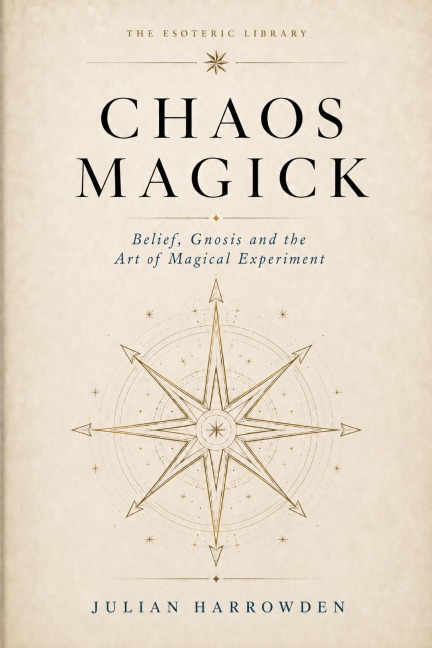

Chaos Magick - Belief, Gnosis and the Art of Magical Experiment
Chaos Magick emerged from one of the most radical ideas in modern occultism: that belief itself can be treated as a tool.
Rather than asking the practitioner to accept a single religious, magical, or metaphysical system, Chaos Magick developed an experimental approach in which symbols, rituals, altered states of consciousness, and even entire belief systems could be adopted, tested, transformed, and abandoned according to their usefulness.
This book explores the history, ideas, and practices that shaped this distinctive current of modern magic. Beginning with the influence of Austin Osman Spare and the development of sigil magic, it follows the emergence of Chaos Magick in the late twentieth century and examines concepts such as gnosis, paradigm shifting, magical identity, servitors, ritual construction, divination, trance, and the creative use of symbols.
Particular attention is given to the relationship between belief and experience: how expectations influence perception, why ritual can alter states of consciousness, and how practitioners attempt to distinguish meaningful results from coincidence, selective memory, and retrospective interpretation.
Neither an unquestioning celebration nor a dismissal of magical practice, *Chaos Magick* approaches the subject historically and critically while preserving the experimental spirit that made the movement distinctive.
A study of magic without fixed dogma, where certainty gives way to method, belief becomes provisional, and the magician enters the laboratory of experience.
Julian Harrowden is an author and independent researcher interested in Western esotericism, ritual practice, symbolism, and modern magical traditions. His work combines historical research with an accessible approach, exploring how occult ideas change across different cultural and philosophical contexts. In *Chaos Magick*, he examines belief, gnosis, sigils, paradigm shifting, and magical experimentation.