Und dann auf "Zum Home-Bildschirm [+]".

Stöbern
genialokal zum Startbildschirm hinzufügen
Installieren Sie die genialokal App auf Ihrem Startbildschirm für einen schnellen Zugriff und eine komfortable Nutzung.
Installieren Sie die genialokal App auf Ihrem Startbildschirm für einen schnellen Zugriff und eine komfortable Nutzung.
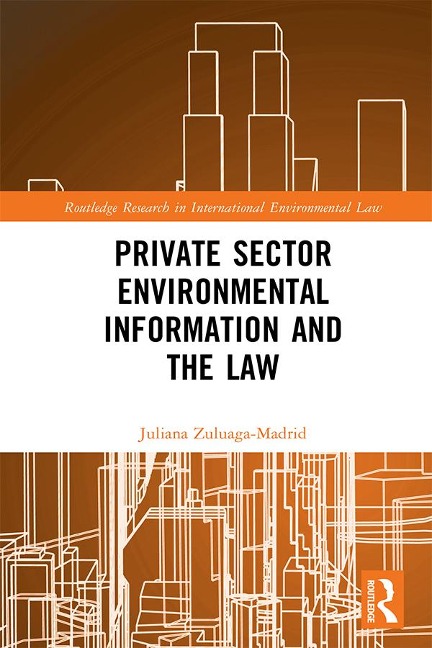
Current advancements in civil rights and environmental activism emphasize the crucial importance of making environmental information widely available to the public, regardless of whether it is in the hands of the government or of corporations, especially when the information is needed to understand and prevent risks for human health and the environment. In the wake of a resurgence of environmental and civil rights activism, conflicts flare between the right of the people to know and the right of private actors to keep certain information hidden, mostly for commercial reasons. This book offers a detailed comparative analysis of how environmental information is being accessed in different countries and jurisdictions, and how these issues are currently being handled by judges and governments. Focusing on the right of access to environmental information held and produced by private actors and the legal issues that emerge when other values and rights are compromised, this book offers an alternative framework to improve on current legal systems, suggesting a more nuanced and balanced approach that takes both set of interests duly into consideration. Providing an integrated approach to public environmental law and private commercial law, the book integrates the arguments from both sides to establish a common ground, defining shared principles and models that provide a solid basis for a robust new system. Reviewing access to private sector information at a truly international level, this book will be relevant to students, academics and practitioners working in these areas.
Juliana Zuluaga-Madrid holds a PhD in Law and an LLM in Energy and Environmental Law. She has worked for companies in the mining sector, Oil & Gas and is currently Legal Director at INGEMA S.A, a company in the energy sector. She combines her legal practice with academic engagements as lecturer and research advisor for Universidad del Rosario (Bogotá).
Acknowledgements List of acronyms and abbreviations - Introduction - Why now? - Background and scope - Normative Framework - Preliminary Notions of the Right to Know and the Private Sector - Legal and Historical Precedents of Access to Environmental Information - Transition to democratic state models - The transparency trend - 'Information governance' and environmental reform - The evolution of human rights theory - Fundamental notions of Private Entities - Public v Private - Definition of Private Entities - Public and Private Information - The protection of business confidentiality - The Aarhus Convention: Fundamental concepts and contribution - Environmental Participation under Aarhus - Contribution and innovative features - Characterisation of the Right to Access Environmental Information - Recognition of the right to information as a human right - The Right to Access Environmental Information in International Law - Influence of International Law in regional and national jurisdictions - Statutory and constitutional recognition of the right to information - The right of access to environmental information at national level - Systems for public participation in environmental matters - Scope of the Laws providing Access to Information - Scope of beneficiaries: Is access to information provided without discrimination and without having to state an interest? - Material scope: What information can be accessed? - Data, information and knowledge - Restrictions based on format - The definition of 'Environmental Information' - Access to 'relevant' environmental information in decision-making processes - Scope of obligated subjects - Scope of exempted information - Access to Private Sector Environmental Information - Why increase access to private sector environmental information? - Indirect access through public authorities - Active disclosure: from the private duty to report to the public obligation to inform - Passive access: Indirect access by request to a public authority - Direct access to environmental information held by private entities - Private entities included in the definition of 'public authorities' - Private entities not included in the definition of 'public authorities' - Private entities active disclosure - The Protection of Trade Secrets and 'Confidential Business Information' - Why is business confidentiality worthy of protection? - Defining 'confidential business information' - The logic behind the protection of CBI - Trade secrets as property - Trade secrets as Intellectual Property - Trade secrets as Human Rights - Statutes for the protection of CBI - Trade secrets under international law - CBI protection and national level - CBI not qualifying as trade secrets or IP - Types of CBI and trade secrets with special protection - Protection of CBI and trade secrets via exceptions to disclosure - Access to information about emissions into the environment according to the CJEU - Problems of the System for Access to Private Sector Information - Shortcomings of the public/private divide for access to environmental information - No clear criteria to assimilate private entities to public authorities - Deficiencies of corporate transparency - The organic focus of access laws - Overlapping between the definitions of 'environmental information' and 'confidential business information' - Cost-benefit analysis and other financial information - Technical information about hazardous activities or products - Chemical substances - Health and safety data - Environmental Impact Assessments and other relevant information on specific projects - Geotechnical information and natural resource's locations - Inconsistencies in the applicable laws - The current toolbox for solving conflicts between access to environmental information and the protection of CBI - Proposal to Reform Access to Environmental Information - Matrix of Values - Integrated contextual analysis instead of 'balancing of interests' - Conclusions and Recommendations - Colombia - The US - The EU
Dieses eBook wird im PDF-Format geliefert und ist mit einem Adobe Kopierschutz (DRM) versehen. Sie können dieses eBook mit allen Geräten lesen, die das PDF-Format und den Adobe Kopierschutz (DRM) unterstützen.
Zum Beispiel mit den folgenden Geräten:
• tolino Reader
Laden Sie das eBook direkt über den Reader-Shop auf dem tolino herunter oder übertragen Sie das eBook auf Ihren tolino mit einer kostenlosen Software wie beispielsweise Adobe Digital Editions.
• Sony Reader & andere eBook Reader
Laden Sie das eBook direkt über den Reader-Shop herunter oder übertragen Sie das eBook mit der kostenlosen Software Sony READER FOR PC/Mac oder Adobe Digital Editions auf ein Standard-Lesegeräte mit epub- und Adobe DRM-Unterstützung.
• Tablets & Smartphones
Möchten Sie dieses eBook auf Ihrem Smartphone oder Tablet lesen, finden Sie hier unsere kostenlose Lese-App für iPhone/iPad und Android Smartphone/Tablets.
• PC & Mac
Lesen Sie das eBook direkt nach dem Herunterladen mit einer kostenlosen Lesesoftware, beispielsweise Adobe Digital Editions, Sony READER FOR PC/Mac oder direkt über Ihre eBook-Bibliothek in Ihrem Konto unter „Meine eBooks“ - „online lesen“.
Schalten Sie das eBook mit Ihrer persönlichen Adobe ID auf bis zu sechs Geräten gleichzeitig frei.
Bitte beachten Sie, dass die Kindle-Geräte das Format nicht unterstützen und dieses eBook somit nicht auf Kindle-Geräten lesbar ist.