Und dann auf "Zum Home-Bildschirm [+]".

Stöbern
genialokal zum Startbildschirm hinzufügen
Installieren Sie die genialokal App auf Ihrem Startbildschirm für einen schnellen Zugriff und eine komfortable Nutzung.
Installieren Sie die genialokal App auf Ihrem Startbildschirm für einen schnellen Zugriff und eine komfortable Nutzung.

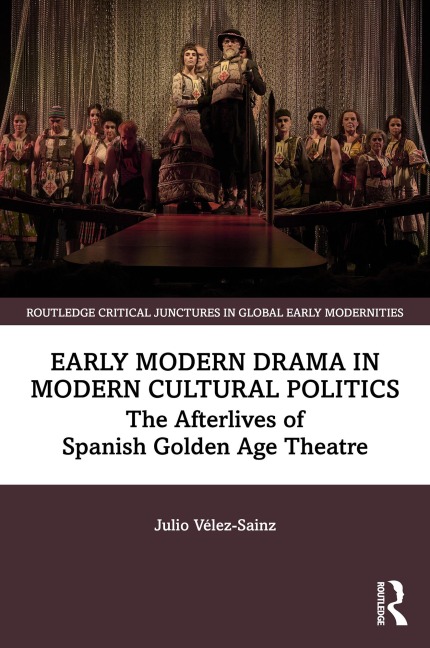
Early Modern Drama in Modern Cultural Politics: The Afterlives of Spanish Golden Age Theatre examines how Spanish Golden Age theatre has been repeatedly appropriated, reinterpreted, and debated in modern cultural and political contexts. From the 19th century to the present, plays by authors such as Cervantes, Lope de Vega, and Calderón have served as powerful symbols in discussions of national identity, cultural heritage and political ideology. Combining literary analysis with theatre history and performance studies, the book explores how early modern works have lived beyond the page through staging, criticism, and institutional promotion. Drawing on archival materials, press sources, and production histories, it reconstructs the modern reception of key plays including Numancia, Fuente Ovejuna, and stage and literary adaptations of Don Quixote. Through a series of detailed case studies, the book shows how Golden Age drama continues to shape cultural institutions, theatrical practice, and public discourse in Spain and internationally. By placing Spanish classical theatre within broader debates about cultural memory, nationalism, and the politics of the canon, this study offers a new perspective on the enduring significance of early modern drama.
Julio Vélez-Sainz is Full Professor of Spanish Literature at the Universidad Complutense de Madrid, where he co-directs the Seminar of Theatre Studies. Educated at the University of Chicago (Ph.D., 2002) and the Universidad de Salamanca (Ph.D., 2008), he is a specialist in literature and theatre as both scholar and practitioner. He has held visiting appointments at Yale University, Brown University, and the University of Chicago. He is the author of ten monographs, eight critical editions, and more than 150 articles and book chapters. He served as director of the Instituto del Teatro de Madrid (2016-2024), several editorial boards and is President ad honorem of the Asociación Internacional de Teatro Español y Novohispano de los Siglos de Oro (AITENSO).
Maravall, De-actualization and the Abduction of Golden Age Theatre Theory; The Ideological Appropriation of the Legacy from Menéndez Pelayo's "Brindis del Retiro" ["Retiro Toast"] (1881) to the creation of the Compañía Nacional de Teatro Clásico (1986); Collective Characters and Identity: The Siege of Numantia; Fuente Ovejuna: From Local to Global; The Long Shadow of the Knight: Don Quixote Onstage, Globalization and Postcolonialism; Final Thoughts: Liberating Golden Age Theatre from Its Political Abduction