
Stöbern
genialokal zum Startbildschirm hinzufügen
Installieren Sie die genialokal App auf Ihrem Startbildschirm für einen schnellen Zugriff und eine komfortable Nutzung.
Installieren Sie die genialokal App auf Ihrem Startbildschirm für einen schnellen Zugriff und eine komfortable Nutzung.
Tippen Sie einfach auf Teilen:
 Und dann auf "Zum Home-Bildschirm [+]".

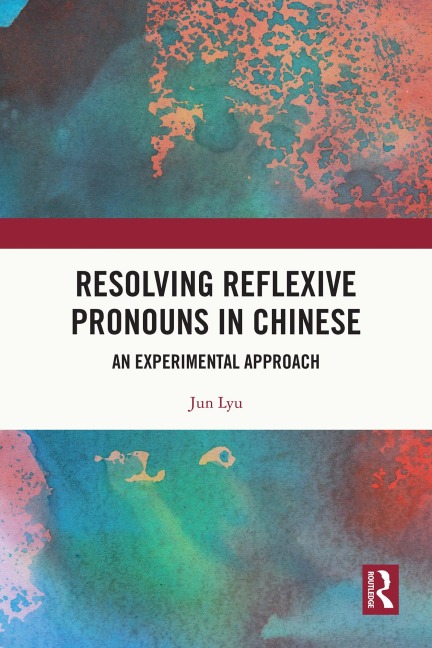
This book explores the resolution of Mandarin Chinese reflexive pronouns - ziji ('self') and ta-ziji ('he/she-self') - in language processing, focusing on how the human mind integrates multiple linguistic cues during comprehension through both theoretical and experimental approaches. It investigates the structural, semantic, and discourse-level properties of these reflexives, examining how syntactic and non-syntactic constraints shape real-time resolution. By introducing new empirical data, the book challenges established assumptions about Chinese reflexives, addressing whether locality bias reflects syntactic or linear proximity, how discourse-level factors influence ta-ziji interpretation, and how perspective-taking interacts with syntactic prominence in processing. These findings are synthesized into a unified framework that integrates syntactic and non-syntactic factors governing reflexive resolution in Chinese. This work is a valuable resource for researchers and graduate students in linguistics, psycholinguistics, syntax, semantics, and language processing, particularly those specializing in Chinese linguistics, anaphora resolution, and experimental approaches to theoretical linguistics.
Dr Jun Lyu is an Assistant Professor in Linguistics and Applied Linguistics at the School of Chinese as a Second Language, Peking University. He holds a PhD from the University of Southern California. His main research interest lies in sentence processing, with a specific focus on pronoun resolution from cross-linguistic and language acquisition perspectives.
1. Introduction 2. Syntactic locality and linear recency in reflexive resolution 3. Discourse topicality and reflexive resolution 4. Logophoric prominence and reflexive resolution 5. The blocking effect and reflexive resolution 6. General discussion and conclusions