Und dann auf "Zum Home-Bildschirm [+]".

Stöbern
genialokal zum Startbildschirm hinzufügen
Installieren Sie die genialokal App auf Ihrem Startbildschirm für einen schnellen Zugriff und eine komfortable Nutzung.
Installieren Sie die genialokal App auf Ihrem Startbildschirm für einen schnellen Zugriff und eine komfortable Nutzung.
Ihr gewünschter Artikel ist in 0 Buchhandlungen vorrätig - wählen Sie hier eine Buchhandlung in Ihrer Nähe aus:

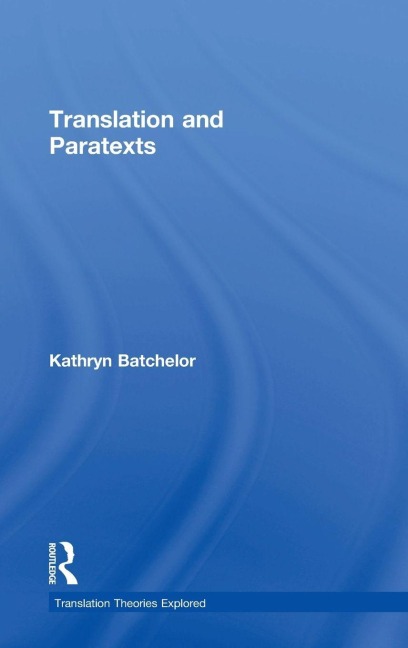

Translation and Paratexts explores the relevance of paratexts for translation studies and provides a framework for further research. Written in three parts, Kathryn Batchelor firstly offers a critical overview of recent scholarship, and then in the second part introduces three original case studies to demonstrate the importance of paratextual theory, before concluding with a final part outlining the theory of paratextuality for translation research. Translation and Paratexts is essential reading for students and researchers in Translation Studies, Interpreting studies and Literary Translation.
Kathryn Batchelor is Associate Professor of Translation and Francophone Studies at the University of Nottingham, UK. She is the author of Decolonizing Translation (Routledge, 2009) and has co-edited four volumes of essays, including Translating Frantz Fanon Across Continents and Languages (Routledge, 2017) and Intimate Enemies: Translation in Francophone Contexts (Liverpool University Press, 2013).
List of figures Acknowledgements Introduction PART I Genette's concept of the paratext and its development across disciplines Chapter 1: Genette's paratext Chapter 2: Paratexts in translation studies Chapter 3: Paratexts in digital, media and communication studies PART II Case studies Chapter 4: Authorised translations and paratextual relevance: English versions of Nietzsche Chapter 5: Making the foreign Serve China: Chinese paratexts of Western translation theory texts Chapter 6: Walter Presents and its paratexts: curating foreign TV for British audiences PART III Towards a theory of paratextuality for translation Chapter 7: Translation and paratexts: terminology and typologies Chapter 8: Translation and paratexts: research topics and methodologies Conclusion