
Stöbern
genialokal zum Startbildschirm hinzufügen
Installieren Sie die genialokal App auf Ihrem Startbildschirm für einen schnellen Zugriff und eine komfortable Nutzung.
Installieren Sie die genialokal App auf Ihrem Startbildschirm für einen schnellen Zugriff und eine komfortable Nutzung.
Tippen Sie einfach auf Teilen:
 Und dann auf "Zum Home-Bildschirm [+]".
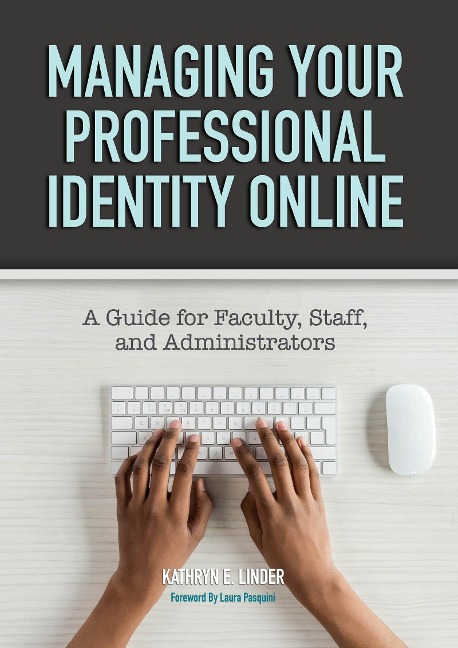
In higher education, professional online identities have become increasingly important. A rightly worded tweet can cause an academic blog post to go viral. A wrongly worded tweet can get a professor fired. Regular news items in The Chronicle of Higher Education and Inside Higher Ed provide evidence that reputations are both built and crushed via online platforms. Ironically, given the importance of digital identities to job searches, the promotion and distribution of scholarly work, pedagogical innovation, and many other components of an academic life, higher education professionals receive little to no training about how to best represent themselves in a digital space.Managing Your Professional Identity Online: A Guide for Higher Education fills this gap by offering higher education professionals the information and guidance they need to:- craft strong online biographical statements for a range of platforms;- prioritize where and how they want to represent themselves online in a professional capacity;- intentionally and purposefully create an effective brand for their professional identity online;- develop online profiles that are consistent, professional, accurate, organized, of good quality, and representative of their academic lives;- regularly update and maintain an online presence;- post appropriately in a range of online platforms and environments; and- successfully promote their professional accomplishments.Managing Your Professional Identity Online is practical and action-oriented. In addition to offering a range of case studies demonstrating concrete examples of effective practices, the book is built around activities, templates, worksheets, rubrics, and bonus materials that walk readers through a step-by-step guide of how to design, build, and maintain professional online identities.
Dr. Katie Linder is currently the executive director for program development at Kansas State University Global Campus. Previously, she directed the award-winning Ecampus Research Unit at Oregon State University. Katie is also a Certified Coach through the International Coach Federation. Katie is an avid writer and researcher with a passion for process and peeking behind the scenes at what it takes to be a successful academic. For the past several years, her work has focused on blended course design best practices, institutional supports for accessible online learning, and research literacy for scholarship of teaching and learning practitioners and distance education stakeholders. She speaks on topics related to writing and publication; creativity and productivity; self-promotion and personal branding; and teaching and learning with technology.Her latest works include Going Alt-Ac: A Guide to Alternative Academic Careers (Stylus, 2020; co-authored with Kevin Kelly and Tom Tobin), Managing Your Professional Identity Online: A Guide for Faculty, Staff, and Administrators (Stylus, 2018), High-Impact Practices in Online Education (Stylus, 2018), and The Business of Innovating Online (Stylus, 2019). She is also the author of The Blended Course Design Workbook: A Practical Guide (Stylus, 2016). Katie earned her BA in English Literature from Whitworth University in Spokane, WA, and her MA and PhD in Women's, Gender, and Sexuality Studies from The Ohio State University.Visit her personal website at: https://drkatielinder.com
Tables, Figures, and Boxes Forward by Laura Pasquini Preface. The Planting of a Seed Acknowledgements Introduction. Why Digital Identities Matter 1)What Makes a Strong Digital Identity? 2)Choosing Where to be Present Online 3)Evaluating Your Current Digital Identity 4)Choosing How to Represent Yourself Online 5)Tools for Updating and Managing Your Online Presence 6)Designing an Effective Digital CV or Resume 7)Building a Professional Website 8)Tweets, Updates, and Other Forms of Posting Online 9)Building and Engaging with Online Communities 10)Responding to Online Conflict 11)Strategies to Create and Share Content with Larger Audiences Conclusion. Three Examples from Higher Education Professionals with Kevin Gannon, Lee Skallerup Bessette, and Anonymous Glossary References Index
Dieses eBook wird im PDF-Format geliefert und ist mit einem Adobe Kopierschutz (DRM) versehen. Sie können dieses eBook mit allen Geräten lesen, die das PDF-Format und den Adobe Kopierschutz (DRM) unterstützen.
Zum Beispiel mit den folgenden Geräten:
• tolino Reader
Laden Sie das eBook direkt über den Reader-Shop auf dem tolino herunter oder übertragen Sie das eBook auf Ihren tolino mit einer kostenlosen Software wie beispielsweise Adobe Digital Editions.
• Sony Reader & andere eBook Reader
Laden Sie das eBook direkt über den Reader-Shop herunter oder übertragen Sie das eBook mit der kostenlosen Software Sony READER FOR PC/Mac oder Adobe Digital Editions auf ein Standard-Lesegeräte mit epub- und Adobe DRM-Unterstützung.
• Tablets & Smartphones
Möchten Sie dieses eBook auf Ihrem Smartphone oder Tablet lesen, finden Sie hier unsere kostenlose Lese-App für iPhone/iPad und Android Smartphone/Tablets.
• PC & Mac
Lesen Sie das eBook direkt nach dem Herunterladen mit einer kostenlosen Lesesoftware, beispielsweise Adobe Digital Editions, Sony READER FOR PC/Mac oder direkt über Ihre eBook-Bibliothek in Ihrem Konto unter „Meine eBooks“ - „online lesen“.
Schalten Sie das eBook mit Ihrer persönlichen Adobe ID auf bis zu sechs Geräten gleichzeitig frei.
Bitte beachten Sie, dass die Kindle-Geräte das Format nicht unterstützen und dieses eBook somit nicht auf Kindle-Geräten lesbar ist.