Und dann auf "Zum Home-Bildschirm [+]".

Stöbern
genialokal zum Startbildschirm hinzufügen
Installieren Sie die genialokal App auf Ihrem Startbildschirm für einen schnellen Zugriff und eine komfortable Nutzung.
Installieren Sie die genialokal App auf Ihrem Startbildschirm für einen schnellen Zugriff und eine komfortable Nutzung.
Ihr gewünschter Artikel ist in 0 Buchhandlungen vorrätig - wählen Sie hier eine Buchhandlung in Ihrer Nähe aus:

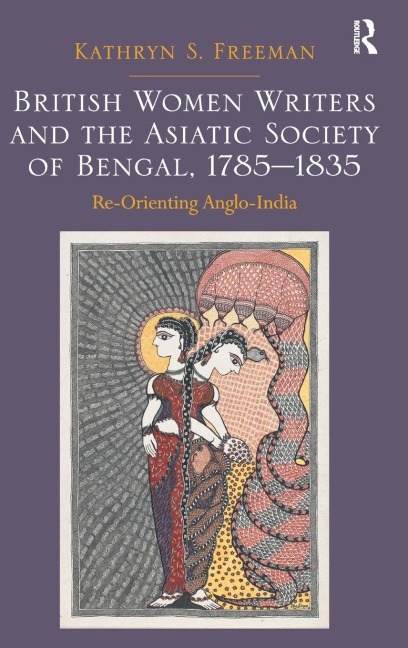
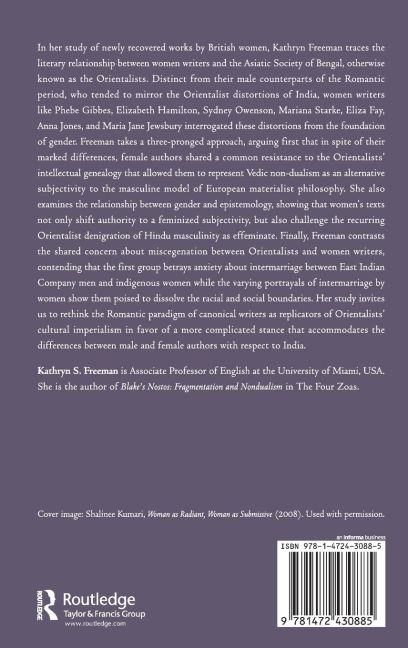
Tracing the literary relationship between British women and the Asiatic Society of Bengal, Kathryn Freeman argues that women writers, distinct from their male counterparts, interrogated Orientalist distortions of India through the lens of gender. Her study invites us to rethink the Romantic paradigm of canonical writers as replicators of Orientalists' cultural imperialism in favor of a more complicated stance that accommodates the differences between male and female authors with respect to India.
Kathryn S. Freeman is Professor of English at the University of Miami, USA. She is the author of Blake's Nostos: Fragmentation and Nondualism in The Four Zoas; A Guide to Blake's Cosmology; Rethinking the Romantic Era: Androgyny and Subjectivity in the Writings of Mary Robinson, Samuel Taylor Coleridge, and Mary Shelley; and Through the Fiction of Phebe Gibbes: Women, Alienation, and Prodigality in the Long Eighteenth Century.
Acknowledgements, Introduction: British Women Writers and Late Enlightenment Anglo-India: The Paradoxical Binary of Vedic Nondualism and the Western Sublime, 1 The Asiatic Society of Bengal: "Beyond the stretch of labouring thought sublime", 2 "Out of that narrow and contracted path": Creativity and Authority in Elizabeth Hamilton's Translations of the Letters of a Hindoo Rajah, 3 Confronting Sacrifice, Resisting the Sentimental: Phebe Gibbes, Sidney Owenson, and the Anglo-Indian Novel, 4 Female Authorship in the Anglo-Indian Meta-Drama of Mariana Starke's The Sword of Peace (1788) and The Widow of Malabar (1791), Epilogue: Lost and Found in Translation: Re-Orienting British Revolutionary Literature through Women Writers in Early Anglo-India, Bibliography, Index