Und dann auf "Zum Home-Bildschirm [+]".

Stöbern
genialokal zum Startbildschirm hinzufügen
Installieren Sie die genialokal App auf Ihrem Startbildschirm für einen schnellen Zugriff und eine komfortable Nutzung.
Installieren Sie die genialokal App auf Ihrem Startbildschirm für einen schnellen Zugriff und eine komfortable Nutzung.
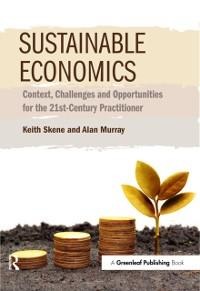
This book marks a milestone in Economics publishing. Sustainable Economics is *the* subject of the moment, as businesses across the globe face up to peak oil prices, climate instability, increasingly complex environmental legislation and the challenge of adapting to a new business landscape. Sustainable Economics: Context, Challenges and Opportunities for the 21st Century Practitioner debugs the language of sustainable development. It explores the strengths and weaknesses of the many and diverse schools of thought. The book enables the modern business student and practitioner to disentangle the complex, often convoluted debate relating to sustainability, and it provides the tools necessary to lead their organizations through the murky waters of current times and prepare for the challenges of the future. Eschewing the linear - take, make and waste - approach of current business and manufacturing thinking, this book revisits the ecological models underpinning recent economic sustainability theory, and re-examines the consequences of modern ecological thought upon business strategies relating to sustainability. A chapter is also dedicated to the "circular economy", already in common parlance at policy levels in the UK, and notably in China and other developing countries.Packed with the most recent research papers, Sustainable Economics is an essential resource for the 21st-century business practitioner and legislator.The book is supported with a large array of teaching and learning material, for both formal and informal use, ranging from role play to data analysis which are available on request with the purchase of this book.
Keith Skene, Alan Murray
Preface1. Human economic activity: an environmental impact assessment2. The three horsemen of the modern apocalypse: climate, pollution and habitat 3. Water, energy and the green paradox4. Business and biology: can we learn from nature?5. Current schools of sustainable thinking: origins, strengths and weaknesses6. The circular economy7. Design to redesign8. Generic barriers to change9. Transition to a sustainable economy10. Appropriate indicators of a sustainable transitionAppendix: a brief guide to thermodynamicsGlossaryAbout the authorsIndex
Dieses eBook wird im PDF-Format geliefert und ist mit einem Adobe Kopierschutz (DRM) versehen. Sie können dieses eBook mit allen Geräten lesen, die das PDF-Format und den Adobe Kopierschutz (DRM) unterstützen.
Zum Beispiel mit den folgenden Geräten:
• tolino Reader
Laden Sie das eBook direkt über den Reader-Shop auf dem tolino herunter oder übertragen Sie das eBook auf Ihren tolino mit einer kostenlosen Software wie beispielsweise Adobe Digital Editions.
• Sony Reader & andere eBook Reader
Laden Sie das eBook direkt über den Reader-Shop herunter oder übertragen Sie das eBook mit der kostenlosen Software Sony READER FOR PC/Mac oder Adobe Digital Editions auf ein Standard-Lesegeräte mit epub- und Adobe DRM-Unterstützung.
• Tablets & Smartphones
Möchten Sie dieses eBook auf Ihrem Smartphone oder Tablet lesen, finden Sie hier unsere kostenlose Lese-App für iPhone/iPad und Android Smartphone/Tablets.
• PC & Mac
Lesen Sie das eBook direkt nach dem Herunterladen mit einer kostenlosen Lesesoftware, beispielsweise Adobe Digital Editions, Sony READER FOR PC/Mac oder direkt über Ihre eBook-Bibliothek in Ihrem Konto unter „Meine eBooks“ - „online lesen“.
Schalten Sie das eBook mit Ihrer persönlichen Adobe ID auf bis zu sechs Geräten gleichzeitig frei.
Bitte beachten Sie, dass die Kindle-Geräte das Format nicht unterstützen und dieses eBook somit nicht auf Kindle-Geräten lesbar ist.