Und dann auf "Zum Home-Bildschirm [+]".

Stöbern
genialokal zum Startbildschirm hinzufügen
Installieren Sie die genialokal App auf Ihrem Startbildschirm für einen schnellen Zugriff und eine komfortable Nutzung.
Installieren Sie die genialokal App auf Ihrem Startbildschirm für einen schnellen Zugriff und eine komfortable Nutzung.
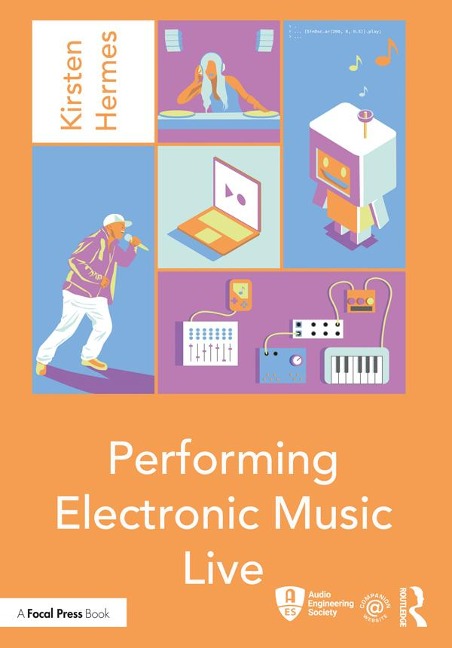
Performing Electronic Music Live lays out conceptual approaches, tools, and techniques for electronic music performance, from DJing, DAWs, MIDI controllers, traditional instruments, live sound design, hardware setups, custom software and hardware, to live visuals, venue acoustics, and live show promotion. Through case studies and contrasting tutorials by successful artists, Kirsten Hermes explores the many different ways in which you can create memorable experiences on stage. Featuring interviews with highly accomplished musicians and practitioners, readers can also expand on their knowledge with hands-on video tutorials for each chapter via the companion website, performingelectronicmusic.live. Performing Electronic Music Live is an essential, all-encompassing resource for professionals, students of music production courses, and researchers in the field of creative-focused performance technology.
Kirsten Hermes is an interdisciplinary researcher, book author, senior lecturer, violinist and audio-visual artist, bridging scientific and creative domains in her work. She tours internationally under the moniker Nyokeë, integrating the iconic sound of retro games consoles into high-energy electropop tracks, accompanied by her moving graphics. Together with Joe Smith, she is also in a hybrid neoclassical and electronic band called Emb:re. Kirsten holds a PhD in sound perception from the University of Surrey (UK), which was funded by the British Engineering and Physical Sciences Council. She also holds a Masters Degree in Audio Production from the University of Westminster. Kirsten regularly publishes interdisciplinary book chapters and academic papers, combining scientific and technical knowledge with creative practice.
Chapter 1 - General Advice 1. The concept 2. Confidence and preparation 2.1 Effective rehearsal 2.2 Dealing with stage fright 2.3 Stepping into the performance persona 2.4 Using feedback and being prepared for rejection 3. Quality of the production 4. Factors that determine the setup choice 4.1 The music - genre and composition 4.2 The act - personality, motivation and skills 4.3 Band members and skills 4.4 The performance situation 4.4.1 The audience 4.4.2 The venue and playback system 4.4.3 Risk 4.4.4 Budget 4.4.5 Need for portability Tutorial and takeaway points 5. References Chapter 2 - DAWs and Controllers 1. Non-linearity of time 2. Overview of performance DAWs 2.1 Ableton Live 2.2 Bitwig 2.3 Maschine 2.4 Logic Pro X 2.5 Motu Digital Performer 2.6 FL studio 2.7 Standalone hardware DAW equivalents 3. Plugging in hardware 3.1 Live arrangement 3.2 One-shots and finger drumming 3.3 Performing on software instruments 3.4 Controlling audio effects 3.5 Other external hardware 4. Prepared musical material and live recording 5. Collaboration 6. Randomness and generative approaches 7. Customising the performance interface 8. Performing live in more studio-oriented DAWs 9. Working with visuals 10. Recording the show Tutorial From a complex studio production to an intuitive live set Looping clips One-shots Follow actions Live effects Live keys and vocals Visuals 11. Takeaway points References Interview with Robert Henke Chapter 3 - MIDI and CV Performance Controllers 1. CV/GATE 2. The MIDI protocol 2.1 MIDI messages in the MIDI 1 protocol 2.2 MIDI 2.0 3. Types of performance controllers 3.1 Buttons 3.2 Continuous signals: knobs, faders, sliders 3.3 Controllers that resemble traditional musical instruments. 3.4 Modular controllers 3.5 Motion-controlled performance hardware 3.6 Turning non-musical hardware into MIDI controllers 3.7 MIDI Polyphonic Expression 3.8 Sequencers 3.9 Clock signals and MIDI routing Tutorial 4. Takeaway points References Chapter 4 - DJing and Turntablism 1. A short history of DJing 2. Types of DJ in the present day 2.1 Touring artist-DJs 2.2 Resident DJs 2.3 Mobile event DJs 2.4 Radio DJs 2.5 Online DJ-producers 3. DJ techniques 3.1 Mixing techniques and turntablism 3.2 Virtuoso turntablism 3.3 Effects and audio processing 3.4 Programming 4. DJ tools available today 4.1 DJ software and hardware controllers 4.2 CDJs 4.3 Going retro: using Vinyl for DJing 4.4 Headphones, monitors and microphones 4.5 Streaming tracks from online platforms Tutorial: three DJ setups presented by Dan Murray Preparation DJ skills and techniques Beatmatching on vinyl Getting creative on CDJs Working with a hybrid setup Performance styles 5. Takeaway points References Interview with Alex M.O.R.P.H Chapter 5 - Incorporating Acoustic Instruments and Vocals 1. Traditional instruments in electronic music 2. Fusion genres 3. Live instruments and vocals that are not on the record 4. Instruments that are on the record but not on stage 5. Microphones and DI boxes 6. Effects and sound manipulation 6.1 Vocal effects processing 6.2 Vocoders and talk boxes 6.3 Effects for other instruments Tutorial - generated live vocal harmonies, violin and synth 7. Takeaway points References Interview with Matt Robertson Chapter 6 - Live Synthesis and Sound Design 1. Synthesis technology 1.1 Synthesis techniques 1.1.1 Additive synthesis 1.1.2 Subtractive synthesis 1.1.3 FM synthesis 1.1.4 Waveshaping synthesis 1.1.5 Sampling 1.1.6 Granular synthesis 1.1.7 Wavetable synthesis 1.1.8 Physical modelling synthesis 1.2 Controls typically found on commercial synthesizers 1.2.1 Oscillators 1.2.2 Amplifier 1.2.3 Amplitude envelope 1.2.4 Filters 1.2.5 Modulation 1.2.6 Clock 1.2.7 Effects, sequencing and arpeggiators 1.2.8 Playback controls 2. A rich history of artists shaping their sound through synthesis 2.1 Retro-leaning synths used by current artists 3. A brief history of sampling 4. Using synths and samplers on stage 4.1 Playing live on hardware synthesizers and samplers 4.1.1 Choosing hardware synths 4.1.2 Working with pre-programmed sequences 4.1.3 Modular synthesizers on stage 4.2 Performing live with software synthesizers Tutorial 5. Takeaway points References Chapter 7 - Performing without a Laptop 1. Building blocks of a laptop-free setup 1.1 Sound sources 1.2 Control signal generators 1.2.1 Clock signal generators 1.3 Control signal routing tools 1.4 Sound processors and effects 1.5 Mixers 2. All-in-one hardware tools 3. Cabling and connections Tutorial: a modular synthesizer setup (Matt Gooderson) Modular Systems Components of the Hardware Setup Melody Rhythm Sound Sources Utility Modules Multiple Quantiser Sample and Hold Mixer Audio Modifiers Composition and Performance 4. Takeaway points References Chapter 8 - Programming Custom Performance Tools 1. Getting started with programming 1.1 What is a program? 1.2 What programming language should you learn? 2. Inspiring artist examples 2.1 Complete playback solutions 2.2 Effects plug-ins and software instruments 2.3 Expanding the functionality of hardware 2.4 Automatic performance tools 2.5 Letting the outside environment control the sound Tutorial: introducing BBC R&D's Audio Orchestrator, featuring Jon Francombe and Stephen Davismoon How does Audio Orchestrator work? The Sequences page The Controls page The Audio page The Appearance page The Export page 3. Patch It: modular music programming environments 3.1 Max/MSP 3.2 Pure Data 3.3 Other node-based programming environments 3.4 Node-based programming in action 3.4.1 Effects processing 3.4.2 Generative music 3.4.3 Sampling and sequencing 3.4.4 Working with external hardware 3.4.5 Theatre shows Tutorial: generative music in Max / MSP, featuring Francesc Moya Serra First steps and audio output Metronome and timing Sound triggering with the select object Using MIDI notes to perform on a VST synth Random pitches in a subpatch Adding further complexity Random note velocities and durations Modulating synthesis parameters Fitting the random note pitches to a musical scale Percussion The performance GUI 4. Live coding: making EDM with algorithms Tutorial: an introduction to SuperCollider, featuring Eli Fieldsteel The interface Getting started Oscillator UGens Cross-fading between sounds Working with pre-recorded audio samples What else is possible in SuperCollider? 5. Takeaway Points References Interview with Holly Herndon Chapter 9 - Building Custom Hardware Tools 1. New instruments built from scratch 2. The human body as musical instrument 3. Adding functionality to existing instruments 4. Performing music on toys and household items 5. How can you get started? Tutorial: Optical Theremin inside a Game Boy Shell with Rainbow Trash (Dominique Pelletier) What you will need Casing Electronics Testing connections Soldering connections Closing up the case Other things you can do... 6. Takeaway points References Chapter 10 - The Performance Setting 1. Common live sound technology 2. The soundcheck 3. Live sound mixing 4. Spaces 4.1 Arenas and stadiums 4.2 Large Festivals 4.3 Nightclubs 4.4 Warehouse raves 4.5 Concert halls 4.6 Outdoor theatres 4.7 Small and intimate shows 4.8 Controlled acoustic spaces 4.9 Installations 4.10 Remote settings and streaming Tutorial: a large redundancy playback rig, featuring Steven Massey Stems for playback Uninterruptible power supply Redundancy playback rig Output routing via a split rack The monitor mix The live mix 5. Takeaway points References Interview with Laura Escudé Chapter 11 - Stage Design and Visual Parameters 1. Tools for creating visual interest 1.1 Moving visuals 1.2 Lighting 1.3 Dancing and acting 1.4 Fashion 1.5 Stage design 2. What determines the choice of visual stage parameters? 2.1 Artist identity 2.2 Visual parameters that convey a narrative 2.3 Creating an abstract connection between what is seen and heard 2.4 Amplifying performance parameters Tutorial 3. Takeaway points References Chapter 12 - Planning and Promotion 1. Music branding principles 1.1 Artist identity 1.2 Target audience 2. Creating marketing materials 2.1 Visual materials 2.2 Biography 2.3 Press release 2.4 Website 2.4.1 A clear representation of the artist image 2.4.2 Layout and content 2.4.3 Search engine optimization 2.5 Social media 2.6 Hardcopy marketing materials 3. Networking and gig opportunities Tutorial: music industry Dos and Don'ts presented by Woody van Eyden Where am I now? Where do I want to be? What do I need to do to get there? Who can help me? What should I do in terms of networking? 4. Takeaway points References Chapter 13 - Conclusion 1 What do electronic musicians do on stage? 2 What constitutes a great electronic music performance? 3 How do I choose the concept for my show? 3.1 A compelling Performance persona 3.2 Virtuosic skills 3.3 Technical know-how 3.4 A compelling performance setting 3.5 Liveness 3.6 Core values 3.7 Visual interest 4 What does my audience expect? 5 I am quite shy but I would like to perform live. What can I do? 6 I cannot play any instruments or sing. Can I still perform live? 7 Should I be a solo artist or form a band? 8 What kind of tools do I need to perform electronic music live? 9 There are so many different options. What is the right setup for me? 10 Who creates electronic performance equipment? 11 Where can I try out and buy performance equipment? 12 I produce music in a DAW. How can I turn this into a live show? 13 Should my live show sound like my record? 14 What does "live" mean? Should every sound be created in the moment, or are backing tracks acceptable? 15 Is it bad to mime and pretend that I am doing something on stage when I am not? 16 I have never produced any music. Where do I begin? 17 How should I prepare for my show? 17.1 Practice 17.2 Sound check 17.3 Feedback 18 How can I find gig opportunities? Thank you!
Dieses eBook wird im PDF-Format geliefert und ist mit einem Adobe Kopierschutz (DRM) versehen. Sie können dieses eBook mit allen Geräten lesen, die das PDF-Format und den Adobe Kopierschutz (DRM) unterstützen.
Zum Beispiel mit den folgenden Geräten:
• tolino Reader
Laden Sie das eBook direkt über den Reader-Shop auf dem tolino herunter oder übertragen Sie das eBook auf Ihren tolino mit einer kostenlosen Software wie beispielsweise Adobe Digital Editions.
• Sony Reader & andere eBook Reader
Laden Sie das eBook direkt über den Reader-Shop herunter oder übertragen Sie das eBook mit der kostenlosen Software Sony READER FOR PC/Mac oder Adobe Digital Editions auf ein Standard-Lesegeräte mit epub- und Adobe DRM-Unterstützung.
• Tablets & Smartphones
Möchten Sie dieses eBook auf Ihrem Smartphone oder Tablet lesen, finden Sie hier unsere kostenlose Lese-App für iPhone/iPad und Android Smartphone/Tablets.
• PC & Mac
Lesen Sie das eBook direkt nach dem Herunterladen mit einer kostenlosen Lesesoftware, beispielsweise Adobe Digital Editions, Sony READER FOR PC/Mac oder direkt über Ihre eBook-Bibliothek in Ihrem Konto unter „Meine eBooks“ - „online lesen“.
Schalten Sie das eBook mit Ihrer persönlichen Adobe ID auf bis zu sechs Geräten gleichzeitig frei.
Bitte beachten Sie, dass die Kindle-Geräte das Format nicht unterstützen und dieses eBook somit nicht auf Kindle-Geräten lesbar ist.