
Stöbern
genialokal zum Startbildschirm hinzufügen
Installieren Sie die genialokal App auf Ihrem Startbildschirm für einen schnellen Zugriff und eine komfortable Nutzung.
Installieren Sie die genialokal App auf Ihrem Startbildschirm für einen schnellen Zugriff und eine komfortable Nutzung.
Tippen Sie einfach auf Teilen:
 Und dann auf "Zum Home-Bildschirm [+]".
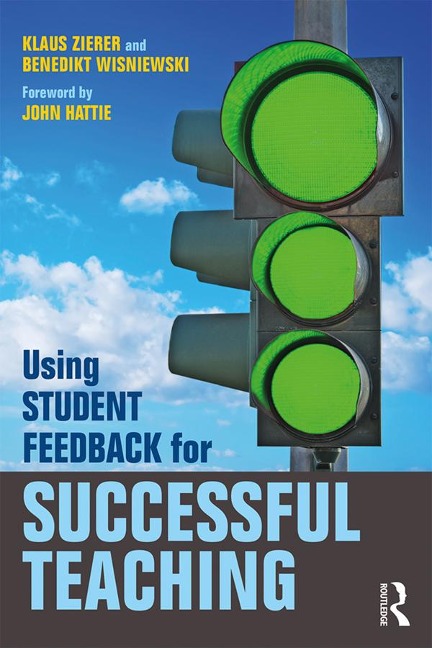
Feedback from students to teachers has been shown to have a major influence on students' achievement. Although the use of feedback from students requires little time and investment, the exploration of this topic in recent years has focused primarily on that from teacher-to-student or teacher-to-teacher. This innovative book examines the much-neglected feedback path from student to teacher and provides an empirically founded and practice-oriented step-by-step guide for teachers who want to get feedback on their own teaching. Including a foreword by John Hattie, the authors shed light on the benefits, challenges, impact and academic discussion of student feedback. Topics include: - an outline of the current state of research about feedback, including in the light of Visible Learning, and the essentials for translating this research into implementation in the classroom; - the advantages of student-to-teacher feedback and how it is connected to good, effective teaching; - the practicalities of putting student feedback into practice: finding the right questions to ask, professional discussion, and how to go about applying changes to your teaching; - an exploration of combining digital technologies with the acquisition and evaluation of student feedback; - the wider impact of feedback and how a "feedback culture" can transform not only individual teachers but whole schools. Using Student Feedback for Successful Teaching is an essential guide for experienced and newly-qualified teachers alike who are invested in their professional development and who strive to deliver the best quality teaching for their students.
Klaus Zierer is Professor of Education at the University of Augsburg, Germany, and Associate Research Fellow of the Economic and Social Research Council (ESRC)-funded Centre on Skills, Knowledge, and Organisational Performance (SKOPE) at the University of Oxford, UK. Benedikt Wisniewski is a school psychologist, former teacher, and teacher trainer. As a lecturer at the University of Regensburg, he is involved in university teacher training. He is the author and publisher of various textbooks in the field of pedagogy and educational psychology.
List of illustrations Acknowledgements Foreword by John Hattie Chapter 1: Introduction: feedback between desire and reality Chapter 2: Feedback in the light of Visible Learning Chapter 3: Student feedback Chapter 4: Student feedback in practice Chapter 5: Student feedback scenarios using digitization Chapter 6: Feedback culture and professionalism
Dieses eBook wird im PDF-Format geliefert und ist mit einem Adobe Kopierschutz (DRM) versehen. Sie können dieses eBook mit allen Geräten lesen, die das PDF-Format und den Adobe Kopierschutz (DRM) unterstützen.
Zum Beispiel mit den folgenden Geräten:
• tolino Reader
Laden Sie das eBook direkt über den Reader-Shop auf dem tolino herunter oder übertragen Sie das eBook auf Ihren tolino mit einer kostenlosen Software wie beispielsweise Adobe Digital Editions.
• Sony Reader & andere eBook Reader
Laden Sie das eBook direkt über den Reader-Shop herunter oder übertragen Sie das eBook mit der kostenlosen Software Sony READER FOR PC/Mac oder Adobe Digital Editions auf ein Standard-Lesegeräte mit epub- und Adobe DRM-Unterstützung.
• Tablets & Smartphones
Möchten Sie dieses eBook auf Ihrem Smartphone oder Tablet lesen, finden Sie hier unsere kostenlose Lese-App für iPhone/iPad und Android Smartphone/Tablets.
• PC & Mac
Lesen Sie das eBook direkt nach dem Herunterladen mit einer kostenlosen Lesesoftware, beispielsweise Adobe Digital Editions, Sony READER FOR PC/Mac oder direkt über Ihre eBook-Bibliothek in Ihrem Konto unter „Meine eBooks“ - „online lesen“.
Schalten Sie das eBook mit Ihrer persönlichen Adobe ID auf bis zu sechs Geräten gleichzeitig frei.
Bitte beachten Sie, dass die Kindle-Geräte das Format nicht unterstützen und dieses eBook somit nicht auf Kindle-Geräten lesbar ist.