
Stöbern
genialokal zum Startbildschirm hinzufügen
Installieren Sie die genialokal App auf Ihrem Startbildschirm für einen schnellen Zugriff und eine komfortable Nutzung.
Installieren Sie die genialokal App auf Ihrem Startbildschirm für einen schnellen Zugriff und eine komfortable Nutzung.
Tippen Sie einfach auf Teilen:
 Und dann auf "Zum Home-Bildschirm [+]".
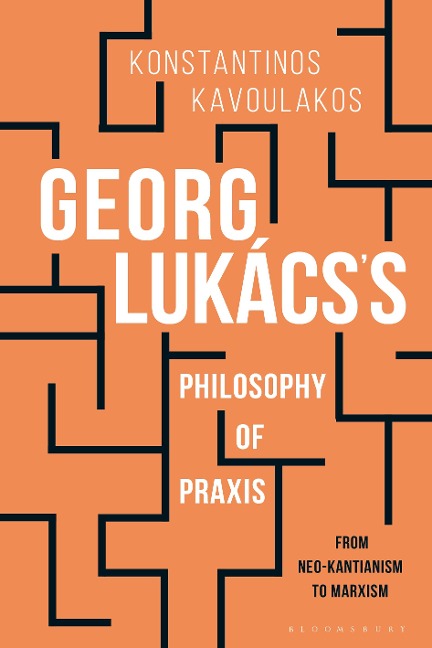
Georg Lukács' early Marxist philosophy of the 1920s laid the foundations of Critical Theory. However the evaluation of Lukács' philosophical contribution has been largely determined by one-sided readings of eminent theorists like Adorno, Habermas, Honneth or even Lukács himself. This book offers a new reconstruction of Lukács' early Marxist work, capable of restoring its dialectical complexity by highlighting its roots in his neo-Kantian, 'pre-Marxist' period.
In his pre-Marxist work Lukács sought to articulate a critique of formalism from the standpoint of a dubious mystical ethics of revolutionary praxis. Consequently, Lukács discovered a more coherent and realistic answer to his philosophical dilemmas in Marxism. At the same time, he retained his neo-Kantian reservations about idealist dialectics. In his reading of historical materialism he combined non-idealist, non-systematic historical dialectics with an emphasis on conscious, collective, transformative praxis. Reformulated in this way Lukács' classical argument plays a central role within a radical Critical Theory.
Konstantinos Kavoulakos is associate professor of Social and Political Philosophy/Philosophy of Culture at the University of Crete, Greece.
Acknowledgments
Abbreviations
Preface by Andrew Feenberg
1. Introduction: The Need to Reconsider Lukács' Philosophy of Praxis
First Part: Method
2. The Problem of Content: a Neo-Kantian Theme
3. Flawed Philosophical Alternatives
4. Lukács' Materialist Theory of History
Second Part: Theory
5. The Origins of the Concept of Reification in Lukács' Early Work
6. The Modern Form of Objectivity
7. What is Reification?
Third Part: Praxis
8. From Mystical Ethics to Transformative Praxis
9. De-reifying Capitalism
10. Limits of De-reification
11. Epilogue: The Significance of Lukács's Philosophy of Praxis Today
References
Index
Dieses eBook wird im PDF-Format geliefert und ist mit einem Adobe Kopierschutz (DRM) versehen. Sie können dieses eBook mit allen Geräten lesen, die das PDF-Format und den Adobe Kopierschutz (DRM) unterstützen.
Zum Beispiel mit den folgenden Geräten:
• tolino Reader
Laden Sie das eBook direkt über den Reader-Shop auf dem tolino herunter oder übertragen Sie das eBook auf Ihren tolino mit einer kostenlosen Software wie beispielsweise Adobe Digital Editions.
• Sony Reader & andere eBook Reader
Laden Sie das eBook direkt über den Reader-Shop herunter oder übertragen Sie das eBook mit der kostenlosen Software Sony READER FOR PC/Mac oder Adobe Digital Editions auf ein Standard-Lesegeräte mit epub- und Adobe DRM-Unterstützung.
• Tablets & Smartphones
Möchten Sie dieses eBook auf Ihrem Smartphone oder Tablet lesen, finden Sie hier unsere kostenlose Lese-App für iPhone/iPad und Android Smartphone/Tablets.
• PC & Mac
Lesen Sie das eBook direkt nach dem Herunterladen mit einer kostenlosen Lesesoftware, beispielsweise Adobe Digital Editions, Sony READER FOR PC/Mac oder direkt über Ihre eBook-Bibliothek in Ihrem Konto unter „Meine eBooks“ - „online lesen“.
Schalten Sie das eBook mit Ihrer persönlichen Adobe ID auf bis zu sechs Geräten gleichzeitig frei.
Bitte beachten Sie, dass die Kindle-Geräte das Format nicht unterstützen und dieses eBook somit nicht auf Kindle-Geräten lesbar ist.