Und dann auf "Zum Home-Bildschirm [+]".

Stöbern
genialokal zum Startbildschirm hinzufügen
Installieren Sie die genialokal App auf Ihrem Startbildschirm für einen schnellen Zugriff und eine komfortable Nutzung.
Installieren Sie die genialokal App auf Ihrem Startbildschirm für einen schnellen Zugriff und eine komfortable Nutzung.
Ihr gewünschter Artikel ist in 0 Buchhandlungen vorrätig - wählen Sie hier eine Buchhandlung in Ihrer Nähe aus:

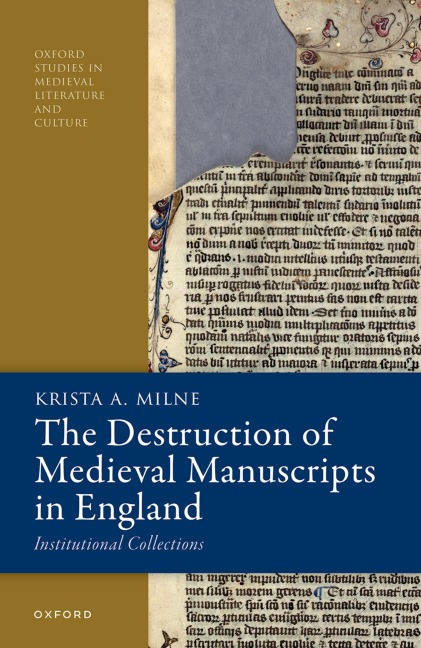
The Dissolution of the Monasteries (1536-40) is widely held as the single most significant event in England's history of the destruction and loss of medieval manuscripts. Despite this consensus, the ultimate impact of the Dissolution - and of medieval manuscript destruction during the centuries that followed - remains unclear. How did Reformation-era losses compare to those which preceded the Reformation, and to those that followed it? How did the losses caused by sectarian conflicts compare to more quotidian kinds of loss, such as improper storage or deliberate de-acquisition? Which manuscripts were targeted, when were they targeted, and how should one account for the inevitably skewed record? In The Destruction of Medieval Manuscripts in England, Krista A. Milne asks these questions to better understand literary taste, behavioural patterns, and the circulation of knowledge throughout the medieval period. Milne explores methods drawn from quantitative codicology to explore the most significant moments of manuscript loss in the history of England. The evidence suggests that this destruction was much more limited in its targets, but far more extensive in scope, than is usually acknowledged. Overwhelmingly, throughout the investigation, the manuscripts most at risk were those considered too new to qualify as antique but too old to be au courant. This pattern of destruction, which Milne describes as the principle of 'age without vintage,' remains apparent in many different domains today.
Krista A. Milne is Assistant Professor of Medieval English Literature at Leiden University. Her research utilizes quantitative and digital methods that were once reserved for the "hard" sciences to explore longstanding questions about medieval books and their readers. Such methods undergird her Dutch Research Council-funded project (2020-24), which focuses on manuscripts destroyed during the Second World War. Her other grant-funded projects include the digital TOMES Anthology (2019-20), and a large-scale investigation of Anglo-Norman manuscripts (2018).
- Introduction - Part I. Medieval Manuscript Loss Before c.1500 - 1: Before 1500: Medieval Manuscripts Destroyed in Medieval England - 2: Before 1500: A Quantitative Approach to Medieval Manuscript Loss - Part II. Medieval Manuscript Loss Between c.1500 and c.1600 - 3: 1518-1547: The Dissolution of the Monasteries and 'The Monuments of Auncyent Writers' - 4: 1547-1558: The Act for Abolishing Divers Books and Images and the 'Inconstancy of Mankind' - 5: 1558-1603: Elizabethan Purges and the 'Auncient Recordes or Monumentes Written' - Part III. Medieval Manuscript Loss After c.1600 - 6: 1603-1700: Medieval Manuscripts as Matters of National Importance - 7: After 1700: Medieval Manuscripts Destroyed in Modern England - Conclusion