
Stöbern
genialokal zum Startbildschirm hinzufügen
Installieren Sie die genialokal App auf Ihrem Startbildschirm für einen schnellen Zugriff und eine komfortable Nutzung.
Installieren Sie die genialokal App auf Ihrem Startbildschirm für einen schnellen Zugriff und eine komfortable Nutzung.
Tippen Sie einfach auf Teilen:
 Und dann auf "Zum Home-Bildschirm [+]".
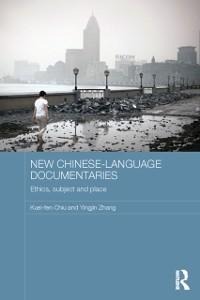
Documentary filmmaking is one of the most vibrant areas of media activity in the Chinese world, with many independent filmmakers producing documentaries that deal with a range of sensitive socio-political problems, bringing to their work a strongly ethical approach. This book identifies notable similarities and crucial differences between new Chinese-language documentaries in mainland China and Taiwan. It outlines how documentary filmmaking has developed, contrasts independent documentaries with dominant official state productions, considers how independent documentary filmmakers go about their work, including the work of exhibiting their films and connecting with audiences, and discusses the content of their documentaries, showing how the filmmakers portray a wide range of subject matter regarding places and people, and how they deal with particular issues including the underprivileged, migrants and women in an ethical way. Throughout the book demonstrates how successful Chinese-language independent documentary filmmaking is, with many appearances at international film festivals and a growing number of award-winning titles.
Kuei-fen Chiu is Distinguished Professor of Taiwan Literature and Transnational Cultural Studies at National Chung Hsing University, Taiwan Yingjin Zhang is Professor of Comparative Literature and Film Studies at the University of California, San Diego, USA and Visiting Chair Professor of Humanities at Shanghai Jiao Tong University, China
1. Introduction: New Chinese-Language Documentaries Part 1: History and Politics 2. The History of Documentary Filmmaking in Mainland China 3. The Vision and Voice of New Taiwan Documentary Part 2: Theory and Ethics 4. Independent Documentary and Social Theories of Space and Locality 5. Subject to Movement: Wu Wenguang and the Ethics of Self Part 3: Subject and Gender 6. New Subjectivities in Women's Documentary Films 7. The Other as Interlocutor: 'Voices of the People' in Taiwan's Documentaries Part 4: Place and Migration 8. Empowering Place: Jia Zhangke's Post-Nostalgic Assemblage of Shanghai 9. Migration Documentaries and the Vision of Cosmopolitanism Part 5: Exhibition and Circulation 10. YIDFF and Taiwan Documentary in the International Arena 11. The Circulation of Mainland Chinese Independent Documentary
Dieses eBook wird im PDF-Format geliefert und ist mit einem Adobe Kopierschutz (DRM) versehen. Sie können dieses eBook mit allen Geräten lesen, die das PDF-Format und den Adobe Kopierschutz (DRM) unterstützen.
Zum Beispiel mit den folgenden Geräten:
• tolino Reader
Laden Sie das eBook direkt über den Reader-Shop auf dem tolino herunter oder übertragen Sie das eBook auf Ihren tolino mit einer kostenlosen Software wie beispielsweise Adobe Digital Editions.
• Sony Reader & andere eBook Reader
Laden Sie das eBook direkt über den Reader-Shop herunter oder übertragen Sie das eBook mit der kostenlosen Software Sony READER FOR PC/Mac oder Adobe Digital Editions auf ein Standard-Lesegeräte mit epub- und Adobe DRM-Unterstützung.
• Tablets & Smartphones
Möchten Sie dieses eBook auf Ihrem Smartphone oder Tablet lesen, finden Sie hier unsere kostenlose Lese-App für iPhone/iPad und Android Smartphone/Tablets.
• PC & Mac
Lesen Sie das eBook direkt nach dem Herunterladen mit einer kostenlosen Lesesoftware, beispielsweise Adobe Digital Editions, Sony READER FOR PC/Mac oder direkt über Ihre eBook-Bibliothek in Ihrem Konto unter „Meine eBooks“ - „online lesen“.
Schalten Sie das eBook mit Ihrer persönlichen Adobe ID auf bis zu sechs Geräten gleichzeitig frei.
Bitte beachten Sie, dass die Kindle-Geräte das Format nicht unterstützen und dieses eBook somit nicht auf Kindle-Geräten lesbar ist.