
Stöbern
genialokal zum Startbildschirm hinzufügen
Installieren Sie die genialokal App auf Ihrem Startbildschirm für einen schnellen Zugriff und eine komfortable Nutzung.
Installieren Sie die genialokal App auf Ihrem Startbildschirm für einen schnellen Zugriff und eine komfortable Nutzung.
Tippen Sie einfach auf Teilen:
 Und dann auf "Zum Home-Bildschirm [+]".

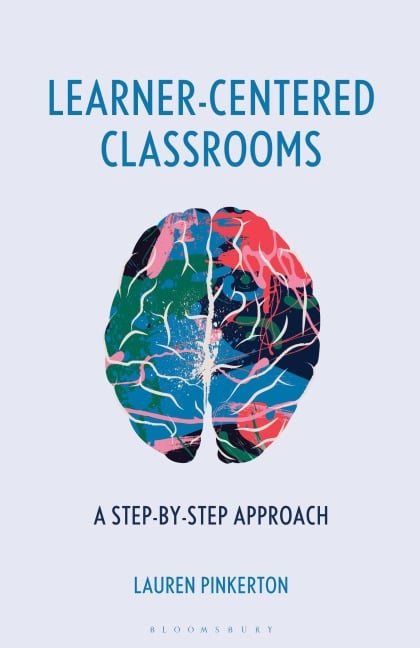
Learner Centered Classrooms: A Step-by-Step Approach is a practical, no-nonsense guide for educators who are ready to shift from traditional, teacher-centered instruction to learner-centered education-but need help making that shift in the real world. Unlike many books that assume ideal conditions like small class sizes, ample funding, and top-tier technology, this book is grounded in the realities most teachers face: overcrowded classrooms, limited resources, and time constraints.
Designed with empathy and practicality in mind, this book meets educators where they are on their pedagogical journey. It moves beyond theory and avoids the preachy tone common in academic texts, offering instead a conversational, accessible, and encouraging approach. Each chapter breaks down the learner-centered education (LCE) framework into manageable, actionable steps that can be implemented in even the most challenging environments.
Whether you're new to LCE or looking to refine your approach, Learner Centered Classrooms provides the tools, strategies, and real-life guidance you need to create engaging, student-driven learning experiences-no matter your circumstances.
Lauren Pinkerton is a dedicated and passionate English instructor with over 10 years of experience inspiring students and creating engaging, learner-centered environments. Currently pursuing a D.A. in English Pedagogy and Literacy at Murray State University (expected 2025), with advanced degrees in Curriculum and Instruction (M.Ed.) and Adolescent Young Adult English Education (B.S.). Research interests include secondary English pedagogy, Sub-Saharan literacy rates, and global literacy inequality. A published scholar and frequent conference leader, Lauren has presented internationally on topics ranging from AI in education to learner-centered practices. Her career includes roles as an English adjunct faculty member, Senior Education Officer in Namibia, and secondary ELA and humanities teacher, where she excelled in curriculum development, teacher training, literacy advancement, and educational leadership. Recognized for her commitment to excellence with awards for leadership and teaching, she brings a global, research-driven, and equity-focused approach to education.
Chapter 1: Introduction
· Purpose and Scope of the Book
· Understanding Learner-Centered Education (LCE)
· Challenges in Traditional Teaching Environments
· How to Navigate This Book
Chapter 1 sets the correct expectations and mindset for the reader. It reconfirms that this book is the correct choice for them and validates their feelings that education is both a critical importance in society while also a tremendous burden upon the teacher.
Chapter 2: Preparing for Change
· The Role of the Teacher: Debunking Myths and Misconceptions of LCE
· Evaluating Your Current Teaching Practices
· Identifying and Addressing Classroom Constraints
· Setting Clear and Achievable Goals
· Building Your Support Network
Chapter 2 serves as a vital component to the text. It is within this chapter that the reader will take a series of personality quizzes that analyze their overall curricular ideology view as well as their current level of LCE practices. Most importantly, the reader will be exposed to the 7 teaching elements that make up the remaining chapters of the book (Classroom management, lesson planning and curriculum design, administering assessments, providing feedback, teaching modalities, instructional technology and media, and student engagement and motivation). The reader will select current challenges that they identify are currently in their classrooms, and will then rank these challenges from Manageable, Moderate and Significant. The chapter will then lead them through a goal creating activity aimed specifically at their chosen five Significant challenges.
Chapter 3: Classroom Management
· It Starts Before It Begins: Establishing a Student-Centered Classroom Culture
· Judge a Book by its Cover
· Taking Advantage of Your Physical Space
· Too Nice or Too Mean?
· Your Journey
· Step-by-Step Approaches
Chapter 3 uncovers best-practice approaches for maintaining a functional behavioral management within the classroom, focusing on before-class activities, visual and physical layout of the room, and balancing the line between being too nice (and being walked all over) and being too strict, stopping the teacher from building meaningful relationships with students.
Chapter 3, and all chapters dealing with teaching elements, ends with two components. "Your Journey" is a reflective engagement tool that pulls on journaling, reflection, identifying areas that could be improved, and creating measurable goals. The "Step-by-Step Approaches" offers realistic action-items that progress from the simplest change to the most challenging change. Each action item addresses challenges seen in undesirable classroom conditions, and tips on how to navigate through them.
Chapter 4: Lesson Planning and Curriculum Design
· Work in Units-Not in Isolation
· From Abstract to Less-Abstract
· Your Journey
· Step-by-Step Approaches
Chapter 4 discusses how to reframe and build lesson plans with LCE strategies in mind, particularly pulling on Bloom's Taxonomy, lower-order thinking to higher-order thinking, project-based learning, and learner-centered approaches.
Chapter 4, and all chapters dealing with teaching elements, ends with two components. "Your Journey" is a reflective engagement tool that pulls on journaling, reflection, identifying areas that could be improved, and creating measurable goals. The "Step-by-Step Approaches" offers realistic action-items that progress from the simplest change to the most challenging change. Each action item addresses challenges seen in undesirable classroom conditions, and tips on how to navigate through them.
Chapter 5: Administering Assessments
· Assessment and the Student
· Assessment and the Teacher
· Incorporating Differentiation While Maintaining Standards
· Your Journey
· Step-by-Step Approaches
Chapter 5 breaks down the different types of formative and summative assessments and addresses the value of each one. It dives into why students have test anxiety and how teachers can design assessments to mitigate these feelings. Chapter 5 also discusses strategies on how to assign plenty of assessments while not burying themselves under stacks of papers and assignments to grade.
Chapter 5, and all chapters dealing with teaching elements, ends with two components. "Your Journey" is a reflective engagement tool that pulls on journaling, reflection, identifying areas that could be improved, and creating measurable goals. The "Step-by-Step Approaches" offers realistic action-items that progress from the simplest change to the most challenging change. Each action item addresses challenges seen in undesirable classroom conditions, and tips on how to navigate through them.
Chapter 6: Providing Feedback
· Feedback Matters
· Your Journey
· A Step-by-Step Approach
Chapter 6 reinforces the belief that feedback does matter, and despite the perceived amount of time it takes up in a teacher's life, it can often become the most critical tool towards progressing a student's education. Chapter 6 in particular shows images of past teachers who have not done an adequate job in providing feedback. This chapter discusses various techniques to communicate with students.
Chapter 6, and all chapters dealing with teaching elements, ends with two components. "Your Journey" is a reflective engagement tool that pulls on journaling, reflection, identifying areas that could be improved, and creating measurable goals. The "Step-by-Step Approaches" offers realistic action-items that progress from the simplest change to make to the most challenging change. Each action item addresses challenges seen in undesirable classroom conditions, and tips on how to navigate through them.
Chapter 7: Teaching Modalities
· Making Multimodalities Your Lifeline
· The More You Speak, the Less They Learn
· Your Journey
· Step-by-Step Approaches
Chapter 7 may be the most challenging chapter for some readers, as the goal of Chapter 7 is to urge teachers to stop lecturing. This chapter will discuss several techniques to not only move the speaking parts towards the students, but to uncover ways to get students to actually start speaking. The chapter also touches on multimodality methods, and lightly discusses neurology topics to illustrate the difference in the brain between lower-cognitive functions and higher-cognitive functions.
Chapter 7, and all chapters dealing with teaching elements, ends with two components. "Your Journey" is a reflective engagement tool that pulls on journaling, reflection, identifying areas that could be improved, and creating measurable goals. The "Step-by-Step Approaches" offers realistic action-items that progress from the simplest change to make to the most challenging change. Each action item addresses challenges seen in undesirable classroom conditions, and tips on how to navigate through them.
Chapter 8: The Worth of Digital Technology
· The Necessity of Technology
· Your Journey
· Step-by-Step Approaches
Chapter 8 is a shorter, but fiery section that argues the need for digital technology in the classroom by comparing what the Scholar Academic ideology sought to accomplish from 1950-1975 as a similar problem to what America's taskforce is currently facing. The chapter argues that students must be given adequate opportunities with technology in the classroom to prepare them the skills needed into today's workforce.
Chapter 8, and all chapters dealing with teaching elements, ends with two components. "Your Journey" is a reflective engagement tool that pulls on journaling, reflection, identifying areas that could be improved, and creating measurable goals. The "Step-by-Step Approaches" offers realistic action-items that progress from the simplest change to make to the most challenging change. Each action item addresses challenges seen in undesirable classroom conditions, and tips on how to navigate through them.
Chapter 9: Student Engagement and Motivation
· Activating Goal Contagion
· Intrinsic vs Extrinsic Motivation
· Your Journey
· Step-by-Step Approaches
Chapter 9 pulls on the students themselves and discusses ways to get them to actively participate and create student buy-in. After all, learner-centered education can only go so far without the students participating themselves! Chapter 9 discusses how to move students from a passive role in the classroom to a more active participant, as well as exploring the difference in effectiveness and output when it comes to targeting intrinsic vs. extrinsic motivation tools. Chapter 9 also discusses some brain activity to show the brain functionality between extrinsic reward and intrinsic reward to scientifically explain their differences.
Chapter 9, and all chapters dealing with teaching elements, ends with two components. "Your Journey" is a reflective engagement tool that pulls on journaling, reflection, identifying areas that could be improved, and creating measurable goals. The "Step-by-Step Approaches" offers realistic action-items that progress from the simplest change to make to the most challenging change. Each action item addresses challenges seen in undesirable classroom conditions, and tips on how to navigate through them.
Chapter 10: Conclusion· Recap of Key Insights
· Revisiting Your Practices and Goals
· Final Reflections and Encouragement
Chapter 10 serves as the conclusive chapter of the book. After summarizing the major learning targets set forth from Chapters 3-9, Chapter 10 mirrors Chapter 2 by providing three exercises for the reader to track their growth progress from their initial goal setting. Chapter 10 emphasizes that any amount of progress is a win, and encourages teachers to reuse the book and continue focusing on implementing the strategies within their classroom.