
Stöbern
genialokal zum Startbildschirm hinzufügen
Installieren Sie die genialokal App auf Ihrem Startbildschirm für einen schnellen Zugriff und eine komfortable Nutzung.
Installieren Sie die genialokal App auf Ihrem Startbildschirm für einen schnellen Zugriff und eine komfortable Nutzung.
Tippen Sie einfach auf Teilen:
 Und dann auf "Zum Home-Bildschirm [+]".
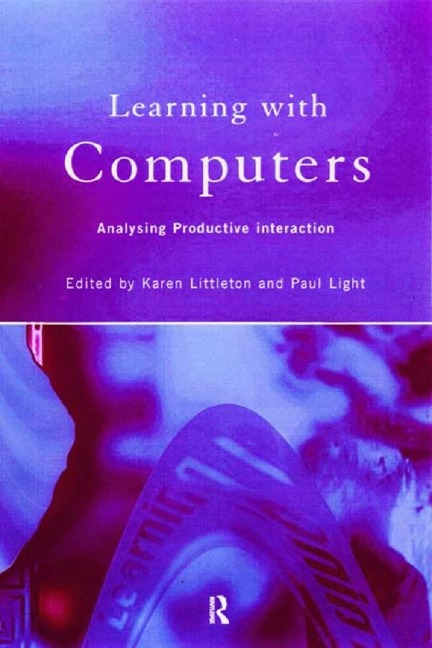
Contrary to the belief that computers isolate users, Karen Littleton and Paul Light demonstrate that learning with computers is often a collaborative and social activity. Learning with Computers brings together a significant body of research that shows how working with others at the computer can be beneficial to learners of all ages, from the early school years to the highest levels of education. It also investigates factors such as gender that explain why some interactions are not as productive as others.
Karen Littleton is a Lecturer in Psychology at The Open University. Her previous publications include Cultural Worlds of Early Childhood (1998), Learning Relationships in the Classroom (1998), Making Sense of Social Development (1998) (all edited with Martin Woodhead and Dorothy Faulkner)., Paul Light is Pro-Vice Chancellor at Bournemouth University. His previous publications include Learning to Think (1991) (edited with Sue Sheldon and Martin Woodhead) and Growing up in a Changing Society (1991) and Becoming a Person (1991) edited with Martin Woodhead and Ronnie Carr.
Chapter 1 Introduction, Paul Light, Karen Littleton; Chapter 2 Task effects on co-operative and collaborative learning with computers, Jean Underwood, Geoffrey Underwood; Chapter 3 Productive interaction in the context of computer-supported collaborative learning in science, Christine Howe, Andrew Tolmie; Chapter 4 Time-based analysis of students studying the Periodic Table, Kim Issroff; Chapter 5 Collaborations in a primary classroom, Eileen Scanlon, Kim Issroff, Patricia Murphy; Chapter 6 Is 'exploratory talk' productive talk?, Neil Mercer, Rupert Wegerif; Chapter 7 Computers in the community of classrooms, Charles Crook; Chapter 8, Danièle Golay Schilter, Jean-François Perret, Anne-Nelly Perret-Clermont, Franco de Guglielmo; Chapter 9, Roger Säljö; Chapter 10, Paul Light, Vivienne Light; Chapter 11 Productivity through interaction, Karen Littleton;
Dieses eBook wird im PDF-Format geliefert und ist mit einem Adobe Kopierschutz (DRM) versehen. Sie können dieses eBook mit allen Geräten lesen, die das PDF-Format und den Adobe Kopierschutz (DRM) unterstützen.
Zum Beispiel mit den folgenden Geräten:
• tolino Reader
Laden Sie das eBook direkt über den Reader-Shop auf dem tolino herunter oder übertragen Sie das eBook auf Ihren tolino mit einer kostenlosen Software wie beispielsweise Adobe Digital Editions.
• Sony Reader & andere eBook Reader
Laden Sie das eBook direkt über den Reader-Shop herunter oder übertragen Sie das eBook mit der kostenlosen Software Sony READER FOR PC/Mac oder Adobe Digital Editions auf ein Standard-Lesegeräte mit epub- und Adobe DRM-Unterstützung.
• Tablets & Smartphones
Möchten Sie dieses eBook auf Ihrem Smartphone oder Tablet lesen, finden Sie hier unsere kostenlose Lese-App für iPhone/iPad und Android Smartphone/Tablets.
• PC & Mac
Lesen Sie das eBook direkt nach dem Herunterladen mit einer kostenlosen Lesesoftware, beispielsweise Adobe Digital Editions, Sony READER FOR PC/Mac oder direkt über Ihre eBook-Bibliothek in Ihrem Konto unter „Meine eBooks“ - „online lesen“.
Schalten Sie das eBook mit Ihrer persönlichen Adobe ID auf bis zu sechs Geräten gleichzeitig frei.
Bitte beachten Sie, dass die Kindle-Geräte das Format nicht unterstützen und dieses eBook somit nicht auf Kindle-Geräten lesbar ist.