Und dann auf "Zum Home-Bildschirm [+]".

Stöbern
genialokal zum Startbildschirm hinzufügen
Installieren Sie die genialokal App auf Ihrem Startbildschirm für einen schnellen Zugriff und eine komfortable Nutzung.
Installieren Sie die genialokal App auf Ihrem Startbildschirm für einen schnellen Zugriff und eine komfortable Nutzung.
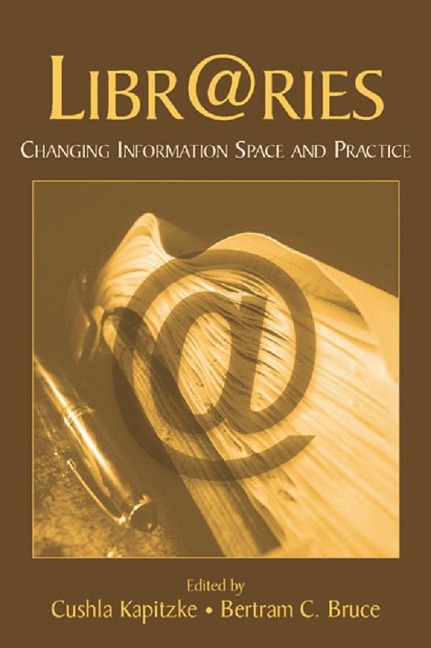
This volume is the first to examine the social, cultural, and political implications of the shift from the traditional forms and functions of print-based libraries to the delivery of online information in educational contexts. Libr@ries are conceptualized as physical places, virtual spaces, communities of literate practice, and discourses of information work. Despite the centrality of libraries in literacy and learning, the study of libraries has remained isolated within the disciplinary boundaries of information and library science since its inception in the early twentieth century. The aim of this book is to problematize and thereby mainstream this field of intellectual endeavor and inquiry. Collectively the contributors interrogate the presuppositions of current library practice, seek to understand how library as place and library as space blend together in ways that may be both contradictory and complementary, and envision new modes of information access and new multimodal literacies enabled by online environments. Libr@ries: Changing Information Space and Practice is intended for advanced undergraduate and graduate students, researchers, and educators in the fields of literacy and multiliteracies education, communication technologies in education, library sciences, information and communication studies, media and cultural studies, and the sociology of computer-mediated space.
Cushla Kapitzke, Bertram C. Bruce
Contents: M.A. Peters, Foreword. Introduction. C. Kapitzke, B.C. Bruce, Rewriting Libraries: Space, Knowledge, and Capital. Part I: Arobase Space.N.C. Burbules, Digital Libraries as Virtual Spaces. S. Boyce, Literacy Spaces--Library Design. M. Dressman, S. Tettegah, Ordered by Desire: School Libraries in Past and Present Times. J. Schmidt, From Library to Cybrary: Changing the Focus of Library Design and Service Delivery. A.A. Goodrum, Surrogation, Mediation, and Collaboration: Access to Digital Images in Cultural Heritage Institutions. Part II: Arobase Knowledge.J. Hunter, Next Generation Metadata Tools: Supporting Dynamic Knowledge Bases. D. Rooney, U. Schneider, Knowledge Management and Research in Cybraries. L. Barwick, N. Thieberger, Cybraries in Paradise: New Technologies and Ethnographic Repositories. C. Kapitzke, Redefining Libraries by Rethinking Research. Part III: Arobase Capital.J. Willinsky, The Scholarly Wing of the Public Cybrary and the Right to Know. T.W. Luke, The Politics and Philosophy of E-Text: Use Value, Sign Value, and Exchange Value in the Transition From Print to Digital Media. M.L. Kornbluh, M. Shell-Weiss, P. Turnbull, Alternatives to Pay-for-View: The Case for Open Access to Historical Research and Scholarship. B. Fabos, Search Engine Anatomy: The Industry and Its Commercial Structure. P. Graham, Monopoly, Monopsony, and the Value of Culture in a Digital Age: An Axiology of Two Multimedia Resource Repositories. B. Fitzgerald, Structuring Open Access to Knowledge: The Creative Commons Story. B.C. Bruce, C. Kapitzke, The Arobase in the Library--The Library in Society.
Dieses eBook wird im PDF-Format geliefert und ist mit einem Adobe Kopierschutz (DRM) versehen. Sie können dieses eBook mit allen Geräten lesen, die das PDF-Format und den Adobe Kopierschutz (DRM) unterstützen.
Zum Beispiel mit den folgenden Geräten:
• tolino Reader
Laden Sie das eBook direkt über den Reader-Shop auf dem tolino herunter oder übertragen Sie das eBook auf Ihren tolino mit einer kostenlosen Software wie beispielsweise Adobe Digital Editions.
• Sony Reader & andere eBook Reader
Laden Sie das eBook direkt über den Reader-Shop herunter oder übertragen Sie das eBook mit der kostenlosen Software Sony READER FOR PC/Mac oder Adobe Digital Editions auf ein Standard-Lesegeräte mit epub- und Adobe DRM-Unterstützung.
• Tablets & Smartphones
Möchten Sie dieses eBook auf Ihrem Smartphone oder Tablet lesen, finden Sie hier unsere kostenlose Lese-App für iPhone/iPad und Android Smartphone/Tablets.
• PC & Mac
Lesen Sie das eBook direkt nach dem Herunterladen mit einer kostenlosen Lesesoftware, beispielsweise Adobe Digital Editions, Sony READER FOR PC/Mac oder direkt über Ihre eBook-Bibliothek in Ihrem Konto unter „Meine eBooks“ - „online lesen“.
Schalten Sie das eBook mit Ihrer persönlichen Adobe ID auf bis zu sechs Geräten gleichzeitig frei.
Bitte beachten Sie, dass die Kindle-Geräte das Format nicht unterstützen und dieses eBook somit nicht auf Kindle-Geräten lesbar ist.