Und dann auf "Zum Home-Bildschirm [+]".

Stöbern
genialokal zum Startbildschirm hinzufügen
Installieren Sie die genialokal App auf Ihrem Startbildschirm für einen schnellen Zugriff und eine komfortable Nutzung.
Installieren Sie die genialokal App auf Ihrem Startbildschirm für einen schnellen Zugriff und eine komfortable Nutzung.

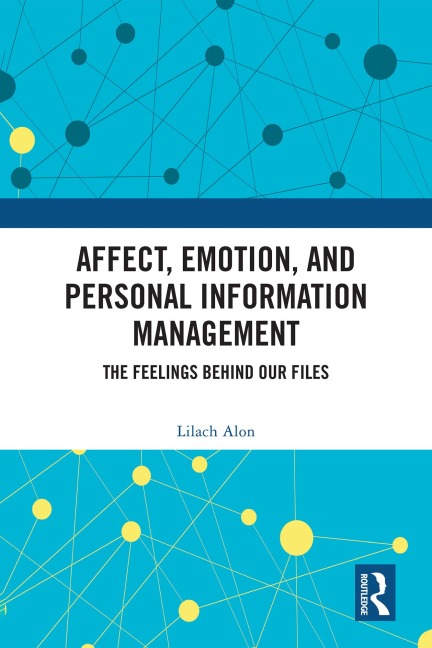
Bringing together psychological, cognitive, and sociocultural perspectives, this book offers a new way of understanding personal information management (PIM) as an emotional as well as practical activity. It explores how everyday acts such as saving, sorting, retrieving, and discarding information are tied to memory, identity, responsibility, care, and control. Affective PIM examines the emotional dimensions of PIM, showing how what we save, delete, organise, and search for is shaped as much by feeling as by function. Organised in three parts, the book moves from conceptual foundations to empirical case studies and narratives from everyday life and periods of transition, and then to future directions, including AI- enabled automation, wearable technologies, and user- centred design. Reflection prompts throughout support critical engagement and help readers connect the discussion to their own information practices. The result is a theoretically grounded and accessible account of how PIM is lived, felt, and negotiated in contemporary digital life. The book is intended for researchers and students in library and information science, information behaviour, digital literacy, human-computer interaction, and user experience design. It will also be valuable to designers, educators, and other readers interested in the human side of personal information, digital life, and the changing relationship between people, technologies, and everyday information practices.
Lilach Alon is an Assistant Professor in the Faculty of Education at Tel-Hai University, Israel. Her research lies at the intersection of information science, education, and psychology, with a particular focus on information behaviour, digital literacy, artificial intelligence, and human-computer interaction, especially in relation to learning, everyday information practices, and technology- rich environments.
Introduction: The PIM Paradox Part 1: Theoretical Foundations 01. What is Personal Information Management? 02. Emotions in Interaction with Information Part 2: Living With Personal Information 03. Emotions in the PIM Experience 04. Adaptive PIM Practices in Everyday Lives 05. PIM as Scaffolding During Life Transitions Part 3: Applications and Future Directions 06. Designing Affective-Sensitive PIM Platforms 07. Expanding PIM Literacy Beyond Individual Skills 08. AI and the Future of PIM 09. Conclusion: Keeping What Matters.