
Stöbern
genialokal zum Startbildschirm hinzufügen
Installieren Sie die genialokal App auf Ihrem Startbildschirm für einen schnellen Zugriff und eine komfortable Nutzung.
Installieren Sie die genialokal App auf Ihrem Startbildschirm für einen schnellen Zugriff und eine komfortable Nutzung.
Tippen Sie einfach auf Teilen:
 Und dann auf "Zum Home-Bildschirm [+]".
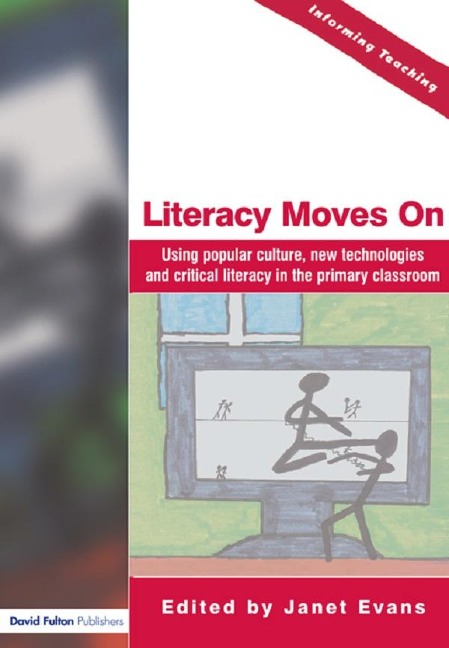
This book looks at the changing nature of literacy and at the way in which new and different literacies are emerging in the first part of the 21st century. It considers how children are shaping and being shaped by these changes, it also looks at how teachers need to bridge-the-gap between children's out of school interests and school based curriculum demands. This edited collection, which features chapters by international experts and voices in the field, aims to: Take a closer look at (and demystify) some of the influences on literacy in the 21st century e.g. popular culture, multi-modal texts, email, text messaging and critical literacy. Enhance teachers' awareness of these developments and show how they can use them to improve the literacy skills of their pupils. Show, through the Implications for Practice sections, how teachers can find different but straightforward ways of linking children's personal, out-of-school interests with the demands of the school curriculum.
Edited by Janet Evans
Children's voices; Introduction, Janet Evans; Part 1 PART 1 'New' literacies and children's ways of using them; Chapter 1 CHAPTER 1 Multimodal texts, Eve Bearne; Chapter 2 CHAPTER 2 Moving stories, Jackie Marsh; Chapter 3 CHAPTER 3 Children reading and interpreting stories in print, film and computer games, Margaret Mackey; Chapter 4 CHAPTER 4 The Dagger of Doom and the Mighty Handbag, Guy Merchant; Part 2 PART 2 Focusing on texts with a critical eye: Critical literacy in the primary school; Chapter 5 CHAPTER 5 Creating opportunities for critical literacy with young children, Vivian Vasquez; Chapter 6 CHAPTER 6 Beanie Babies, Janet Evans; Chapter 7 CHAPTER 7 Children reread and rewrite their local neighbourhoods: critical literacies and identity work, Barbara Comber, Helen Nixon; Part 3 PART 3 Bridging the gap between children's personal interests and teachers' school-based curriculum demands; Chapter 8 CHAPTER 8 Curiosity Kits:, Ros Fisher; Chapter 9 CHAPTER 9 Writing about heroes and villains, Elaine Millard; Chapter 10 CHAPTER 10 Getting it right for children, Dominic ScottIndex;
Dieses eBook wird im PDF-Format geliefert und ist mit einem Adobe Kopierschutz (DRM) versehen. Sie können dieses eBook mit allen Geräten lesen, die das PDF-Format und den Adobe Kopierschutz (DRM) unterstützen.
Zum Beispiel mit den folgenden Geräten:
• tolino Reader
Laden Sie das eBook direkt über den Reader-Shop auf dem tolino herunter oder übertragen Sie das eBook auf Ihren tolino mit einer kostenlosen Software wie beispielsweise Adobe Digital Editions.
• Sony Reader & andere eBook Reader
Laden Sie das eBook direkt über den Reader-Shop herunter oder übertragen Sie das eBook mit der kostenlosen Software Sony READER FOR PC/Mac oder Adobe Digital Editions auf ein Standard-Lesegeräte mit epub- und Adobe DRM-Unterstützung.
• Tablets & Smartphones
Möchten Sie dieses eBook auf Ihrem Smartphone oder Tablet lesen, finden Sie hier unsere kostenlose Lese-App für iPhone/iPad und Android Smartphone/Tablets.
• PC & Mac
Lesen Sie das eBook direkt nach dem Herunterladen mit einer kostenlosen Lesesoftware, beispielsweise Adobe Digital Editions, Sony READER FOR PC/Mac oder direkt über Ihre eBook-Bibliothek in Ihrem Konto unter „Meine eBooks“ - „online lesen“.
Schalten Sie das eBook mit Ihrer persönlichen Adobe ID auf bis zu sechs Geräten gleichzeitig frei.
Bitte beachten Sie, dass die Kindle-Geräte das Format nicht unterstützen und dieses eBook somit nicht auf Kindle-Geräten lesbar ist.