
Stöbern
genialokal zum Startbildschirm hinzufügen
Installieren Sie die genialokal App auf Ihrem Startbildschirm für einen schnellen Zugriff und eine komfortable Nutzung.
Installieren Sie die genialokal App auf Ihrem Startbildschirm für einen schnellen Zugriff und eine komfortable Nutzung.
Tippen Sie einfach auf Teilen:
 Und dann auf "Zum Home-Bildschirm [+]".
Ihr gewünschter Artikel ist in 0 Buchhandlungen vorrätig - wählen Sie hier eine Buchhandlung in Ihrer Nähe aus:

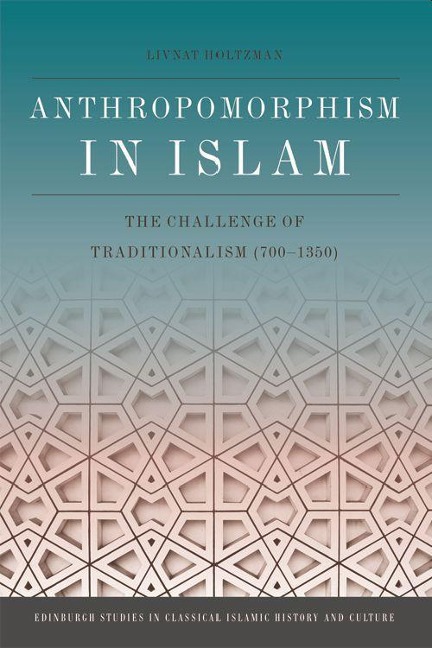
'An informative and engaging study of the Islamic tradition's attempts to grapple with conceptions of anthropomorphism across a range of historical settings. It represents a formidable survey of a complex topic that has for centuries defined classical Islamic theological discourses.' Mustafa Shah, University of London Explores the problem of anthropomorphism - a major bone of contention in eighth- to fourteenth-century Islamic theology More than any other issue in Islamic theology, anthropomorphism (tashbīh) stood at the heart of many theological debates, and was mostly discussed within the circles of traditionalist Islam. The way a scholar interpreted the anthropomorphic descriptions of God in the Qur'an or the Hadith (for instance, God's hand, God's laughter or God's sitting on the heavenly throne) often reflected his political and social stature, as well as his theological affinity. This book presents an in-depth literary analysis of the textual and non-textual elements of aḥādīth al-ṣifāt - the traditions that depict God and His attributes in an anthropomorphic language. It goes on to discuss the inner controversies in the prominent traditionalistic learning centres of the Islamic world regarding the way to understand and interpret these anthropomorphic traditions. Through a close, contextualised and interdisciplinary reading in Hadith compilations, theological treatises and historical sources, the author offers an evaluation and understanding of the traditionalistic endeavours to define anthropomorphism in the most crucial and indeed most formative period of Islamic thought. Key Features - Includes case studies of anthropomorphic traditions, tribal heritage and lore, the Hashwiyya and the traditionalists - Explores non-textual elements in the anthropomorphic traditions (including body-gestures and mimicry) - Studies rhetorical devices and rationalised argumentations in the writings of traditionalist theologians - Provides the first in-depth literary and linguistic analysis of the anthropomorphic material in the Hadith Livnat Holtzman is Chair of the Department of Arabic at Bar-Ilan University, Israel. She has published extensively on Islamic traditionalism, and is co-editor (with Caterina Bori) of A Scholar in the Shadow: Essays in the Legal and Theological Thought of Ibn Qayyim al-Jawziyya (2010). Cover image: (c) iStockphoto.com Cover design: [EUP logo] edinburghuniversitypress.com ISBN 978-0-7486-8956-9 Barcode
Livnat Holtzman is an expert in Islamic theology. She specializes in traditionalist theology from the inception of Islam until the 15th century, and has published extensively on the thought of Ibn Taymiyya and Ibn Qayyim al-Jawziyya. Currently she is Senior Lecturer in the Department of Arabic at Bar-Ilan University, Israel.
Introduction Chapter 1: The Narrator and the Narrative: A Literary Analysis of Ahadith al-sifat Introduction I. A Preliminary Remark on Hadith and Narratology II. The Framing Narrative III. The Embedded Narrative IV. The Narrator and His Audience V. The Motives of the Narrator VI. The Narrator's Role Chapter 2: A Tale of Two Narrators: Some Historical, Geographical, and Cultural Considerations Introduction I. Two Different Narrators II. The Proliferation of the Abu Razin Narrative III. Two Narrators and One Narrative: The Tribal Connection IV. The Proliferation of the Jarir Narrative V. The Jarir Narrative and the Mi-na Chapter 3: Gestures and A-adith al--ifat Introduction I. The Prophet's Gestures: Iconic, Metaphoric, and Deictic II. 'The Instance of Narrating': The Narrator and His Audience III. The Performing Trend IV. The Ultimate Performer of A-adith al--ifat V. The Predicament of the Traditionalists Chapter 4: The Diversified Solution to the Challenge of Islamic Traditionalism: A-adith al--ifat and Bi-La Kayfa Introduction I. Drawing the Borderlines of the Traditionalistic Discourse II. The Earliest Debate III. Transmission, Censorship, and Euphemisms IV. The All-Inclusive Tanzih: The Ash-arite Solution V. Expanding the Borders of the Traditionalistic Discourse Chapter 5: Iconic Books and Gestures: A-adith al--ifat in the Public Sphere Introduction I. The Iconicity of the Qadiri Creed II. The Three Dimensions of Kitab al-Taw-id III. Fakhr al-Din al-Razi's Response to Kitab al-Taw-id IV. Ibn Taymiyya's al--amawiyya al-Kubra and Two Iconic Gestures V. Iconic Gestures and the Hashwiyya Final Remarks and Conclusions Appendix I: Full Translations of Lengthy Traditions 1. A Marginal Version of -adith al-Nuzul 2. The Lengthy -adith al-Ru'ya 3. The Lengthy -adith Fida' al-Mu'min from Ibn -Asakir's Tarikh Dimashq Appendix II: Full Translation of 'the -adith of Allegiance' of Abu Razin Appendix III: Chains of Transmission Appendix IV: Chains of Transmission Appendix V: Chains of Transmission BIBLIOGRAPHY I. Primary Sources II. Secondary Sources