Und dann auf "Zum Home-Bildschirm [+]".

Stöbern
genialokal zum Startbildschirm hinzufügen
Installieren Sie die genialokal App auf Ihrem Startbildschirm für einen schnellen Zugriff und eine komfortable Nutzung.
Installieren Sie die genialokal App auf Ihrem Startbildschirm für einen schnellen Zugriff und eine komfortable Nutzung.
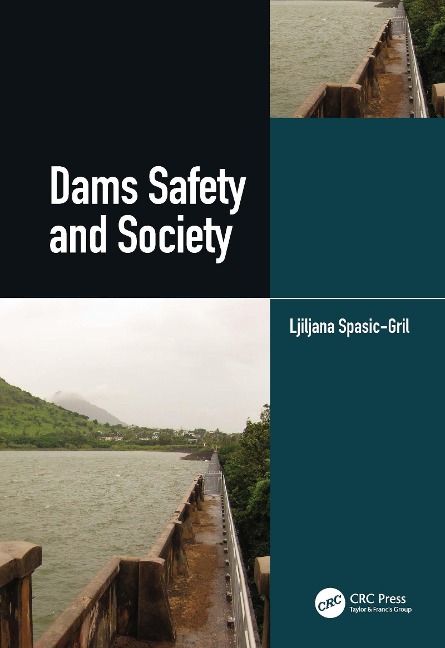
This book addresses current international practices applied for dam safety assessments by looking at a portfolio of dam safety projects in various developing countries (Armenia, Georgia, Tajikistan, Mauritius, Madagascar, Sri Lanka, Myanmar and Vietnam) spread across three continents (Europe, Africa and Asia). Safety assessment involved the review of 134 existing dams and comparison with the best international practices. A large part of dam safety assessment involves understanding of dam hazards, standards applied in the design and maintenance, as well as expectation and social circumstances under which the dams have been designed and constructed in a particular country. For example, standards for design floods, ground investigation, selection of design soil parameters and design earthquakes etc. used are often either non-existent or inadequate, which could lead to an unsafe design. If there are no standards to be applied in dam design and construction, consultants are often under pressure from clients to come up with minimalistic investigation and designs, which, after a few years after dam construction, show signs of deficiencies. Very often countries have no regulations and standards for requirements that should cover the maintenance and operation of dams. The book also describes the Portfolio Risk Assessment of Dams, which can be used as a tool by clients and the funding agencies to identify priority assessment and rehabilitation projects that consider societal and economic losses. It also demonstrates how the implementation of Emergency Preparedness Planning could significantly reduce the number of people at risk. This book aims to help clients, consultants and funding agencies which are engaged in dam safety assessment projects in developing countries to focus on issues that are based on past lessons learnt.
Ljiljana Spasic-Gril has 40 years experience in the feasibility, design, dam safety assessment, construction and commissioning of dams and reservoirs in Europe, Africa, the Middle East, Central, South and East Asia, Australasia, North and South America. She has worked on around 400 dam projects in over 56 countries. Ljiljana has extensive experience on dam safety projects worldwide and has been involved in dam safety projects in the UK (8 dams), Sri Lanka (30 dams), Russia (one dam), Armenia (65 dams), Georgia (6 dams), Ethiopia, Vietnam (450 dams) and Central Asia (over 30 dams). The dam safety project in Central Asia included safety assessment of the Nurek dam, a 300 m high embankment dam, currently the second tallest dam in the world, and the Rogun Dam in Tajikistan when constructed to be the world's tallest dam (335 m tall). Ljiljana has wide experience in managing the activities of multi-disciplinary teams comprising expats and local engineers; she has been involved in developing major schemes from inception through to implementation funded by the World Bank, Asian Development Bank, Islamic Development Bank, African Development Bank, EBRD, EIB, KfW, DfID and other international and UK funding agencies. Ljiljana has also been appointed as a Dam Expert to UNESCO World Heritage. She is author of 18 papers (6 presented at ICOLD conferences), a Chapter on Dams in the book "Engineering Geology and Geomorphology of Glaciated and Periglaciated Terrains" published by the Geological Society, Engineering Geology Special Publication 28. She is the UK representative to the Seismic Technical Committee of International Committee for Large Dams (ICOLD) and Permanent Visiting Professor at South Bank University, London (Dam Engineering).
1. Introduction 2. Main aspects in Dam Safety Assessment and Principles and Concepts Applied 3. Case Studies: Eurasia/Western Asia - Armenia 4. Case Studies: Eurasia/Western Asia - Georgia 5. Case Study: Central Asia - Tajikistan 6. Case Study: South Asia - Sri Lanka 7. Case Studies: South East Asia - Myanmar 8. Case Studies: SouthEast Asia - Vietnam 9. Case Studies: East Africa - Mauritius 10. Case Studies: East Africa - Madagascar 11. Lessons Learnt And Recommendations 12. References
Dieses eBook wird im PDF-Format geliefert und ist mit einem Adobe Kopierschutz (DRM) versehen. Sie können dieses eBook mit allen Geräten lesen, die das PDF-Format und den Adobe Kopierschutz (DRM) unterstützen.
Zum Beispiel mit den folgenden Geräten:
• tolino Reader
Laden Sie das eBook direkt über den Reader-Shop auf dem tolino herunter oder übertragen Sie das eBook auf Ihren tolino mit einer kostenlosen Software wie beispielsweise Adobe Digital Editions.
• Sony Reader & andere eBook Reader
Laden Sie das eBook direkt über den Reader-Shop herunter oder übertragen Sie das eBook mit der kostenlosen Software Sony READER FOR PC/Mac oder Adobe Digital Editions auf ein Standard-Lesegeräte mit epub- und Adobe DRM-Unterstützung.
• Tablets & Smartphones
Möchten Sie dieses eBook auf Ihrem Smartphone oder Tablet lesen, finden Sie hier unsere kostenlose Lese-App für iPhone/iPad und Android Smartphone/Tablets.
• PC & Mac
Lesen Sie das eBook direkt nach dem Herunterladen mit einer kostenlosen Lesesoftware, beispielsweise Adobe Digital Editions, Sony READER FOR PC/Mac oder direkt über Ihre eBook-Bibliothek in Ihrem Konto unter „Meine eBooks“ - „online lesen“.
Schalten Sie das eBook mit Ihrer persönlichen Adobe ID auf bis zu sechs Geräten gleichzeitig frei.
Bitte beachten Sie, dass die Kindle-Geräte das Format nicht unterstützen und dieses eBook somit nicht auf Kindle-Geräten lesbar ist.