Und dann auf "Zum Home-Bildschirm [+]".

Stöbern
genialokal zum Startbildschirm hinzufügen
Installieren Sie die genialokal App auf Ihrem Startbildschirm für einen schnellen Zugriff und eine komfortable Nutzung.
Installieren Sie die genialokal App auf Ihrem Startbildschirm für einen schnellen Zugriff und eine komfortable Nutzung.
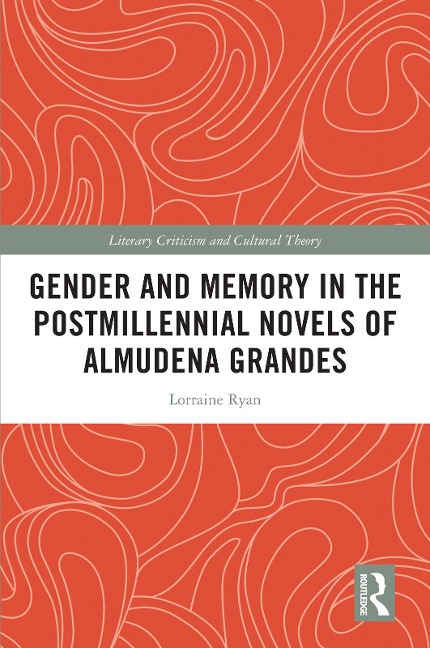
Almudena Grandes is one of Spain-s foremost women-s writers, having sold over 1.1 million copies of her episodios de una guerra interminable, her six-volume series that ranges from the Spanish Civil War to the democratic period; the myriad prizes awarded to her, 18 in total, confirm her pre-eminence. This book situates Grandes-s novels within gendered, philosophical, and mnemonic theoretical concepts that illuminate hidden dimensions of her much-studied work. Lorraine Ryan considers and expands on existing critical work on Grandes-s oeuvre, proposing new avenues of interpretation and understanding. She seeks to debunk the arguments of those who portray Grandes as the proponent of a sectarian, eminently biased Republican memory by analysing the wide variety of gender and perpetrator memories that proliferate in her work. The intersection of perpetrator memory with masculinity, ecocriticism, medical ethics and the child's perspectives confirms Grandes' nuanced engagement with Spanish memory culture. Departing from a philosophical basis, Ryan reconfigures the Republican victim in the novels as a vulnerable subject who attempts to flourish, thus refuting the current critical opinion of the victim as overly-empowered. The new perspectives produced in this monograph do not aim to suggest that Grandes is an advocate of perpetrator memory; rather, it suggests that Grandes is committed to a more pluralistic idea of memory culture, whereby her novels generate understanding of multiple victim, perpetrator and gender memories, an analysis that produces new and meaningful engagements with these novels. Thus, Ryan contends that Grandes-s historical novels are infinitely more complex and nuanced than heretofore conceived.
Lorraine Ryan is Lecturer in Hispanic Studies at the University of Birmingham, UK.
Introduction Motherhood, Clothing and Class in Los aires difíciles. Memory, Masculinity and the Changing Spanish Family in El corazón helado. The Feminised Quest Romance in Inés y la alegría. Perpetration-Induced Traumatic Stress and the Gendered Reading Trope in El lector de Julio Verne. Internal Exile and Resistance in Las tres bodas de Manolita. Perpetration and the Stigma of Illness in Los pacientes del Dr. García. Conclusion
Dieses eBook wird im PDF-Format geliefert und ist mit einem Adobe Kopierschutz (DRM) versehen. Sie können dieses eBook mit allen Geräten lesen, die das PDF-Format und den Adobe Kopierschutz (DRM) unterstützen.
Zum Beispiel mit den folgenden Geräten:
• tolino Reader
Laden Sie das eBook direkt über den Reader-Shop auf dem tolino herunter oder übertragen Sie das eBook auf Ihren tolino mit einer kostenlosen Software wie beispielsweise Adobe Digital Editions.
• Sony Reader & andere eBook Reader
Laden Sie das eBook direkt über den Reader-Shop herunter oder übertragen Sie das eBook mit der kostenlosen Software Sony READER FOR PC/Mac oder Adobe Digital Editions auf ein Standard-Lesegeräte mit epub- und Adobe DRM-Unterstützung.
• Tablets & Smartphones
Möchten Sie dieses eBook auf Ihrem Smartphone oder Tablet lesen, finden Sie hier unsere kostenlose Lese-App für iPhone/iPad und Android Smartphone/Tablets.
• PC & Mac
Lesen Sie das eBook direkt nach dem Herunterladen mit einer kostenlosen Lesesoftware, beispielsweise Adobe Digital Editions, Sony READER FOR PC/Mac oder direkt über Ihre eBook-Bibliothek in Ihrem Konto unter „Meine eBooks“ - „online lesen“.
Schalten Sie das eBook mit Ihrer persönlichen Adobe ID auf bis zu sechs Geräten gleichzeitig frei.
Bitte beachten Sie, dass die Kindle-Geräte das Format nicht unterstützen und dieses eBook somit nicht auf Kindle-Geräten lesbar ist.