
Stöbern
genialokal zum Startbildschirm hinzufügen
Installieren Sie die genialokal App auf Ihrem Startbildschirm für einen schnellen Zugriff und eine komfortable Nutzung.
Installieren Sie die genialokal App auf Ihrem Startbildschirm für einen schnellen Zugriff und eine komfortable Nutzung.
Tippen Sie einfach auf Teilen:
 Und dann auf "Zum Home-Bildschirm [+]".
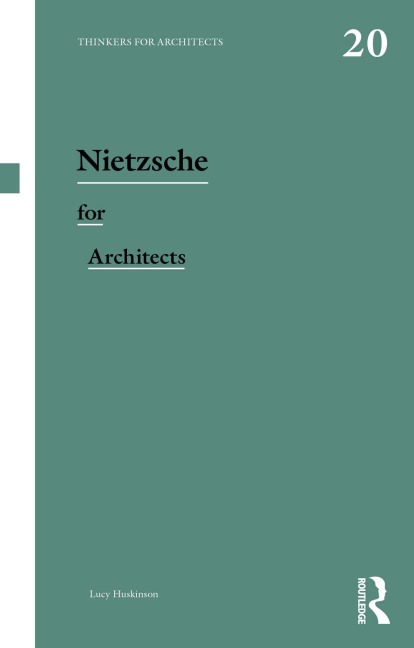
Nietzsche's philosophy is provocative and complex and has been hugely influential on modern intellectual history and European culture. But his critical approach and writing style invites misunderstandings, sometimes with disastrous consequences. His ideas-or those loosely associated with him-are often briefly cited in scholarly studies in architectural theory and history. His ideas are thought to have influenced the theories and designs of such iconic architects as Le Corbusier, Henry van de Velde, Bruno Taut, Louis H. Sullivan, Lebbeus Woods, and Peter Eisenman, as well as competing approaches to architecture and design, such as those adopted by the Bauhaus School and the Nazis. In the bewildering array of architectural positions that lay claim to Nietzsche as an influence, how can we begin to make sense of Nietzsche's own approach to architecture? And how can we identify within his complex philosophy the key ideas and themes we require to make sense of his contribution to architecture? This first introduction to Nietzsche's philosophy written specifically for architects locates his evaluation of appropriate and inappropriate architecture in the body of his writings and presents a clear overview of Nietzsche's insights into architectural design alongside his advice for architects and designers.
Lucy Huskinson is Professor of Philosophy at Bangor University, UK. Her interests lie in the intersections of philosophy, psychology, and architecture, and in the idea that buildings shape us as much as we shape them. She is author of several books in these fields, including Architecture and the Mimetic Self: A Psychoanalytic Study of How Buildings Make and Break Our Lives (2018) and Nietzsche and Architecture: The Grand Style for Modern Living (2024). Her books have been translated into Turkish, Serbian, and Portuguese.
1. Introduction 2. Placing Nietzsche's Life and Ideas Through Buildings and Places 3. Decadent Modern Architecture. "Amassed rather than assembled" 4. The Will to Power as a Will to Build 5. Nietzsche's Architects Conclusion: Nietzschean lessons for Architects
Dieses eBook wird im PDF-Format geliefert und ist mit einem Adobe Kopierschutz (DRM) versehen. Sie können dieses eBook mit allen Geräten lesen, die das PDF-Format und den Adobe Kopierschutz (DRM) unterstützen.
Zum Beispiel mit den folgenden Geräten:
• tolino Reader
Laden Sie das eBook direkt über den Reader-Shop auf dem tolino herunter oder übertragen Sie das eBook auf Ihren tolino mit einer kostenlosen Software wie beispielsweise Adobe Digital Editions.
• Sony Reader & andere eBook Reader
Laden Sie das eBook direkt über den Reader-Shop herunter oder übertragen Sie das eBook mit der kostenlosen Software Sony READER FOR PC/Mac oder Adobe Digital Editions auf ein Standard-Lesegeräte mit epub- und Adobe DRM-Unterstützung.
• Tablets & Smartphones
Möchten Sie dieses eBook auf Ihrem Smartphone oder Tablet lesen, finden Sie hier unsere kostenlose Lese-App für iPhone/iPad und Android Smartphone/Tablets.
• PC & Mac
Lesen Sie das eBook direkt nach dem Herunterladen mit einer kostenlosen Lesesoftware, beispielsweise Adobe Digital Editions, Sony READER FOR PC/Mac oder direkt über Ihre eBook-Bibliothek in Ihrem Konto unter „Meine eBooks“ - „online lesen“.
Schalten Sie das eBook mit Ihrer persönlichen Adobe ID auf bis zu sechs Geräten gleichzeitig frei.
Bitte beachten Sie, dass die Kindle-Geräte das Format nicht unterstützen und dieses eBook somit nicht auf Kindle-Geräten lesbar ist.