
Stöbern
genialokal zum Startbildschirm hinzufügen
Installieren Sie die genialokal App auf Ihrem Startbildschirm für einen schnellen Zugriff und eine komfortable Nutzung.
Installieren Sie die genialokal App auf Ihrem Startbildschirm für einen schnellen Zugriff und eine komfortable Nutzung.
Tippen Sie einfach auf Teilen:
 Und dann auf "Zum Home-Bildschirm [+]".
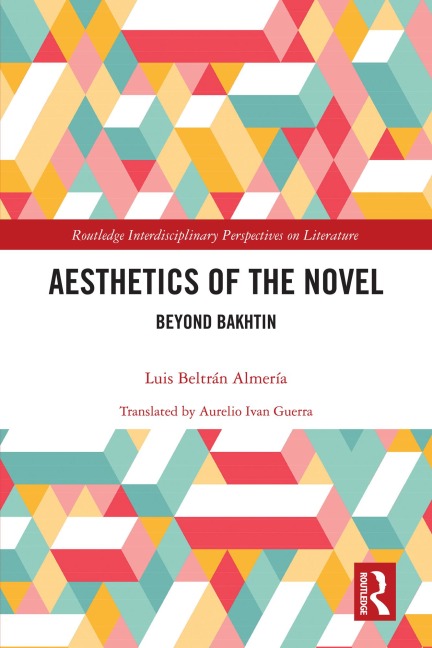
Aesthetics of the Novel: Beyond Bakhtin examines the history of the novel through the diverse aesthetic currents that this literary genre has adopted from antiquity to the present day. Drawing on Mikhail Bakhtin's aesthetic theory, this work provides a comprehensive overview of the Western novel while simultaneously acknowledging the Eastern novel's distinct identity and contributions. The novel is conceived here as a cultural bridge between popular and high culture - a genre whose roots lie in oral tradition and whose evolution reflects the broader complexities of the historical civilizing process. In both Western and Eastern cultures, the novel has served as a primary driving force behind literary and artistic innovation. The monograph offers a comprehensive history of the genre through the lens of Bakhtin's aesthetic theory, situating it as an aesthetic response to the complexity of the civilizing process and as a means of articulating the intricate relationships between popular and high culture. It includes close readings of dozens of canonical Western and Eastern novels, spanning from antiquity to the contemporary era.
Luis Beltrán Almería (Zaragoza, 1955), Professor at the University of Zaragoza (Spain), is the author of over a dozen books and more than 150 articles, some of which have been translated into English, French, Italian, German, and Russian. His most recent publications include GENVS, Genealogía de la imaginación literaria (2017), Estética de la novela (2021), and Estética de la Modernidad (2025). He is the Spanish-language editor of Mikhail Bakhtin's theory of the novel (2019) and György Lukács's theory of the novel (2020). He has led the GENUS Research Group, funded by the Government of Aragon (Spain).
Introduction; PART 1. THEORETICAL FRAMEWORK; I. The Novelistic Imagination; II. The Proto-Novel; PART 2. THE COURTLY NOVEL; III. The Adventure Novel; IV. The Sentimental Novel; V. The Biographical Novel and the Didactic Novel; PART 3. THE POPULAR NOVEL; VI. The Humorous Novel; VII. The Idyllic Novel; PART 4. THE MODERN NOVEL; VIII. Symbolism and Modernity; IX. Symbolism of the Past; X. The Novel of the Recent Past and the Present; XI. The Symbolism of the Future; XII. The Modern Popular Novel; Epilogue; Theses on the Novel