
Stöbern
genialokal zum Startbildschirm hinzufügen
Installieren Sie die genialokal App auf Ihrem Startbildschirm für einen schnellen Zugriff und eine komfortable Nutzung.
Installieren Sie die genialokal App auf Ihrem Startbildschirm für einen schnellen Zugriff und eine komfortable Nutzung.
Tippen Sie einfach auf Teilen:
 Und dann auf "Zum Home-Bildschirm [+]".
Ihr gewünschter Artikel ist in 0 Buchhandlungen vorrätig - wählen Sie hier eine Buchhandlung in Ihrer Nähe aus:

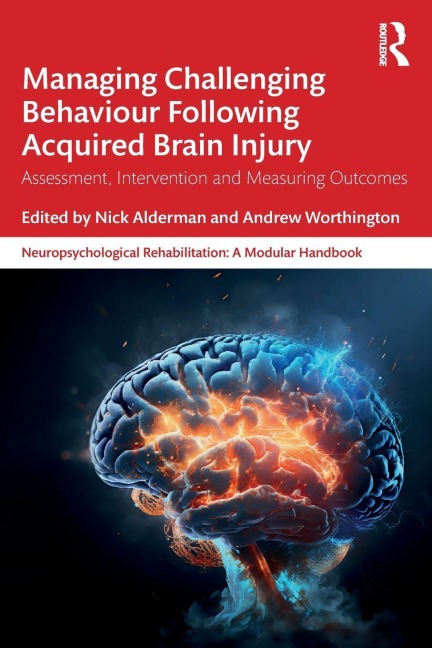
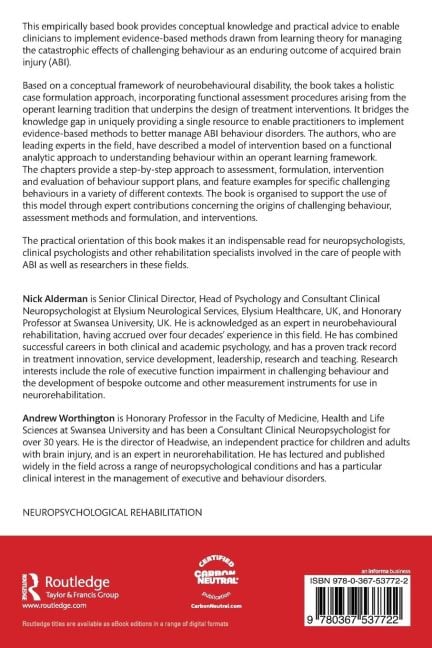
This empirically-based book provides conceptual knowledge and practical advice to enable clinicians to implement evidence-based methods drawn from learning theory for managing the catastrophic effects of challenging behaviour as an enduring outcome of acquired brain injury (ABI).
Nick Alderman is Senior Clinical Director, Head of Psychology and Consultant Clinical Neuropsychologist at Elysium Neurological Services, Elysium Healthcare, UK, and Honorary Professor at Swansea University, UK. He is acknowledged as an expert in neurobehavioural rehabilitation, having accrued over four decades' experience in this field. He has combined successful careers in both clinical and academic psychology, and has a proven track record in treatment innovation, service development, leadership, research and teaching. Research interests include the role of executive function impairment in challenging behaviour and the development of bespoke outcome and other measurement instruments for use in neurorehabilitation. Andrew Worthington is Honorary Professor in the Faculty of Medicine, Health and Life Sciences at Swansea University and has been a Consultant Clinical Neuropsychologist for over 30 years. He is the director of Headwise, an independent practice for children and adults with brain injury, and is an expert in neurorehabilitation. He has lectured and published widely in the field across a range of neuropsychological conditions and has a particular clinical interest in the management of executive and behaviour disorders.
Section 1: Origins of challenging behaviour. 1. Outcomes from acquired brain injury: prevalence and impact of challenging behaviour. 2. The Intervention Model: frameworks, principles, and practice. 3. A legal framework for the management of challenging behaviour. Section 2: Assessment and formulation: general principles and methods. 4. Assessment of behavioural risk in acquired brain injury. 5. Determining the cause: recording behaviour using direct observation methods. Section 3: Intervention. 6. Neurobehavioural rehabilitation and application of new learning methods. 7. Behaviour support in the context of neurobehavioural rehabilitation. 8. Management of aggression after acquired brain injury. 9. What can behavioural interventions contribute to rehabilitation for inappropriate sexual behaviour post acquired brain injury? 10. Managing behaviours that challenge in acute care settings. 11. The clinical realities of delivering neurobehavioural rehabilitation in the community. 12. Managing behaviour in Functional Neurological Disorders.