Und dann auf "Zum Home-Bildschirm [+]".

Stöbern
genialokal zum Startbildschirm hinzufügen
Installieren Sie die genialokal App auf Ihrem Startbildschirm für einen schnellen Zugriff und eine komfortable Nutzung.
Installieren Sie die genialokal App auf Ihrem Startbildschirm für einen schnellen Zugriff und eine komfortable Nutzung.
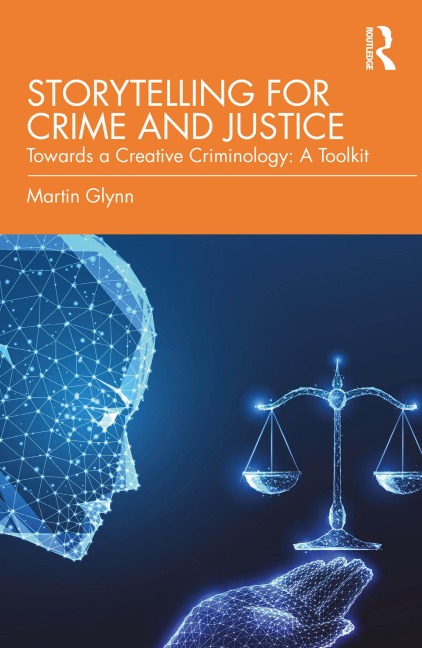
Whether it is doing a TEDx, presenting a podcast, sharing on social media, presenting at a conference, or pitching to a potential funder, engaging with storytelling and performance is now a prerequisite of an academics 'modus operandi.' Exploring the relationship between and the key concepts associated with storytelling and performance, crime, and criminology, this book offers practical tips and insights into creative methods for presenting research, disseminating criminological knowledge, giving lectures, and developing pedagogy. The book presents a reflexive account of the author's experiences of using creativity with incarcerated men and women. Drawing on a range of topics including ethical storytelling, presentation literacy, poetic inquiry, staging ethno-drama, crime fiction, and auto-ethnography, it makes a clear and compelling case for a creative criminology and a performative social science. Written by a seasoned criminologist, theatre director, storyteller, and dramatist, this is essential reading for all those interested in using creative methods of knowledge as a tool to explore the complex landscape of crime and justice.
Martin Glynn is an experienced and internationally renowned criminologist with over 40 years' experience of working in criminal justice, public health, and educational settings. As a writer, Martin has written for BBC 1's Casualty, had radio dramas produced for BBC Radio 4, written, and directed theatre productions, published poetry books, alongside being an author of children's books. He gained his PhD at Birmingham City University in 2013, where he is currently a senior lecturer in criminology as well as a member of EQUITY Actors' union, the Writers' Guild of Great Britain, and the Crime Writers' Association.
Introduction: let the journey begin 1 Making stories 2 Ethical storytelling as counter-narratives 3 Finding (historical) stories of crime and justice 4 Storytelling literacy, crime, and justice 5 Performative storytelling, crime and justice 6 Poetic inquiry, crime, and justice 7 Staging criminology: ethnodrama and ethnotheatre 8 Aesop's Fables, crime, and justice 9 Audio and visual storytelling, crime, and justice 10 Reflexive practice: performance auto-ethnography 11 Using crime fiction for teachable moments Epilogue: towards a creative criminology
Dieses eBook wird im PDF-Format geliefert und ist mit einem Adobe Kopierschutz (DRM) versehen. Sie können dieses eBook mit allen Geräten lesen, die das PDF-Format und den Adobe Kopierschutz (DRM) unterstützen.
Zum Beispiel mit den folgenden Geräten:
• tolino Reader
Laden Sie das eBook direkt über den Reader-Shop auf dem tolino herunter oder übertragen Sie das eBook auf Ihren tolino mit einer kostenlosen Software wie beispielsweise Adobe Digital Editions.
• Sony Reader & andere eBook Reader
Laden Sie das eBook direkt über den Reader-Shop herunter oder übertragen Sie das eBook mit der kostenlosen Software Sony READER FOR PC/Mac oder Adobe Digital Editions auf ein Standard-Lesegeräte mit epub- und Adobe DRM-Unterstützung.
• Tablets & Smartphones
Möchten Sie dieses eBook auf Ihrem Smartphone oder Tablet lesen, finden Sie hier unsere kostenlose Lese-App für iPhone/iPad und Android Smartphone/Tablets.
• PC & Mac
Lesen Sie das eBook direkt nach dem Herunterladen mit einer kostenlosen Lesesoftware, beispielsweise Adobe Digital Editions, Sony READER FOR PC/Mac oder direkt über Ihre eBook-Bibliothek in Ihrem Konto unter „Meine eBooks“ - „online lesen“.
Schalten Sie das eBook mit Ihrer persönlichen Adobe ID auf bis zu sechs Geräten gleichzeitig frei.
Bitte beachten Sie, dass die Kindle-Geräte das Format nicht unterstützen und dieses eBook somit nicht auf Kindle-Geräten lesbar ist.