
Stöbern
genialokal zum Startbildschirm hinzufügen
Installieren Sie die genialokal App auf Ihrem Startbildschirm für einen schnellen Zugriff und eine komfortable Nutzung.
Installieren Sie die genialokal App auf Ihrem Startbildschirm für einen schnellen Zugriff und eine komfortable Nutzung.
Tippen Sie einfach auf Teilen:
 Und dann auf "Zum Home-Bildschirm [+]".
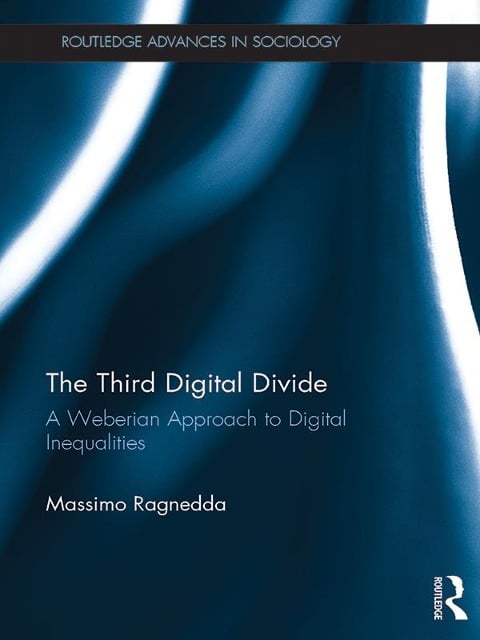
Drawing on the thought of Max Weber, in particular his theory of stratification, this book engages with the question of whether the digital divide simply extends traditional forms of inequality, or whether it also includes new forms of social exclusion, or perhaps manifests counter-trends that alleviate traditional inequalities whilst constituting new modalities of inequality. With attention to the manner in which social stratification in the digital age is reproduced and transformed online, the author develops an account of stratification as it exists in the digital sphere, advancing the position that, just as in the social sphere, inequalities in the online world go beyond the economic elements of inequality. As such, study of the digital divide should focus not simply on class dynamics or economic matters, but cultural aspects - such as status or prestige - and political aspects - such as group affiliations. Demonstrating the enduring relevance of Weber's distinctions with regard to social inequality, The Third Digital Divide: A Weberian approach to rethinking digital inequalities explores the ways in which online activities and digital skills vary according to crucial sociological dimensions, explaining these in concrete terms in relation to the dynamics of social class, social status and power. As such, it will be of interest to social scientists with interests in sociological theory, the sociology of science and technology, and inequality and the digital divide.
Massimo Ragnedda (Ph.D), is a Senior Lecturer in Mass Communication at Northumbria University, Newcastle, where he conducts research on digital divide and social media. He has authored six books with some of publications appearing in peer-reviewed journals and book chapters in English, Spanish and Italian.
List of figures List of tables Introduction Chapter 1. The evolution of the digital divide Chapter 2. Why does Weber still matter? Chapter 3. Digital stratification: Class, status group and parties in the age of the Internet Chapter 4. Life chances and the third level of digital divide Chapter 5. Concluding remarks and recommendations Index
Dieses eBook wird im PDF-Format geliefert und ist mit einem Adobe Kopierschutz (DRM) versehen. Sie können dieses eBook mit allen Geräten lesen, die das PDF-Format und den Adobe Kopierschutz (DRM) unterstützen.
Zum Beispiel mit den folgenden Geräten:
• tolino Reader
Laden Sie das eBook direkt über den Reader-Shop auf dem tolino herunter oder übertragen Sie das eBook auf Ihren tolino mit einer kostenlosen Software wie beispielsweise Adobe Digital Editions.
• Sony Reader & andere eBook Reader
Laden Sie das eBook direkt über den Reader-Shop herunter oder übertragen Sie das eBook mit der kostenlosen Software Sony READER FOR PC/Mac oder Adobe Digital Editions auf ein Standard-Lesegeräte mit epub- und Adobe DRM-Unterstützung.
• Tablets & Smartphones
Möchten Sie dieses eBook auf Ihrem Smartphone oder Tablet lesen, finden Sie hier unsere kostenlose Lese-App für iPhone/iPad und Android Smartphone/Tablets.
• PC & Mac
Lesen Sie das eBook direkt nach dem Herunterladen mit einer kostenlosen Lesesoftware, beispielsweise Adobe Digital Editions, Sony READER FOR PC/Mac oder direkt über Ihre eBook-Bibliothek in Ihrem Konto unter „Meine eBooks“ - „online lesen“.
Schalten Sie das eBook mit Ihrer persönlichen Adobe ID auf bis zu sechs Geräten gleichzeitig frei.
Bitte beachten Sie, dass die Kindle-Geräte das Format nicht unterstützen und dieses eBook somit nicht auf Kindle-Geräten lesbar ist.