Und dann auf "Zum Home-Bildschirm [+]".

Stöbern
genialokal zum Startbildschirm hinzufügen
Installieren Sie die genialokal App auf Ihrem Startbildschirm für einen schnellen Zugriff und eine komfortable Nutzung.
Installieren Sie die genialokal App auf Ihrem Startbildschirm für einen schnellen Zugriff und eine komfortable Nutzung.
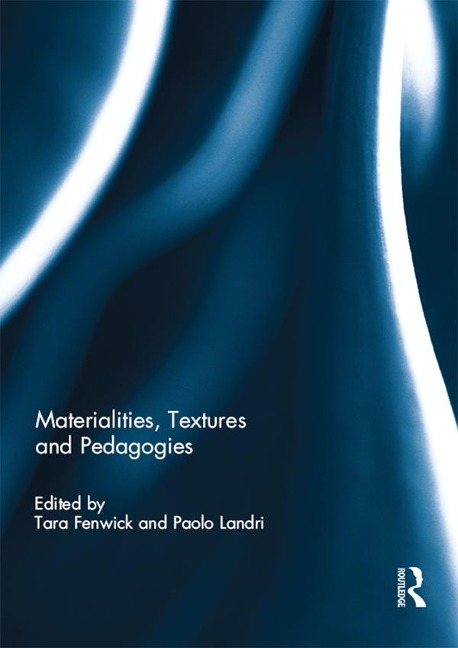
This book joins a developing tradition of 'practice-based' conceptions of learning, but with a special interest in foregrounding the materiality of educational processes. It challenges educational views that are preoccupied with developing a particular kind of human subject, and argues that relations among materials - including texts and technologies, embodiment, tools and natural forces - are key to understanding how learning and knowing emerge in collective activity. To critically examine materiality, the chapter authors draw from orientations associated with actor-network theory, but push forward these conceptions to create an important in-between place of inquiry in sociomaterial/STS studies and education. Most express concerns about visions of education that emphasise output driven learning, performativity, standardisation and representationalist forms of knowledge. They use sociomaterial approaches to make visible the everyday, particular micro-dynamics of education and learning. Their analyses reveal that power relations and the politics that infuse pedagogy are by no means confined to human interests and ideologies, but are created and sustained through materialising processes that are enmeshed with the social and semiotic. Ultimately, these sociomaterial analyses open new directions and vocabularies for reconceptualising what is taken to be pedagogy, where and how pedagogical processes occur, and what effects they have on culture and society. This book was originally published as a special issue of Pedagogy, Culture & Society.
Tara Fenwick is a professor of education at the University of Stirling, UK, and director of ProPEL, an international network for research in professional practice, education and learning. Her most recent book is Emerging approaches to educational research: tracing the sociomaterial, with R. Edwards and P Sawchuk (Routledge 2012). Paolo Landri is a senior researcher of the Institute of Research on Population and Social Policies of the National Research Council, Italy, and link convenor of the network 28 'Sociologies of Education' of the European Educational Research Association. His most recent book is Rethinking Education Ethnography edited with S. Marques da Silva (2012).
1. Introduction: Materialities, textures and pedagogies: socio-material assemblages in education Tara Fenwick and Paolo Landri 2. Affective assemblages: body matters in the pedagogic practices of contemporary school classrooms Dianne Mulcahy 3. Professional standards for teachers: how do they 'work'? An experiment in tracing standardisation in-the-making in teacher education Carlijne Ceulemans, Maarten Simons and Elke Struyf 4. From witnessing to recording - material objects and the epistemic configuration of science classes Tobias Roehl 5. The pedagogy of complex work support systems: infrastructuring practices and the production of critical awareness in risk auditing Arve Mathisen and Monika Nerland 6. I'm deleting as fast as I can: negotiating learning practices in cyberspace Terrie Lynn Thompson 7. Material enactments of identities and learning in everyday community practices: implications for pedagogy Helen Aberton 8. Education as sociomaterial critique Dirk Postma
Dieses eBook wird im PDF-Format geliefert und ist mit einem Adobe Kopierschutz (DRM) versehen. Sie können dieses eBook mit allen Geräten lesen, die das PDF-Format und den Adobe Kopierschutz (DRM) unterstützen.
Zum Beispiel mit den folgenden Geräten:
• tolino Reader
Laden Sie das eBook direkt über den Reader-Shop auf dem tolino herunter oder übertragen Sie das eBook auf Ihren tolino mit einer kostenlosen Software wie beispielsweise Adobe Digital Editions.
• Sony Reader & andere eBook Reader
Laden Sie das eBook direkt über den Reader-Shop herunter oder übertragen Sie das eBook mit der kostenlosen Software Sony READER FOR PC/Mac oder Adobe Digital Editions auf ein Standard-Lesegeräte mit epub- und Adobe DRM-Unterstützung.
• Tablets & Smartphones
Möchten Sie dieses eBook auf Ihrem Smartphone oder Tablet lesen, finden Sie hier unsere kostenlose Lese-App für iPhone/iPad und Android Smartphone/Tablets.
• PC & Mac
Lesen Sie das eBook direkt nach dem Herunterladen mit einer kostenlosen Lesesoftware, beispielsweise Adobe Digital Editions, Sony READER FOR PC/Mac oder direkt über Ihre eBook-Bibliothek in Ihrem Konto unter „Meine eBooks“ - „online lesen“.
Schalten Sie das eBook mit Ihrer persönlichen Adobe ID auf bis zu sechs Geräten gleichzeitig frei.
Bitte beachten Sie, dass die Kindle-Geräte das Format nicht unterstützen und dieses eBook somit nicht auf Kindle-Geräten lesbar ist.