Und dann auf "Zum Home-Bildschirm [+]".

Stöbern
genialokal zum Startbildschirm hinzufügen
Installieren Sie die genialokal App auf Ihrem Startbildschirm für einen schnellen Zugriff und eine komfortable Nutzung.
Installieren Sie die genialokal App auf Ihrem Startbildschirm für einen schnellen Zugriff und eine komfortable Nutzung.
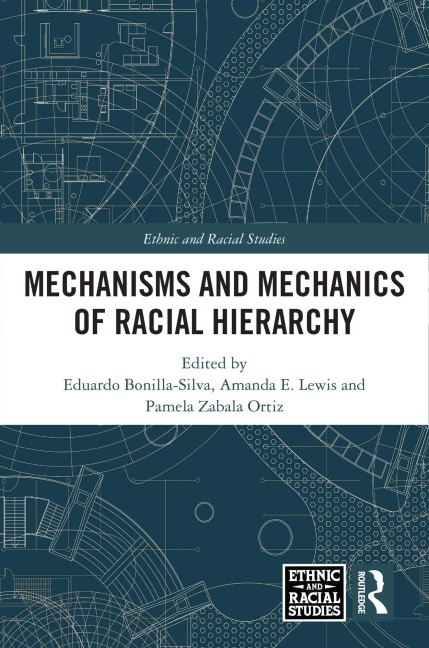
Recent efforts to advance conceptualisations of racial hierarchies have led to the emergence of new debates about the 'why' and 'how' of racism and racial domination. The chapters in this book address these questions by identifying both the mechanisms that produce racial hierarchies and the actors that keep these hierarchies operational, thereby anchoring the domination in its material manifestations, rather than subscribing to traditional theorisations. Featuring contributions from leading scholars and emerging voices in critical race scholarship, this volume offers innovative theoretical frameworks for understanding structural racism. This book examines critical subject areas including family structure as the cause of inequality, the maintenance of intra-group ethnoracial hierarchies as a barrier to group solidarity, geography and histories of racial violence, and whiteness in organisations. Drawing on empirical research from the United States and Australia, the collection provides concrete examples of how racial domination operates across different contexts and scales. This book is essential reading for scholars, students, researchers, and practitioners of race and racism studies, colonialism studies, critical race studies, family studies, organisational studies, political science, and anthropology. It offers new ways to name and theorise racial structure whilst providing actionable insights for those working towards racial justice. The essays in this volume were first published in the journal Ethnic and Racial Studies.
Eduardo Bonilla-Silva is James B. Duke Distinguished Professor of Sociology at Duke University. His classical book, Racism Without Racists: Color-Blind Racism and the Persistence of Racial Inequality in the United States (6th edition), has influenced scholars in education, religious studies, political science, rhetoric, psychology, political science, legal studies, and sociology. Amanda E. Lewis is the Director of the Institute for Research on Race and Public Policy and Distinguished Professor of Black Studies and Sociology at the University of Illinois at Chicago, USA. She researches how race shapes educational opportunities and how our ideas about race get negotiated in everyday life. Pamela Zabala Ortiz is Assistant Professor of Sociology at Boston University, USA. Her research focuses on race making; identity and belonging; and transnational constructions of race, specifically Blackness and latinidad. Her work can be found in Sociology of Race and Ethnicity, Ethnic and Racial Studies, and Identities.
Introduction: Mechanisms and mechanics of racial hierarchy: focusing on the "How" of racism 1. Rethinking racism again: theorizing the racial structure "for real" 2. Mechanisms, smoke and fun-house mirrors: when naming racism is not enough 3. The power of affective capital: rethinking emotions in racial domination 4. Whiteness and organizations: institutions, legitimacy, and hegemony 5. Through the looking glass: reexamining family structure's contribution to racial inequality in life chances 6. Australian racial capitalism, Indigenous exploitation and the racial regime of recognition and reconciliation 7. Sociohistorical contexts of racial violence: sundown towns and the durability of racialized public space 8. Black like this, not like that: how Afro-Latines navigate Black and Latine ethnoracial hierarchies in the U.S.