
Stöbern
genialokal zum Startbildschirm hinzufügen
Installieren Sie die genialokal App auf Ihrem Startbildschirm für einen schnellen Zugriff und eine komfortable Nutzung.
Installieren Sie die genialokal App auf Ihrem Startbildschirm für einen schnellen Zugriff und eine komfortable Nutzung.
Tippen Sie einfach auf Teilen:
 Und dann auf "Zum Home-Bildschirm [+]".
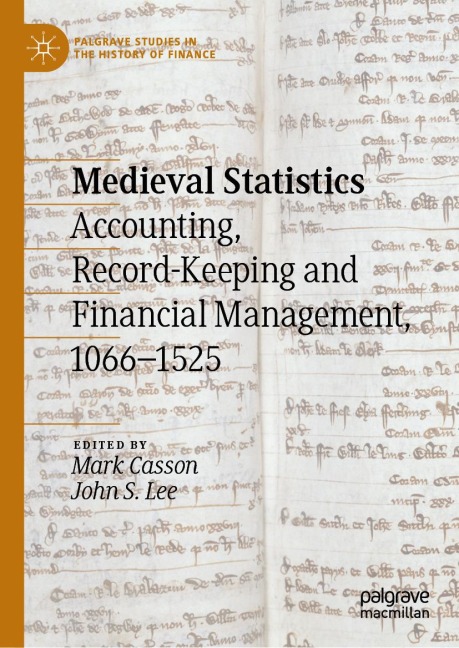
Medieval statistics provide a unique window on the past. This book is the first to systematically examine the sources of medieval statistics. It will be useful as a handbook for researchers in financial and cultural history, as a history of financial record-keeping, and as a review of recent research into medieval finance and accounting based on statistical sources. Medieval documents produced by royal governments, monastic and ecclesiastical institutions, urban boroughs and legal cases for debt recovery provide a mine of useful information on economic life and financial affairs. They show that medieval administration was far more numerate, and far more sophisticated than is usually recognized. This book provides a comprehensive review of the key sources, written by leading experts in the field. The strengths and weaknesses of each source are reviewed, using original documents for illustration, and discussing examples from the recent literature. England is used as a case study because of the range of surviving data and the level of detail that it can provide. This edited volume will be a valuable tool for those working in financial, cultural, and political history, as it seeks to analyse the various ways in which medieval life was documented numerically and highlight the ways in which these statistics are being used by historians to transform our understanding of the medieval past. Mark Casson is Professor of Economics at the University of Reading and Director of the Centre for Institutions and Economic History at Reading. He has long-standing research interests in entrepreneurship, business culture, the economics of the multinational enterprise, business history, the economic history of towns, and transport studies. John S. Lee is a Research Associate at the Centre for Medieval Studies, University of York. His research interests are in the economy and society of medieval England, and local and regional history. Contributors: Nicholas R. Amor, Martin Allen, Stephen Broadberry, Catherine Casson, Jordan Claridge, Alisdair Dobie, Robert C. Nash, Stephen H. Rigby, Greg Salter, James T. Walker.
Mark Casson is Professor of Economics at the University of Reading and Director of the Centre for Institutions and Economic History at Reading. He has long-standing research interests in entrepreneurship, business culture, the economics of the multinational enterprise, business history, the economic history of towns, and transport studies. He was President of the Association of Business Historians and member of the Council of the Royal and Economic Society. He is a Fellow of the British Academy, consulting editor of the Journal of World Business and the International Business Review, Chair of Trustees of the Business Enterprise Heritage Trust and a member of the History Committee of the Royal Statistical Society (RSS). John S. Lee is a researcher at the Centre for Medieval Studies, University of York. His research interests are in the economy and society of medieval England, and local and regional history. His work has ranged from studies of merchants and fairs, and towns and their hinterlands, to religious commemorative practices and the estates of the Knights Templar.
1. Introduction: The Nature and Significance of Medieval Statistics.- 2. The Domesday Book(s): Income Before and After the Norman Conquest.- 3. Medieval Monastic Accounting Records: Potentials and Pitfalls for Statistical Analysis.- 4. Population Statistics.- 5. Agricultural Statistics.- 6. Overseas, Inland and Coastal Trade.- 7. Industry I: Cloth and Tin.- 8. Industry II: Mining, Fishing, Salt-Making, Building and Urban Manufacturing.- 9. Urban Rents and the Property Market.- 10. Money Supply.- 11. The Size of the Medieval Economy.