
Stöbern
genialokal zum Startbildschirm hinzufügen
Installieren Sie die genialokal App auf Ihrem Startbildschirm für einen schnellen Zugriff und eine komfortable Nutzung.
Installieren Sie die genialokal App auf Ihrem Startbildschirm für einen schnellen Zugriff und eine komfortable Nutzung.
Tippen Sie einfach auf Teilen:
 Und dann auf "Zum Home-Bildschirm [+]".

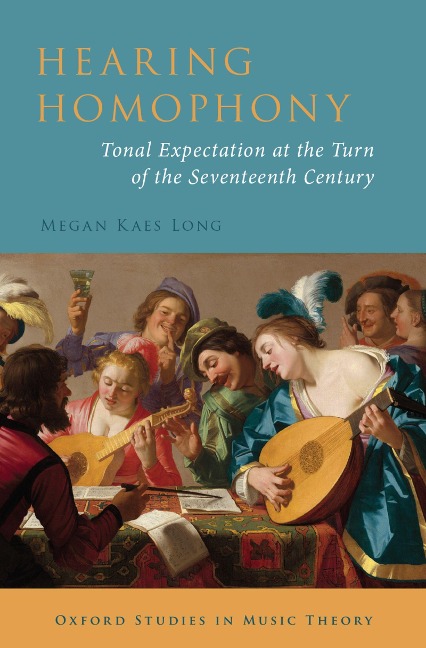
The question of tonality's origins in music's pitch content has long vexed many scholars of music theory. However, tonality is not ultimately defined by pitch alone, but rather by pitch's interaction with elements like rhythm, meter, phrase structure, and form. Hearing Homophony investigates the elusive early history of tonality by examining a constellation of late-Renaissance popular songs which flourished throughout Western Europe at the turn of the seventeenth century. Megan Kaes Long argues that it is in these songs, rather than in more ambitious secular and sacred works, that the foundations of eighteenth century style are found. Arguing that tonality emerges from features of modal counterpoint - in particular, the rhythmic, phrase structural, and formal processes that govern it - and drawing on the arguments of theorists such as Dahlhaus, Powers, and Barnett, she asserts that modality and tonality are different in kind and not mutually exclusive. Using several hundred homophonic partsongs from Italy, Germany, England, and France, Long addresses a historical question of critical importance to music theory, musicology, and music performance. Hearing Homophony presents not only a new model of tonality's origins, but also a more comprehensive understanding of what tonality is, providing novel insight into the challenging world of seventeenth-century music.
Megan Kaes Long is Assistant Professor of Music Theory at Oberlin College Conservatory of Music. Her work explores sixteenth- and seventeenth-century secular song traditions, the theories that describe them, and the ways in which they inform the histories of modality and tonality.
Acknowledgements About the Companion Website Chapter 1: How We Got into Harmonic Tonality, and How to Get Out Chapter 2: La questione della lingua: Transmission and Translation of Musical Style Chapter 3: The Work of the Words Chapter 4: Halves Requiring Completion Chapter 5: From Phrase Structure to Form: The Balletto Chapter 6: Tonal Orientation: New Tools for Navigating the Formal Landscape Chapter 7: Humanism and the Invention of Homophony Epilogue Bibliography Index