Und dann auf "Zum Home-Bildschirm [+]".

Stöbern
genialokal zum Startbildschirm hinzufügen
Installieren Sie die genialokal App auf Ihrem Startbildschirm für einen schnellen Zugriff und eine komfortable Nutzung.
Installieren Sie die genialokal App auf Ihrem Startbildschirm für einen schnellen Zugriff und eine komfortable Nutzung.
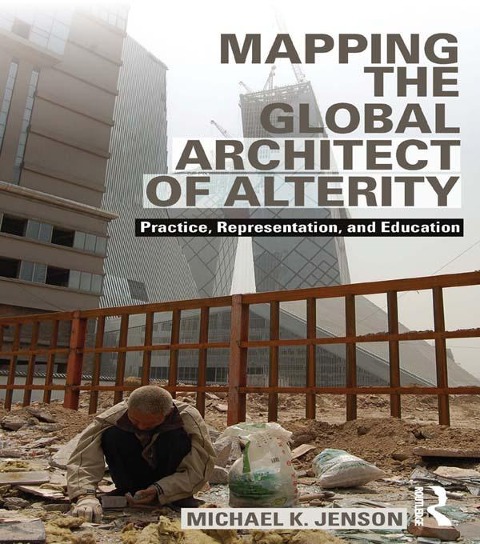
Due to globalization, cultural spaces are now developing with no tangible connection to geographical place. The territorial logic traditionally used to underpin architecture and envision our built environment is being radically altered, forcing the adoption of a new method of conceptualizing space/geography and what constitutes architectural practice. Construction techniques, design sensibilities, and cultural identities are being transformed as technology transports us to places that were previously unreachable. The resultant "globalized" architect must become more than just an artful visionary, but also a master of the art of the political nudge willing to act within multiple mediums and at the simultaneous scales of a chaotic new world disorder. Though fearless they must also be responsible, inherently understanding the necessity to align bold visions with the mundane details of the everyday in ways that are culturally flexible and accepting of change. The potential for what must be considered the legitimate practice of the architect must move from a purely material venue to one more directly engaged in the chaos of the larger economic, political, and social spheres of a globalizing world. The issues and possible interactions with globalization contained in this text exemplify ways that architecture is transforming into a more flexible and fluid interdisciplinary version of its traditional self in order to rise to challenges of this new international terrain. A theme runs throughout in the form of a call: that architects must conceptually re-construct their frames of reference to better align with the demands of a rapidly globalizing world.
Michael K. Jenson is an Associate Professor of Architecture and Current Associate Dean for Academic Affairs for the College of Architecture and Planning at the University of Colorado, Denver. He has practiced in Dallas, New York, Paris, and Denver and has worked on urban design/architecture projects in China, France, Germany, and the USA. His teaching and research explore interdisciplinary dialogues that cultivate innovation in architectural technology and urbanism.
Introduction: Mapping the Global Architect of Alterity Part 1: 21st Century Global Design Processes 1. Architecture Writ Large 2. Subverting the 'Straight and Narrow' 3. Towards s Globally Equitable Relationship Between Nature & Humanity Part 2: Global Design Perspectives: Identity, Materiality, & Cultural Diversity 4. New Urban Topologies 5. Wholesale Urbanism 6. Towards a Globalized "Junk" Architecture of Magnitude 7. The Global Nomad Part 3: Globalizing Architecture And Design Education 8. Towards a "Globalized" Studio Environment: Configuring Reflexive Spatial Agendas 9. Educating The 21st Century Global Architect. Conclusion: Complexity, Alterity, & the Contemporary
Dieses eBook wird im PDF-Format geliefert und ist mit einem Adobe Kopierschutz (DRM) versehen. Sie können dieses eBook mit allen Geräten lesen, die das PDF-Format und den Adobe Kopierschutz (DRM) unterstützen.
Zum Beispiel mit den folgenden Geräten:
• tolino Reader
Laden Sie das eBook direkt über den Reader-Shop auf dem tolino herunter oder übertragen Sie das eBook auf Ihren tolino mit einer kostenlosen Software wie beispielsweise Adobe Digital Editions.
• Sony Reader & andere eBook Reader
Laden Sie das eBook direkt über den Reader-Shop herunter oder übertragen Sie das eBook mit der kostenlosen Software Sony READER FOR PC/Mac oder Adobe Digital Editions auf ein Standard-Lesegeräte mit epub- und Adobe DRM-Unterstützung.
• Tablets & Smartphones
Möchten Sie dieses eBook auf Ihrem Smartphone oder Tablet lesen, finden Sie hier unsere kostenlose Lese-App für iPhone/iPad und Android Smartphone/Tablets.
• PC & Mac
Lesen Sie das eBook direkt nach dem Herunterladen mit einer kostenlosen Lesesoftware, beispielsweise Adobe Digital Editions, Sony READER FOR PC/Mac oder direkt über Ihre eBook-Bibliothek in Ihrem Konto unter „Meine eBooks“ - „online lesen“.
Schalten Sie das eBook mit Ihrer persönlichen Adobe ID auf bis zu sechs Geräten gleichzeitig frei.
Bitte beachten Sie, dass die Kindle-Geräte das Format nicht unterstützen und dieses eBook somit nicht auf Kindle-Geräten lesbar ist.