Und dann auf "Zum Home-Bildschirm [+]".

Stöbern
genialokal zum Startbildschirm hinzufügen
Installieren Sie die genialokal App auf Ihrem Startbildschirm für einen schnellen Zugriff und eine komfortable Nutzung.
Installieren Sie die genialokal App auf Ihrem Startbildschirm für einen schnellen Zugriff und eine komfortable Nutzung.
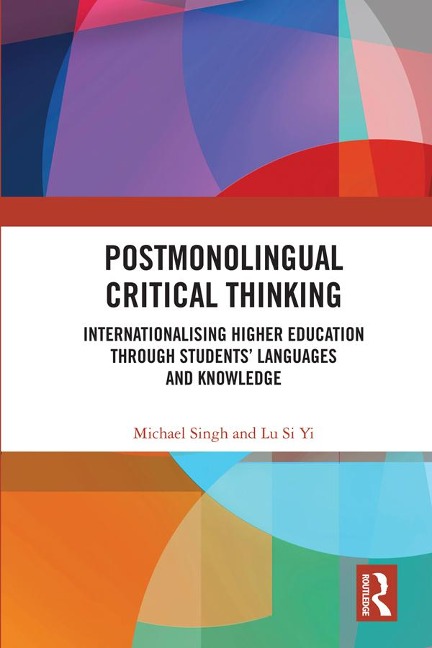
Maintaining English as the sole language of knowledge production and dissemination in universities that enrol students who speak multiple languages, and those students learning other languages, is questionable. This groundbreaking work calls into question the exclusive use of academic English in internationalising higher education teaching and research. By interrogating the dominant assumptions informing the monolingual mindset, Postmonolingual Critical Thinking indicates that academically literate students can capably use their repertoires of languages and knowledge for educational purposes. The case for students' languages and knowledge having a place in English-medium universities is made through evidence of the uses of Zhongwén, academic Chinese. Proposing to broaden the scope of languages used for knowledge production and dissemination, this book highlights the educational potential of multilingualism. Postmonolingual Critical Thinking makes a unique proposal: that universities which recruit doctoral students from Asia create education policy practices that enable them to extend their multilingual capabilities. Arguing that by drawing on intellectual resources from their various languages, students construct knowledge of critical thinking in complex, interesting and potentially innovative ways, this book guides higher education institutions in putting this into practice. It outlines a pragmatic approach for universities to explore the potential of multipolar, multilingual education, while being attentive to the tensions posed by assertions of a monolingual mindset. Postmonolingual Critical Thinking has the potential to create great change in a higher education sector which is mired by a monolingual approach to graduate training. This unique and thought-provoking book is essential reading for those in the fields of applied linguistics, comparative education, higher education, international studies, teacher education and translation studies.
Michael Singh is Professor at the Centre for Educational Research, Western Sydney University, Australia Lu Si Yi (---) is a Lecturer in Language Education at the School of Applied Foreign Languages, Zhejiang International Students University, People's Republic of China.
Chapter 1. Post Monolingual Critical Thinking: Multilingual/Monolingual Tensions. Chapter 2: Thinking Critically About Assumptions in the Literature. Chapter 3: Presuppositions about Postmonolingual Critical Thinking. Chapter 4: Pedagogically Engaging Students' Prior Critical Thinking. Chapter 5: Students' Rules for Postmonolingual Critical Thinking. Chapter 6: Reconstructing Postmonolingual Critical Thinking though Popular Culture. Chapter 7: Open-ended Postmonolingual Critical Thinking about the Business of Education. Chapter 8: Intercultural Self-Confidence through Postmonolingual Critical Thinking. Chapter 9: Lessons in Postmonolingual Critical Thinking.
Dieses eBook wird im PDF-Format geliefert und ist mit einem Adobe Kopierschutz (DRM) versehen. Sie können dieses eBook mit allen Geräten lesen, die das PDF-Format und den Adobe Kopierschutz (DRM) unterstützen.
Zum Beispiel mit den folgenden Geräten:
• tolino Reader
Laden Sie das eBook direkt über den Reader-Shop auf dem tolino herunter oder übertragen Sie das eBook auf Ihren tolino mit einer kostenlosen Software wie beispielsweise Adobe Digital Editions.
• Sony Reader & andere eBook Reader
Laden Sie das eBook direkt über den Reader-Shop herunter oder übertragen Sie das eBook mit der kostenlosen Software Sony READER FOR PC/Mac oder Adobe Digital Editions auf ein Standard-Lesegeräte mit epub- und Adobe DRM-Unterstützung.
• Tablets & Smartphones
Möchten Sie dieses eBook auf Ihrem Smartphone oder Tablet lesen, finden Sie hier unsere kostenlose Lese-App für iPhone/iPad und Android Smartphone/Tablets.
• PC & Mac
Lesen Sie das eBook direkt nach dem Herunterladen mit einer kostenlosen Lesesoftware, beispielsweise Adobe Digital Editions, Sony READER FOR PC/Mac oder direkt über Ihre eBook-Bibliothek in Ihrem Konto unter „Meine eBooks“ - „online lesen“.
Schalten Sie das eBook mit Ihrer persönlichen Adobe ID auf bis zu sechs Geräten gleichzeitig frei.
Bitte beachten Sie, dass die Kindle-Geräte das Format nicht unterstützen und dieses eBook somit nicht auf Kindle-Geräten lesbar ist.