
Stöbern
genialokal zum Startbildschirm hinzufügen
Installieren Sie die genialokal App auf Ihrem Startbildschirm für einen schnellen Zugriff und eine komfortable Nutzung.
Installieren Sie die genialokal App auf Ihrem Startbildschirm für einen schnellen Zugriff und eine komfortable Nutzung.
Tippen Sie einfach auf Teilen:
 Und dann auf "Zum Home-Bildschirm [+]".
Ihr gewünschter Artikel ist in 0 Buchhandlungen vorrätig - wählen Sie hier eine Buchhandlung in Ihrer Nähe aus:
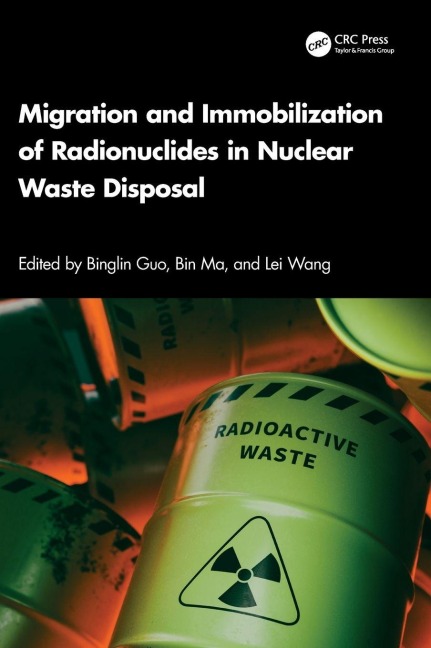
Managing nuclear waste remains one of the most significant challenges for the nuclear industry in terms of both safety and environmental concerns. This book offers a thorough examination of the migration and immobilization of nuclear waste. Focusing on the chemistry of radioactive elements in natural rocks, waters, and engineered barriers, the book details how key isotopes travel through or are retained by soils, clays, and groundwater. It also examines how chemical conditions, mineral surfaces, and colloidal particles control the movement of radionuclides and how glass, cement, and advanced ceramics can contain waste for long periods. The chapters in this book cover radioactivity essentials, waste generation from medical, energy, and industrial applications, and processing, transporting, and storage of waste. Accessible case studies-from Three Mile Island and Chernobyl to Fukushima-demonstrate how nuclear accidents unfold and how emergency responses can limit environmental harm. This book will appeal to engineers, scientists, and researchers working in nuclear energy and waste management.
Binglin Guo is a professor and a National Excellent Young Scholar at the School of Civil Engineering, Hefei University of Technology. He is the director of the Anhui Engineering Research Center for Low-Carbon Technology of Cementitious Materials. His research interests include solid waste utilization, environmental cement chemistry, and low-carbon cementitious materials. Bin Ma is a Marie Sk-odowska-Curie Fellow and a National Excellent Young Scholar. He is also a professor of cement environmental chemistry at North China Electric Power University in Beijing, China. His research interests include solid waste disposal chemistry and cement environmental chemistry, especially radioactive waste treatment. Lei Wang is a Hundred-Talent Program Research Fellow, a National Excellent Young Scholar, and a Humboldt Fellow at the College of Energy Engineering, Zhejiang University. His research interests include sustainable waste-to-energy technologies, low-carbon hazardous waste treatment, and CO- sequestration and utilization in minerals.
Part I Overview of nuclear waste 1 Natural radioactivity and anthropogenic radioactivity 2 Nuclear waste generation and potential risks in the nuclear industry Part II Characteristics of nuclear waste 3 Principles of Nuclear Waste Management 4 Nuclear waste processing, transport and storage 5 Nuclear Waste Disposal and Migration in Geochemical Systems: Insights from Recent Advances in Mineral-Microbe Interactions 6 Nuclear Disasters and Practical Accident Management 7 Radiochemistry of the key radionuclides in high-level waste Part III Nuclear waste treatment technologies 8 Radioactive Waste Immobilization in Cementitious Materials 9 Radioactive waste immobilization in glass composite material 10 Radioactive Waste Immobilization in Ceramic and Novel Materials Part IV Radionuclide migration in the disposal and storage sites 11 Aquatic chemistry and transport of key radionuclide in repository environments 12 Radionuclide diffusion and other migration processes in the biosphere 13 Redox Reactions and Radiolysis of Radionuclide Migration 14 Radionuclides adsorption/desorption at mineral-water interfaces: Mechanisms, influencing factors, and environmental implications 15 Effects of Clay-Biocomposite Colloids on Radionuclide Transport Behavior and Mechanisms Part V Future prospects and conclusions 16 Research Gaps, Challenges, and Prospects for Nuclear Waste Management