Und dann auf "Zum Home-Bildschirm [+]".

Stöbern
genialokal zum Startbildschirm hinzufügen
Installieren Sie die genialokal App auf Ihrem Startbildschirm für einen schnellen Zugriff und eine komfortable Nutzung.
Installieren Sie die genialokal App auf Ihrem Startbildschirm für einen schnellen Zugriff und eine komfortable Nutzung.

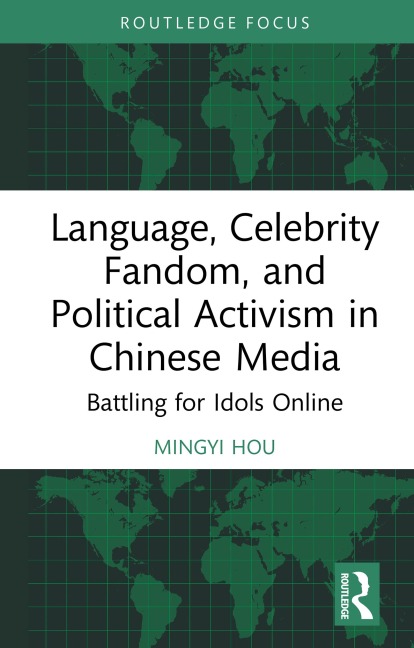
This book examines antagonistic fan communication on Chinese social media, focusing on the sociolinguistic dimensions and digital strategies in fandom discourse of Chinese celebrities to engage in broader questions around language, social media, and fan culture. The volume explores the different factors which contribute to antagonism in these contexts, including competitive fan posting meant to boost celebrities' positive publicity, but also at fans' communicative practices themselves. Adopting an action-centered sociolinguistic framework, Hou considers how antagonistic fan communication transforms as fans' engagement with digital technologies transforms and their experience with mediated content deepens. The book takes an in-depth look into how fans use a mix of verbal aggressions, such as trolling, with savvy digital tools, such as identity masking and memes to avoid content removal, in order to mobilize, collaborate, and communicate on a wider scale and, often times, funnel those energies into digital activism events. Hou shows how the study of such discourses can not only reveal fresh insights into the state of fandom culture and political communication online but also directions for future research on language and social media. This book will be of interest to scholars in digital communication, sociolinguistics, digital media studies, discourse analysis, and celebrity studies.
Mingyi Hou is Assistant Professor of Digital Culture in the Department of Culture Studies at Tilburg University, the Netherlands.
Contents List of Figures Acknowledgment Chapter 1 Introduction Chapter 2 Celebrity Fandom in China The industrial and technological contexts of celebrity fandom culture in China The features of celebrity fandom practices in China The government's regulation of digital platforms and fandom activities Fan antagonism and anti-fandom Cancel culture and celebrity bashing Flaming and trolling Fan activism and Chinese fandom nationalism Social media logics Chapter conclusion Chapter 3 Action-centered sociolinguistic analysis: Fan practices as digitally afforded social action Chapter 4 Researching celebrity fandom through digital ethnography Chapter 5 Algorithm-oriented and competitive fan practices Data contribution Comment control The competitive ethos in celebrity fandom culture Chapter 6 Sociolinguistic features and social media strategies of antagonistic fan communication The interaction order of fan antagonism Unaddressed interaction between fandoms Addressed interaction between fandoms Naming the celebrity "Slaughtering the square" Creating and posting with derogatory hashtags Addressing to entertainment industry stakeholders Flagging abuse to Weibo platform The amplified antagonism in entertainment news on Weibo Moves, evolution and information visibility in fan antagonism Multimodal strategies and themes in fan antagonism Accusing online fan behaviors Verbal attacks on celebrities Who are the anti-fans? Chapter conclusion Chapter 7 Recontextualizing fan antagonism in political communication Who is the opponent of "Brother China" Pick your idol in "Construction 101" The flopped virtual idols of the Communist Youth League Disrupting the conflict structure in fan communication Chapter 8 Fan antagonism and discursive conflicts in digital space Researching antagonism in the celebrity fandom culture in China The competitive digital fan practices as a polycentric construct and a discourse of exclusivity The antagonistic fan communication as a genre When can fans battle? Discursive conflicts in a digital environment 92 Bibliography Index