Und dann auf "Zum Home-Bildschirm [+]".

Stöbern
genialokal zum Startbildschirm hinzufügen
Installieren Sie die genialokal App auf Ihrem Startbildschirm für einen schnellen Zugriff und eine komfortable Nutzung.
Installieren Sie die genialokal App auf Ihrem Startbildschirm für einen schnellen Zugriff und eine komfortable Nutzung.
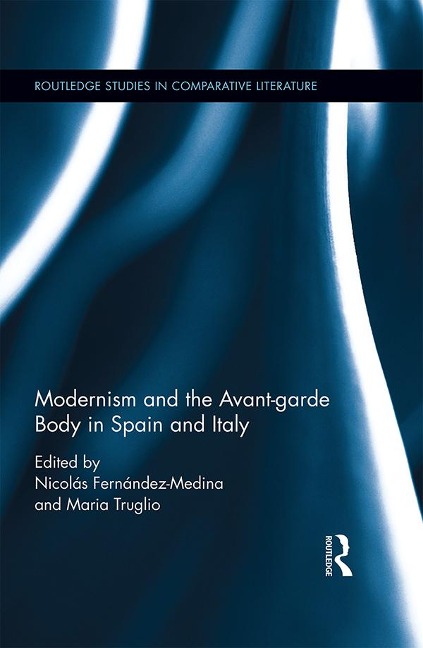
This interdisciplinary volume interrogates bodily thinking in avant-garde texts from Spain and Italy during the early twentieth century and their relevance to larger modernist preoccupations with corporeality. It examines the innovative ways Spanish and Italian avant-gardists explored the body as a locus for various aesthetic and sociopolitical considerations and practices. In reimagining the nexus points where the embodied self and world intersect, the texts surveyed in this book not only shed light on issues such as authority, desire, fetishism, gender, patriarchy, politics, religion, sexuality, subjectivity, violence, and war during a period of unprecedented change, but also explore the complexities of aesthetic and epistemic rupture (and continuity) within Spanish and Italian modernisms. Building on contemporary scholarship in Modernist Studies and avant-garde criticism, this volume brings to light numerous cross-cultural touch points between Spain and Italy, and challenges the center/periphery frameworks of European cultural modernism. In linking disciplines, genres, -isms, and geographical spheres, the book provides new lenses through which to explore the narratives of modernist corporeality. Each contribution centers around the question of the body as it was actively being debated through the medium of poetic, literary, and artistic exchange, exploring the body in its materiality and form, in its sociopolitical representation, relation to Self, cultural formation, spatiality, desires, objectification, commercialization, and aesthetic functions. This comparative approach to Spanish and Italian avant-gardism offers readers an expanded view of the intersections of body and text, broadening the conversation in the larger fields of cultural modernism, European Avant-garde Studies, and Comparative Literature.
Nicolás Fernández-Medina is Associate Professor of Spanish at Penn State. He earned his PhDs from Stanford University. He is the author of The Poetics of Otherness in Antonio Machado's 'Proverbios y cantares' (Cardiff: U of Wales P) and Body of Life: Vital Force and the Building of Spanish Modernity (McGill-Queen's UP, under contract). Maria Truglio is Associate Professor of Italian and of Women's, Gender, and Sexuality Studies at Penn State. She earned her BA (1992) from Wesleyan University and her PhD (2001) from Yale University. She is the author of Beyond the Family Romance: The Legend of Pascoli (University of Toronto Press, 2007). .
Preface (Nicolás Fernández-Medina and Maria Truglio) Part 1: The Fragmented Body: The Anxiety of Fulfilment 1. A Return to the Body: On Fetishism and the Inscrutable Feminine in Ramón Gómez de la Serna's Senos (Nicolás Fernández-Medina) 2. But who is playing this game? Massimo Bontempelli's La scacchiera davanti allo specchio and Children's Literature (Maria Truglio) 3. Unreadable Bodies and Symbolic Violence in Antonio de Obregón's Hermes en la vía pública (Susan Larson) Part 2: The Borderless Body: Charting the Corporeal and the Discursive 4. 1922: Deterritorializing the Body: Beyond the Mind-Body Dualism in Ramón Gómez de la Serna's El secreto del Acueducto (John McCulloch) 5. Possession Narratives, Partnering, and Massimo Bontempelli's Fascist Magic Realism (Keala Jewell) 6. Purity and Putrefaction: Salvador Dalí's Apparatus and Hand (1927) (Ara H. Merjian) 7. Nature and the Madman: Mysticism and Modernism in Pirandello's Fiction (Luca Somigli) Part 3: The Discovered Body: Knowledge and the Constructs of Resistance 8. The Gendered Body Politic of Maruja Mallo (Shirley Mangini) 9 Women, Sexuality, Politics, and the Body in the Futurist Avant-garde during the Great War (Lucia Re) 10. The Body of Venus: Eroticism and Maternality in José Díaz Fernández's La Venus mecánica (1929) (Rebecca Bender) 11. Eco-futurism? Some Thoughts on Nature, Matter, and Body in F. T. Marinetti (Enrico Cesaretti)
Dieses eBook wird im PDF-Format geliefert und ist mit einem Adobe Kopierschutz (DRM) versehen. Sie können dieses eBook mit allen Geräten lesen, die das PDF-Format und den Adobe Kopierschutz (DRM) unterstützen.
Zum Beispiel mit den folgenden Geräten:
• tolino Reader
Laden Sie das eBook direkt über den Reader-Shop auf dem tolino herunter oder übertragen Sie das eBook auf Ihren tolino mit einer kostenlosen Software wie beispielsweise Adobe Digital Editions.
• Sony Reader & andere eBook Reader
Laden Sie das eBook direkt über den Reader-Shop herunter oder übertragen Sie das eBook mit der kostenlosen Software Sony READER FOR PC/Mac oder Adobe Digital Editions auf ein Standard-Lesegeräte mit epub- und Adobe DRM-Unterstützung.
• Tablets & Smartphones
Möchten Sie dieses eBook auf Ihrem Smartphone oder Tablet lesen, finden Sie hier unsere kostenlose Lese-App für iPhone/iPad und Android Smartphone/Tablets.
• PC & Mac
Lesen Sie das eBook direkt nach dem Herunterladen mit einer kostenlosen Lesesoftware, beispielsweise Adobe Digital Editions, Sony READER FOR PC/Mac oder direkt über Ihre eBook-Bibliothek in Ihrem Konto unter „Meine eBooks“ - „online lesen“.
Schalten Sie das eBook mit Ihrer persönlichen Adobe ID auf bis zu sechs Geräten gleichzeitig frei.
Bitte beachten Sie, dass die Kindle-Geräte das Format nicht unterstützen und dieses eBook somit nicht auf Kindle-Geräten lesbar ist.