
Stöbern
genialokal zum Startbildschirm hinzufügen
Installieren Sie die genialokal App auf Ihrem Startbildschirm für einen schnellen Zugriff und eine komfortable Nutzung.
Installieren Sie die genialokal App auf Ihrem Startbildschirm für einen schnellen Zugriff und eine komfortable Nutzung.
Tippen Sie einfach auf Teilen:
 Und dann auf "Zum Home-Bildschirm [+]".

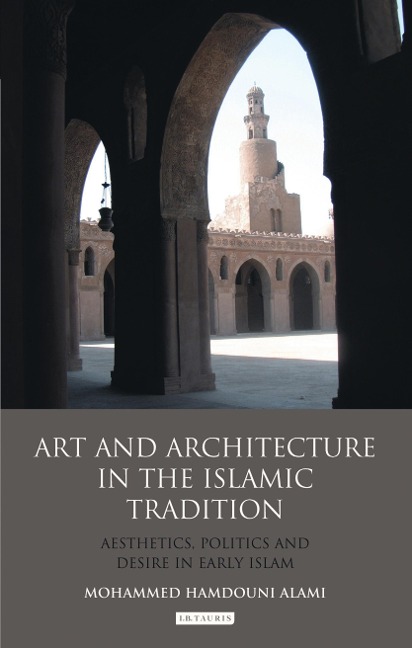
What is 'art' in the sense of the Islamic tradition? Mohammed Hamdouni Alami argues that Islamic art has historically been excluded from Western notions of art; that the Western aesthetic tradition's preoccupation with the human body, and the ban on the representation of the human body in Islam, has meant that Islamic and Western art have been perceived as inherently at odds. However, the move away from this 'anthropomorphic aesthetic' in Western art movements, such as modern abstract and constructivist painting, have presented the opportunity for new ways of viewing and evaluating Islamic art and architecture. This book questions the very idea of art predicated on the anthropocentric bias of classical art, and the corollary 'exclusion' of Islamic art from the status of art.
It addresses a central question in post-classical aesthetic theory, in as much as the advent of modern abstract and constructivist painting have shown that art can be other than the representation of the human body; that art is not neutral aesthetic contemplation but it is fraught with power and violence; and that the presupposition of classical art was not a universal truth but the assumption of a specific cultural and historical set of practices and vocabularies. Based on close readings of classical Islamic literature, philosophy, poetry, medicine and theology, along with contemporary Western art theory, the author uncovers a specific Islamic theoretical vision of art and architecture based on poetic practice, politics, cosmology and desire. In particular it traces the effects of decoration and architectural planning on the human soul as well as the centrality of the gaze in this poetic view - in Arabic 'nazar'- while examining its surprising similarity to modern theories of the gaze.
Through this double gesture, moving critically between two traditions, the author brings Islamic thought and aesthetics back into the realm of visibility, addressing the lack of recognition in comparison with other historical periods and traditions. This is an important step toward a critical analysis of the contemporary debate around the revival of Islamic architectural identity - a debate intricately embedded within opposing Islamic political and social projects throughout the world.
Mohammed Hamdouni Alami is Associate Researcher at the Archaeological Research Facility (ARF) at the University of California, Berkeley. He studied architecture at the Ecole d'Architecture in Grenoble and received his doctorate from the University of California, Berkeley.
Introduction
Architecture and Meaning in the Theory of Al-Jahiz
Architecture and Poetics
Architecture and Myth
Al-Jahiz in the Mosque at Damascus: Social Critique and Debate in the History of Umayyad Architecture
Architecture and Desire
Conclusion