
Stöbern
genialokal zum Startbildschirm hinzufügen
Installieren Sie die genialokal App auf Ihrem Startbildschirm für einen schnellen Zugriff und eine komfortable Nutzung.
Installieren Sie die genialokal App auf Ihrem Startbildschirm für einen schnellen Zugriff und eine komfortable Nutzung.
Tippen Sie einfach auf Teilen:
 Und dann auf "Zum Home-Bildschirm [+]".
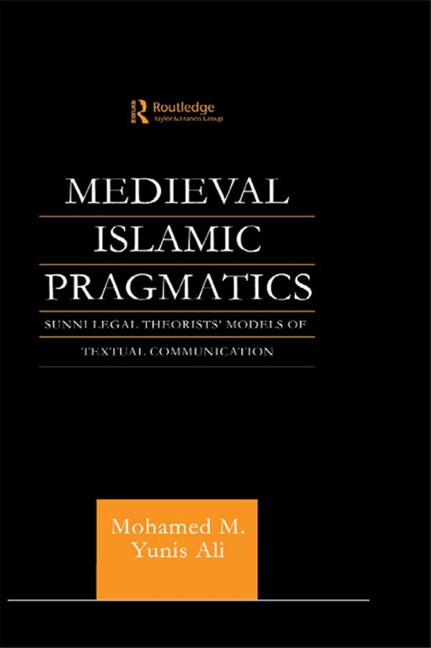
This book deals with two different pragmatic approaches to textual communication: (i) the mainstream approach followed by the 'Ash'ari s, Hanafi s and Mu'tazili s, (ii) the salafite approach followed mainly by the Hanbali s, defended and elaborated by Ibn Taymiyyah. One of the primary aims of the book is to explore and formulate several Muslim legal theorists' pragmatic theories, communicative principles and linguistic views, construct them in the form of models and set them within a general uniform framework. Another aim is to reveal a corpus of information and data which, though highly relevant to modern pragmatics, is still unknown. This study, which can be seen as an extensive introduction to 'medieval Islamic pragmatics', is the first attempt to examine the approaches followed by the Salafi s or the mainstream from a pragmatic viewpoint. There has been no attempt to explain the principles and the strategies utilised by the medieval Sunni Muslim legal theorists in their account of how communication works and how successful interpretation is achieved. Of course, a lot of work has been done on different Islamic sects and their different positions over the interpretation of the Quran and Sunnah, but these studies fall short of delving into the underlying communicative principles that motivate their differences over interpretation. The author's formulation of the Muslim legal theorists' views is enhanced by setting up a reliable theoretical foundation and by delving into their underlying philosophical principles. This involves relating the legal theorists' insights into interpretation and communication to their relevant ontological, epistemological and theological outlooks, and comparing these insights with their modern pragmatic counterparts.
Muhammad M. Yunis Ali
Chapter 1 Introduction; Chapter 2 Wa?? and Use; Chapter 3 Interpretatin; Chapter 4 Ibn Taymiyyah's contextual theory of interpretation; Chapter 5 Ways of signification; Chapter 6 Conclusion;
Dieses eBook wird im PDF-Format geliefert und ist mit einem Adobe Kopierschutz (DRM) versehen. Sie können dieses eBook mit allen Geräten lesen, die das PDF-Format und den Adobe Kopierschutz (DRM) unterstützen.
Zum Beispiel mit den folgenden Geräten:
• tolino Reader
Laden Sie das eBook direkt über den Reader-Shop auf dem tolino herunter oder übertragen Sie das eBook auf Ihren tolino mit einer kostenlosen Software wie beispielsweise Adobe Digital Editions.
• Sony Reader & andere eBook Reader
Laden Sie das eBook direkt über den Reader-Shop herunter oder übertragen Sie das eBook mit der kostenlosen Software Sony READER FOR PC/Mac oder Adobe Digital Editions auf ein Standard-Lesegeräte mit epub- und Adobe DRM-Unterstützung.
• Tablets & Smartphones
Möchten Sie dieses eBook auf Ihrem Smartphone oder Tablet lesen, finden Sie hier unsere kostenlose Lese-App für iPhone/iPad und Android Smartphone/Tablets.
• PC & Mac
Lesen Sie das eBook direkt nach dem Herunterladen mit einer kostenlosen Lesesoftware, beispielsweise Adobe Digital Editions, Sony READER FOR PC/Mac oder direkt über Ihre eBook-Bibliothek in Ihrem Konto unter „Meine eBooks“ - „online lesen“.
Schalten Sie das eBook mit Ihrer persönlichen Adobe ID auf bis zu sechs Geräten gleichzeitig frei.
Bitte beachten Sie, dass die Kindle-Geräte das Format nicht unterstützen und dieses eBook somit nicht auf Kindle-Geräten lesbar ist.