
Stöbern
genialokal zum Startbildschirm hinzufügen
Installieren Sie die genialokal App auf Ihrem Startbildschirm für einen schnellen Zugriff und eine komfortable Nutzung.
Installieren Sie die genialokal App auf Ihrem Startbildschirm für einen schnellen Zugriff und eine komfortable Nutzung.
Tippen Sie einfach auf Teilen:
 Und dann auf "Zum Home-Bildschirm [+]".
Ihr gewünschter Artikel ist in 0 Buchhandlungen vorrätig - wählen Sie hier eine Buchhandlung in Ihrer Nähe aus:

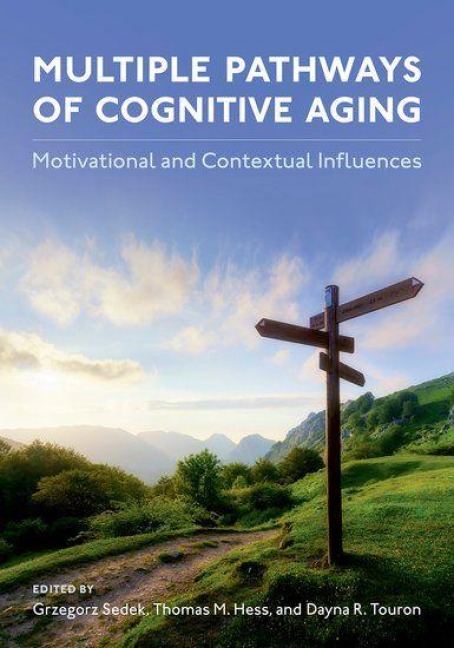
The study of aging and cognition has grown exponentially over the past 50 years, developing from a field dominated by experimentally based information-processing traditions to one represented by a more mature approach both conceptually and methodologically. In the past 10 years there has been growth in integrative approaches that incorporate behavioral, neuropsychological, and social information. In addition, there has been a growing recognition of the limitations associated with simple cross-sectional age-group comparisons, along with an increased use of more complex methods. This has resulted in the development of increasingly sophisticated research designs and analytic tools focused on understanding a multitude of potential mediators and moderators of cognitive change. The result has been a move away from negative-views of cognitive aging to one that is more nuanced and sensitive to contextual factors. Multiple Pathways of Cognitive Aging explores the factors associated with adaptive functioning in later life. Its emphasis is on understanding both the factors underlying individual differences in change in cognitive functioning in later life and the nature of the compensatory mechanisms developed by most successful and active middle-aged and older adults. This includes a consideration of motivational factors as a driver of both cognitive change and adaptive functioning. For students and researchers, Multiple Pathways of Cognitive Aging offers valuable insights into the field of cognitive development, along with innovative methodological approaches to help them in their own research.
Grzegorz Sedek is Professor of Psychology and Head of the Interdisciplinary Center for Applied Cognitive Studies (ICACS) at SWPS University of Social Sciences and Humanities in Warsaw, Poland. He has published research on such topics as cognitive aging, subclinical depression, and learned helplessness. Thomas M. Hess is a Distinguished Professor Emeritus of Psychology at North Carolina State University and recipient of the APA Baltes Distinguished Research Achievement Award.. He has published extensively on cognitive and social cognitive functioning in adulthood. Dayna R. Touron is Associate Dean of the College of Arts and Sciences and Professor of Psychology at the University of North Carolina at Greensboro. She is Associate Editor of Experimental Aging Research and on the editorial boards of Psychology and Aging and Journal of Experimental Psychology: Applied.
- Section I: Introduction - Chapter 1: Introduction and Major Themes - Thomas M. Hess, Grzegorz Sedek, and Dayna R. Touron - Section II: Motivational Influences on Cognition in Older Adults - Chapter 2: Subjective Perceptions of Cognitive Costs: Determinants and Impact on Motivation and Engagement - Thomas M. Hess - Chapter 3: Motivated Memory for What Matters Most: How Older Adults (Selectively) Focus on Important Information and Events Using Schematic Support, Metacognition, and Meaningful Goals - Mary C. Whatley, Dillon H. Murphy, Katie M. Silaj, and Alan D. Castel - Chapter 4: Motivational Processes in Emotional Aging - Hannah Wolfe and Derek Isaacowitz - Chapter 5: The Positivity Effect: A Review of Theories and Recent Findings - Sarah J. Barber and Hyunji Kim - Chapter 6: Stereotyping and Effort Mobilization in Older Age: The Role of Self-Involvement - Gabriela Czarnek, Malgorzata Kossowska, and Michael Richter - Chapter 7: Motivational Reserve: The Role of Motivational Processes in Cognitive Impairment and Alzheimer's Disease - Simon Forstmeier, Myriam Verena Thoma, and Andreas Maercker - Section III: Contextual Influences on Cognition and Compensatory Mechanisms in Aging - - Chapter 8: Social and Cultural Influences on Cognitive Aging - Angela Gutchess, Nicole M. Rosa, and Danielle B. Schwartz - Chapter 9: Why Do Some Older Adults Avoid Memory Retrieval When Acquiring a New Skill? - Christopher Hertzog and Dayna R. Touron - Chapter 10: Age Differences in Complex Decision Making and Judgment: The Role of Motivational Factors and Individual Differences - Klara Rydzewska, Maciej Koscielniak, Bettina von Helversen, and Grzegorz Sedek - Chapter 11: Motivation and the Social Context of Aging and Decision Making - JoNell Strough and Kelly Smith - Chapter 12: Controlling the Wandering Mind: Spontaneous Thought Content Suggests Compensation for Cognitive Decline - Dayna Touron - Chapter 13: The Potential for Socially Integrated and Engaged Lifestyles to Support Cognitive Health With Aging: Precursors and Pathways - Elizabeth A. L. Stine-Morrow, Ted W. Worm, Aron K. Barbey, and Daniel G. Morrow - Section IV: Maintenance of Cognitive Abilities and Modern Forms of Intervention - Chapter 14: There Is Nothing Wrong with Cognitive Aging, and Here Is What to Do About It - Paul Verhaeghen - Chapter 15: Cognitive Plasticity Induced in Older Adults by Cognitive Training, Physical Exercise and Combined Interventions - Soledad Ballesteros - Chapter 16: Adapting Algorithms on the Web to Deal With Cognitive Aging - Radoslaw Nielek, Justyna Pawlowska, Klara Rydzewska, and Adam Wierzbicki