
Stöbern
genialokal zum Startbildschirm hinzufügen
Installieren Sie die genialokal App auf Ihrem Startbildschirm für einen schnellen Zugriff und eine komfortable Nutzung.
Installieren Sie die genialokal App auf Ihrem Startbildschirm für einen schnellen Zugriff und eine komfortable Nutzung.
Tippen Sie einfach auf Teilen:
 Und dann auf "Zum Home-Bildschirm [+]".
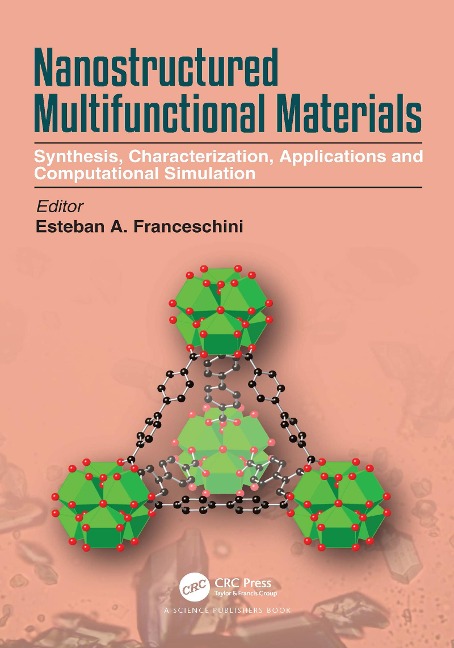
The development of nanomaterials plays a fundamental role in current and future technology applications, particularly nanomaterials that have multiple functionalities. This book provides a broad overview of the effect of nanostructuring in the multifunctionality of different widely studied nanomaterials. This book is divided into four sections constituting a road map that groups materials sharing certain types of nanostructuring, including nanoporous, nanoparticled, 2D laminar nanomaterials, and computational methods for characterizations of nanostructures. This structured approach in nanomaterials research will serve as a valuable reference material for chemists, (bio)engineers, physicists, nanotechnologists, undergraduates, and professors.
Esteban A. Franceschini is Researcher in CONICET (Argentina) in the INFIQC and the National University of Cordoba. He is the co-author of over 30 peer-reviewed journal articles, patents, and book chapters. He did his doctorate and post-doctorate at the National Atomic Energy Commission in nanomaterials synthesis for fuel cells applications and is currently working on the development of composite materials for the generation of hydrogen in alkaline electrolyzers, development of prototypes and integration into renewable energy sources.
Introduction to Nanostructured Multifunctional Materials. Mesoporous Particles by Combination of Aerosol Route and Sol-Gel Process. Nanostructured Semiconducting Oxide Films. Implications of Structure in Properties of Micro and Mesoporous Carbons. Metal-Organic Frameworks (MOFs): Multi-Functionality within Order. Material's Definitions, Descriptions. Current Trends and Applications. Supported Metal Nanoparticles in Catalysis. Metallic Nanoparticles with Mesoporous Shells: Synthesis, Characterization and Applications. Nanoparticles based Composites and Hybrids. Functionalities and Synthetic Methods and Study Cases. Effect of Functionalization on Graphenic Surfaces in their Properties. Two-Dimensional Hybrid Nanomaterials. Graphene-based Materials as Highly Promising Catalysts for Energy Storage and Conversion Applications. From Bulk to Nano: Understanding the Transition through Computer Simulations. Computer Simulations of Ultra-Thin Materials: from 2D to Heterostructures. Exploring Water Nanoconfinement in Mesoporous Oxides through Molecular Simulations.
Dieses eBook wird im PDF-Format geliefert und ist mit einem Adobe Kopierschutz (DRM) versehen. Sie können dieses eBook mit allen Geräten lesen, die das PDF-Format und den Adobe Kopierschutz (DRM) unterstützen.
Zum Beispiel mit den folgenden Geräten:
• tolino Reader
Laden Sie das eBook direkt über den Reader-Shop auf dem tolino herunter oder übertragen Sie das eBook auf Ihren tolino mit einer kostenlosen Software wie beispielsweise Adobe Digital Editions.
• Sony Reader & andere eBook Reader
Laden Sie das eBook direkt über den Reader-Shop herunter oder übertragen Sie das eBook mit der kostenlosen Software Sony READER FOR PC/Mac oder Adobe Digital Editions auf ein Standard-Lesegeräte mit epub- und Adobe DRM-Unterstützung.
• Tablets & Smartphones
Möchten Sie dieses eBook auf Ihrem Smartphone oder Tablet lesen, finden Sie hier unsere kostenlose Lese-App für iPhone/iPad und Android Smartphone/Tablets.
• PC & Mac
Lesen Sie das eBook direkt nach dem Herunterladen mit einer kostenlosen Lesesoftware, beispielsweise Adobe Digital Editions, Sony READER FOR PC/Mac oder direkt über Ihre eBook-Bibliothek in Ihrem Konto unter „Meine eBooks“ - „online lesen“.
Schalten Sie das eBook mit Ihrer persönlichen Adobe ID auf bis zu sechs Geräten gleichzeitig frei.
Bitte beachten Sie, dass die Kindle-Geräte das Format nicht unterstützen und dieses eBook somit nicht auf Kindle-Geräten lesbar ist.