Und dann auf "Zum Home-Bildschirm [+]".

Stöbern
genialokal zum Startbildschirm hinzufügen
Installieren Sie die genialokal App auf Ihrem Startbildschirm für einen schnellen Zugriff und eine komfortable Nutzung.
Installieren Sie die genialokal App auf Ihrem Startbildschirm für einen schnellen Zugriff und eine komfortable Nutzung.
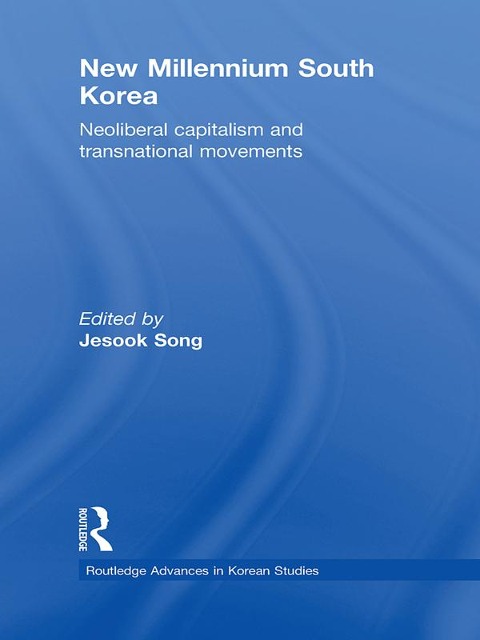
Despite the common held belief that Asian nations have displayed anti-market tendencies of under-consumption and export-oriented trade since the Asian financial crisis, in the 10 years since the crisis, South Korea has bucked this trend accruing a higher debt rate than the US. This groundbreaking collection of essays addresses questions such as how did the open market policies and restructuring processes implemented during the Asian financial crisis magnify the consumption and debt level in South Korea to such an extent? What is the impact of these financial changes on the daily lives of people in different cultural and socio-economic groups? In examining these questions the authors provide valuable insight into the rise of financial capitalism, transnational mobility and the implications of neoliberal governing tactics following the Asian Financial Crisis. Examining South Korea's transformation during the early years of the 21st century, New Millenium South Korea will be of interest to anthropologists, economists and sociologists, as well as students and scholars of Korean Studies.
Jesook Song is an Associate Professor at the University of Toronto. As an anthropologist of Korea and a gender studies scholar, her interests include liberal governmentality, financialization, and youth education.
Introduction: Why Korea in the New Millennium? Part I: Economic and Sociological Accounts 1. Globalization and Social Inequality in South Korea 2. Neoliberalism, the Financial Crisis and Economic Restructuring in Korea 3. Neoliberalism in South Korea: The Dynamics of Financialization Part II: Ethnographic and Historical Accounts 4. Contesting Legal Liminality: The Gendered Labor Politics of Irregular Workers in South Korea 5. The Will to Self-Managing, the Will to Freedom: The Self-managing Ethic and the Spirit of Flexible Capitalism in South Korea 6. Educational Manager Mothers As Neoliberal Maternal Subjects 7. For the Rights of "Colonial Returnees": Korean Chinese, Decolonization and Neoliberal Democracy in South Korea 8. "Not-Quite Korean" Children in "Almost Korean" Families: The Fear of Decreasing Population and State Multiculturalism in South Korea 9. "If you don't work, you don't eat": Evangelizing Development in Africa
Dieses eBook wird im PDF-Format geliefert und ist mit einem Adobe Kopierschutz (DRM) versehen. Sie können dieses eBook mit allen Geräten lesen, die das PDF-Format und den Adobe Kopierschutz (DRM) unterstützen.
Zum Beispiel mit den folgenden Geräten:
• tolino Reader
Laden Sie das eBook direkt über den Reader-Shop auf dem tolino herunter oder übertragen Sie das eBook auf Ihren tolino mit einer kostenlosen Software wie beispielsweise Adobe Digital Editions.
• Sony Reader & andere eBook Reader
Laden Sie das eBook direkt über den Reader-Shop herunter oder übertragen Sie das eBook mit der kostenlosen Software Sony READER FOR PC/Mac oder Adobe Digital Editions auf ein Standard-Lesegeräte mit epub- und Adobe DRM-Unterstützung.
• Tablets & Smartphones
Möchten Sie dieses eBook auf Ihrem Smartphone oder Tablet lesen, finden Sie hier unsere kostenlose Lese-App für iPhone/iPad und Android Smartphone/Tablets.
• PC & Mac
Lesen Sie das eBook direkt nach dem Herunterladen mit einer kostenlosen Lesesoftware, beispielsweise Adobe Digital Editions, Sony READER FOR PC/Mac oder direkt über Ihre eBook-Bibliothek in Ihrem Konto unter „Meine eBooks“ - „online lesen“.
Schalten Sie das eBook mit Ihrer persönlichen Adobe ID auf bis zu sechs Geräten gleichzeitig frei.
Bitte beachten Sie, dass die Kindle-Geräte das Format nicht unterstützen und dieses eBook somit nicht auf Kindle-Geräten lesbar ist.