Und dann auf "Zum Home-Bildschirm [+]".

Stöbern
genialokal zum Startbildschirm hinzufügen
Installieren Sie die genialokal App auf Ihrem Startbildschirm für einen schnellen Zugriff und eine komfortable Nutzung.
Installieren Sie die genialokal App auf Ihrem Startbildschirm für einen schnellen Zugriff und eine komfortable Nutzung.
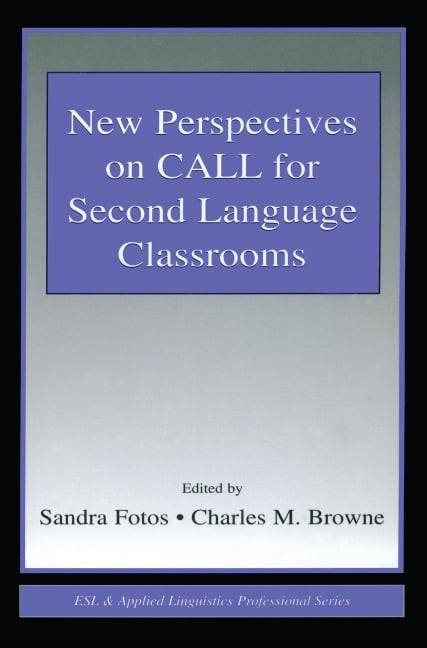
This practical handbook is designed to help language teachers, teacher trainers, and students learn more about their options for using computer-assisted language learning (CALL) and develop an understanding of the theory and research supporting these options. The chapters in New Perspectives on CALL for Second Language Classrooms synthesize previous CALL theory and research and describe practical applications to both second and foreign language classrooms, including procedures for evaluating these applications. The implementation of CALL at the institutional level is also addressed, with attention to designing multimedia language laboratories and creating collaborative CALL-based projects between educational institutions. Although many chapters locate their descriptions of CALL activities and projects within the ESL/EFL setting, the principles and activities described are equally useful for other language settings. The book does not require prior knowledge of CALL, computers, or software. To assist readers, a glossary of CALL terms and an appendix of CALL Web sites are provided. The book also has its own accompanying Web site (http://www.erlbaum.com/callforL2classrooms) presenting chapter abstracts, author contact information, and regularly updated links to pedagogical, research, and teacher development sites. By integrating theoretical issues, research findings, and practical guidelines on different aspects of CALL, this book offers teachers multiple levels of resources for their own professional development, for needs-based creation of specific CALL activities, for curriculum design, and for implementation of institutional and inter-institutional CALL projects.
Sandra Fotos, Charles M. Browne
Contents: Preface. Part I: Introduction to CALL.S. Fotos, C. Browne, The Development of CALL and Current Options. M. Warschauer, Technological Change and the Future of CALL. P. Liddell, N. Garrett, The New Language Centers and the Role of Technology: New Mandates, New Horizons. Part II: Perspectives on Classroom CALL.P. Hubbard, Learner Training for Effective Use of CALL. M.C. Pennington, Electronic Media in Second Language Writing: An Overview of Tools and Research Findings. G. Braine, Teaching Second and Foreign Language Writing on LANs. S. Fotos, Writing as Talking: E-Mail Exchange for Promoting Proficiency and Motivation in the Foreign Language Classroom. R. Taylor, C. Gitsaki, Teaching WELL and Loving IT. T. Iwabuchi, S. Fotos, Creating Course-Specific CD-ROMs for Interactive Language Learning. Part III: Implementing CALL in Institutional Settings.C. Browne, S. Gerrity, Setting up and Maintaining a CALL Laboratory. P. O'Connor, W. Gatton, Implementing Multimedia in a University EFL Program: A Case Study in CALL. L. Opp-Beckman, C. Kieffer, A Collaborative Model for Online Instruction in the Teaching of Language and Culture. Part IV: Evaluating CALL.K. Reeder, T. Heift, J. Roche, S. Tabyanian, S. Schlickau, P. Gölz, Toward a Theory of E/Valuation for Second Language Learning Media. B. Susser, T.N. Robb, Evaluation of ESL/EFL Instructional Web Sites. Part V: Conclusion.C.A. Chapelle, V. Hegelheimer, The Language Teacher in the 21st Century. Appendix:List of Web Sites.
Dieses eBook wird im PDF-Format geliefert und ist mit einem Adobe Kopierschutz (DRM) versehen. Sie können dieses eBook mit allen Geräten lesen, die das PDF-Format und den Adobe Kopierschutz (DRM) unterstützen.
Zum Beispiel mit den folgenden Geräten:
• tolino Reader
Laden Sie das eBook direkt über den Reader-Shop auf dem tolino herunter oder übertragen Sie das eBook auf Ihren tolino mit einer kostenlosen Software wie beispielsweise Adobe Digital Editions.
• Sony Reader & andere eBook Reader
Laden Sie das eBook direkt über den Reader-Shop herunter oder übertragen Sie das eBook mit der kostenlosen Software Sony READER FOR PC/Mac oder Adobe Digital Editions auf ein Standard-Lesegeräte mit epub- und Adobe DRM-Unterstützung.
• Tablets & Smartphones
Möchten Sie dieses eBook auf Ihrem Smartphone oder Tablet lesen, finden Sie hier unsere kostenlose Lese-App für iPhone/iPad und Android Smartphone/Tablets.
• PC & Mac
Lesen Sie das eBook direkt nach dem Herunterladen mit einer kostenlosen Lesesoftware, beispielsweise Adobe Digital Editions, Sony READER FOR PC/Mac oder direkt über Ihre eBook-Bibliothek in Ihrem Konto unter „Meine eBooks“ - „online lesen“.
Schalten Sie das eBook mit Ihrer persönlichen Adobe ID auf bis zu sechs Geräten gleichzeitig frei.
Bitte beachten Sie, dass die Kindle-Geräte das Format nicht unterstützen und dieses eBook somit nicht auf Kindle-Geräten lesbar ist.