Und dann auf "Zum Home-Bildschirm [+]".

Stöbern
genialokal zum Startbildschirm hinzufügen
Installieren Sie die genialokal App auf Ihrem Startbildschirm für einen schnellen Zugriff und eine komfortable Nutzung.
Installieren Sie die genialokal App auf Ihrem Startbildschirm für einen schnellen Zugriff und eine komfortable Nutzung.
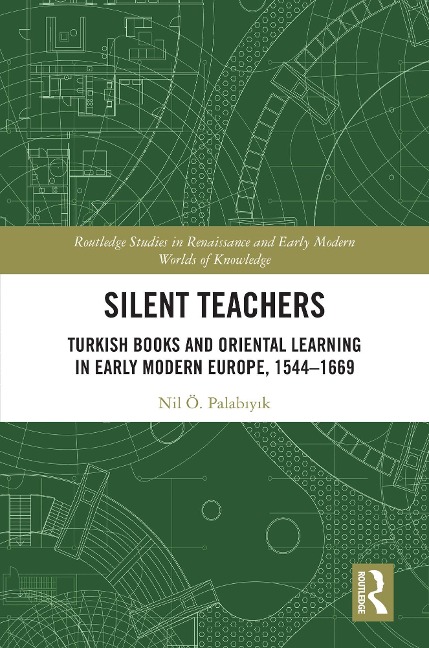
Silent Teachers considers for the first time the influence of Ottoman scholarly practices and reference tools on oriental learning in early modern Europe. Telling the story of oriental studies through the annotations, study notes, and correspondence of European scholars, it demonstrates the central but often overlooked role that Turkish-language manuscripts played in the achievements of early orientalists. Dispersing the myths and misunderstandings found in previous scholarship, this book offers a fresh history of Turkish studies in Europe and new insights into how Renaissance intellectuals studied Arabic and Persian through contemporaneous Turkish sources. This story hardly has any dull moments: the reader will encounter many larger-than-life figures, including an armchair expert who turned his alleged captivity under the Ottomans into bestselling books; a drunken dragoman who preferred enjoying the fruits of the vine to his duties at the Sublime Porte; and a curmudgeonly German physician whose pugnacious pamphlets led to the erasure of his name from history. Taking its title from the celebrated humanist Joseph Scaliger's comment that books from the Muslim world are 'silent teachers' and need to be explained orally to be understood, this study gives voice to the many and varied Turkish-language books that circulated in early modern Europe and proposes a paradigm-shift in our understanding of early modern erudite culture.
Nil Ö. Palabiyik, Lecturer in Medieval and Early Modern Studies at Queen Mary, University of London, conducts research at the crossroads of intellectual history, manuscript culture, and history of the book. As a postdoctoral fellow funded by the British Academy and the Humboldt Foundation, she worked at the Rylands Library and Institute, Manchester, and the Ludwig-Maximilian-Universität, Munich. Her love of archives took her to the finest libraries in Europe, and led to visiting fellowships at the Scaliger Institute, Leiden, and Herzog August Bibliothek, Wolfenbüttel. She published on humanist scholarship, early modern orientalism, and Greek printing in Europe and the Ottoman Empire.
Introduction / Chapter One: Earliest printed books on Turkey: Georgievits and Postel on the Turkish language / Chapter Two: The advent of scholarly books on Turkey: Leunclavius' Ottoman Annals and History, Crusius' Greece under Turkish Rule with Scaliger's Annotations / Chapter Three: First printed grammars of Turkish: Megiser and Du Ryer / Chapter Four: Oriental studies in Leiden: The manuscript Turkish dictionaries of Deusing and Golius / Chapter Five: A fine library: Golius and his Turkish books / Conclusions
Dieses eBook wird im PDF-Format geliefert und ist mit einem Adobe Kopierschutz (DRM) versehen. Sie können dieses eBook mit allen Geräten lesen, die das PDF-Format und den Adobe Kopierschutz (DRM) unterstützen.
Zum Beispiel mit den folgenden Geräten:
• tolino Reader
Laden Sie das eBook direkt über den Reader-Shop auf dem tolino herunter oder übertragen Sie das eBook auf Ihren tolino mit einer kostenlosen Software wie beispielsweise Adobe Digital Editions.
• Sony Reader & andere eBook Reader
Laden Sie das eBook direkt über den Reader-Shop herunter oder übertragen Sie das eBook mit der kostenlosen Software Sony READER FOR PC/Mac oder Adobe Digital Editions auf ein Standard-Lesegeräte mit epub- und Adobe DRM-Unterstützung.
• Tablets & Smartphones
Möchten Sie dieses eBook auf Ihrem Smartphone oder Tablet lesen, finden Sie hier unsere kostenlose Lese-App für iPhone/iPad und Android Smartphone/Tablets.
• PC & Mac
Lesen Sie das eBook direkt nach dem Herunterladen mit einer kostenlosen Lesesoftware, beispielsweise Adobe Digital Editions, Sony READER FOR PC/Mac oder direkt über Ihre eBook-Bibliothek in Ihrem Konto unter „Meine eBooks“ - „online lesen“.
Schalten Sie das eBook mit Ihrer persönlichen Adobe ID auf bis zu sechs Geräten gleichzeitig frei.
Bitte beachten Sie, dass die Kindle-Geräte das Format nicht unterstützen und dieses eBook somit nicht auf Kindle-Geräten lesbar ist.