Und dann auf "Zum Home-Bildschirm [+]".

Stöbern
genialokal zum Startbildschirm hinzufügen
Installieren Sie die genialokal App auf Ihrem Startbildschirm für einen schnellen Zugriff und eine komfortable Nutzung.
Installieren Sie die genialokal App auf Ihrem Startbildschirm für einen schnellen Zugriff und eine komfortable Nutzung.
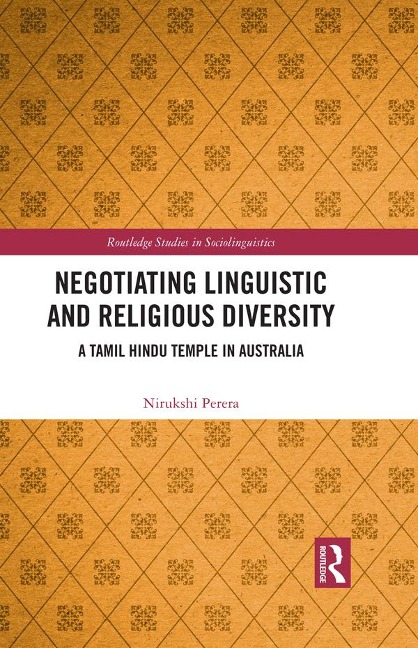
Diversity is a buzzword of our times and yet the extent of religious diversity in Western societies is generally misconceived. This ground-breaking research draws attention to the journey of one migrant religious institution in an era of religious superdiversity. Based on a sociolinguistic ethnography in a Tamil Saivite temple in Australia, the book explores the challenges for the institution in maintaining its linguistic and cultural identity in a new context. The temple is faced with catering for devotees of diverse ethnicities, languages, and religious interpretations; not to mention divergent views between different generations of migrants who share ethnicity and language. At the same time, core members of the temple seek to continue religious and cultural practices according to the traditions of their homelands in Sri Lanka, a country where their identity and language has been under threat. The study offers a rich picture of changing language practices in a diasporic religious institution. Perera inspects language ideology considerations in the design of institutional language policy and how such policy manifests in language use in the temple spaces. This includes the temple's Sunday school where heritage language and religion interplay in second-generation migrant adolescents' identifications and discourse.
Nirukshi Perera is a sociolinguist with a specialisation in language in Sri Lanka and the South Asian diaspora. Her thesis, on which this book is based, received the 2018 Australian Linguistics Society/Applied Linguistics Association Michael Clyne prize for the best thesis on immigrant bilingualism and language contact. She is interested in the interplay of social justice and language, in terms of migration and multiculturalism, in health communication for linguistically marginalised groups, and in how language is used for asserting and overcoming oppression. Niru is a Research Fellow in Linguistic Analysis at Curtin University where she analyses telephone interactions in emergency ambulance calls with a view to improving the effectiveness of communication that can help to save people's lives.
1. Language and religion in superdiverse times 2. The Lankan Tamil diaspora and Hinduism 3. Language and faith challenges at an Australian Hindu temple 4. Approaches to language policy and faith transmission 5. Talking Saivism in the temple's Sunday school 6. Negotiating Lankan Tamil youth faith, language, and identity in the temple 7. Conclusion: The evolving koovil (temple)
Dieses eBook wird im PDF-Format geliefert und ist mit einem Adobe Kopierschutz (DRM) versehen. Sie können dieses eBook mit allen Geräten lesen, die das PDF-Format und den Adobe Kopierschutz (DRM) unterstützen.
Zum Beispiel mit den folgenden Geräten:
• tolino Reader
Laden Sie das eBook direkt über den Reader-Shop auf dem tolino herunter oder übertragen Sie das eBook auf Ihren tolino mit einer kostenlosen Software wie beispielsweise Adobe Digital Editions.
• Sony Reader & andere eBook Reader
Laden Sie das eBook direkt über den Reader-Shop herunter oder übertragen Sie das eBook mit der kostenlosen Software Sony READER FOR PC/Mac oder Adobe Digital Editions auf ein Standard-Lesegeräte mit epub- und Adobe DRM-Unterstützung.
• Tablets & Smartphones
Möchten Sie dieses eBook auf Ihrem Smartphone oder Tablet lesen, finden Sie hier unsere kostenlose Lese-App für iPhone/iPad und Android Smartphone/Tablets.
• PC & Mac
Lesen Sie das eBook direkt nach dem Herunterladen mit einer kostenlosen Lesesoftware, beispielsweise Adobe Digital Editions, Sony READER FOR PC/Mac oder direkt über Ihre eBook-Bibliothek in Ihrem Konto unter „Meine eBooks“ - „online lesen“.
Schalten Sie das eBook mit Ihrer persönlichen Adobe ID auf bis zu sechs Geräten gleichzeitig frei.
Bitte beachten Sie, dass die Kindle-Geräte das Format nicht unterstützen und dieses eBook somit nicht auf Kindle-Geräten lesbar ist.