
Stöbern
genialokal zum Startbildschirm hinzufügen
Installieren Sie die genialokal App auf Ihrem Startbildschirm für einen schnellen Zugriff und eine komfortable Nutzung.
Installieren Sie die genialokal App auf Ihrem Startbildschirm für einen schnellen Zugriff und eine komfortable Nutzung.
Tippen Sie einfach auf Teilen:
 Und dann auf "Zum Home-Bildschirm [+]".

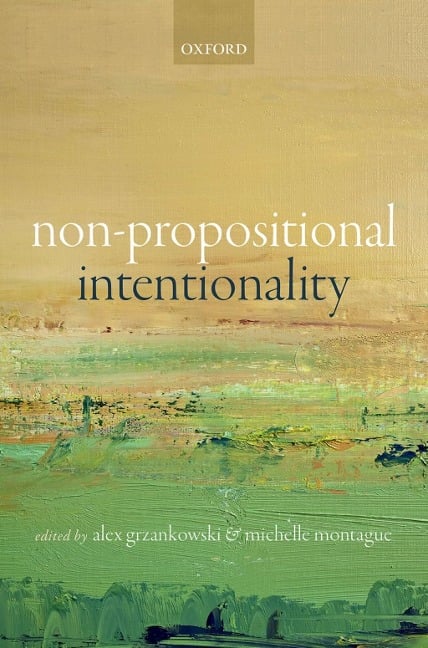
The mind is directed upon the world. There are worldly things that we have beliefs about and things in the world we desire to have happen. We find some things fearsome and others likable. The puzzle of intentionality -- how it is that our minds make contact with the world -- is one of the oldest and most vexed issues facing philosophers. Many contemporary philosophers and cognitive scientists have been attracted to the idea that our minds represent the world. This book explores an important assumption about representation, namely, that when we represent things in the world, we represent them as having properties, and in this way our representations have "propositional" structure. The contributors examine what the commitment to propositionalism amounts to; illuminate why one might find the thesis attractive (or unattractive); and consider ways in which one might depart from propositionalism. The hope is that this will lead towards a more complete understanding of how the mind and world are connected.
Alex Grzankowski is a lecturer in the department of philosophy at Birkbeck, University of London, working primarily on the philosophy of mind and the philosophy of language. He has published a number of articles on issues concerning intentionality and representation. Before coming to the University of London, Alex taught and researched at the University of Cambridge and at Texas Tech University. He received his PhD in 2013 at the University of Texas at Austin.
Michelle Montague is an associate professor of philosophy at the University of Texas, Austin. Her work focuses on the philosophy of mind, primarily on consciousness and intentionality. In addition to publishing numerous articles in these areas, she is the author of The Given: Experience and its Content (Oxford University Press, 2016), the co-editor with Tim Bayne of Cognitive Phenomenology (Oxford University Press, 2011), and the co-editor with Galen Strawson of Philosophical Writings by P.F. Strawson (Oxford University Press, 2011).
- 1: Alex Grzankowski and Michelle Montague: Non-Propositional Intentionality: An Introduction - 2: Why Maps Are Not Propositional: Why Maps Are Not Propositional - 3: Marcel den Dikken, Richard Larson, Peter Ludlow: Intensional Transitive Verbs and Abstract Clausal Complements - 4: Katalin Farkas: Know-How and Non-Propositional Intentionality - 5: Graeme Forbes: Content and Theme in Attitude Ascriptions - 6: Alex Grzankowski: A Relational Theory of Non-Propositional Attitudes - 7: Mark Johnston: Sensory Disclosure: Neither a Propositional, Nor a Factive, Attitude - 8: Uriah Kriegel: Belief-that and Belief-in: Which Reductive Analysis? - 9: Angela Mendelovici: Propositionalism without Propositions, Objectualism without Objects - 10: Mark Sainsbury: Attitudes on Display - 11: John R. Searle: Are There Non-Propositional Intentional States? - 12: Sebastian Watzl: Is Attention a Non-Propositional Attitude?