Und dann auf "Zum Home-Bildschirm [+]".

Stöbern
genialokal zum Startbildschirm hinzufügen
Installieren Sie die genialokal App auf Ihrem Startbildschirm für einen schnellen Zugriff und eine komfortable Nutzung.
Installieren Sie die genialokal App auf Ihrem Startbildschirm für einen schnellen Zugriff und eine komfortable Nutzung.
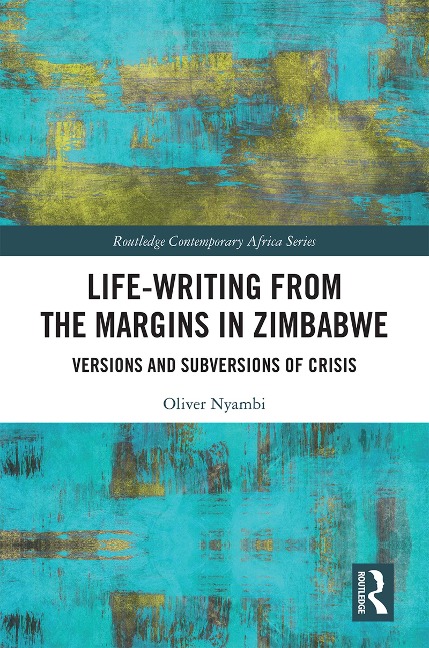
This book explores the unique contributions of various forms of post-2000 life-writings such as the autobiography, epistles, and biographies, to discourses about the nature and socio-politics of what has become known as the Zimbabwean crisis (c. 2000-2009). Much of what has been written about the Zimbabwean crisis - a decade-long period of unprecedented economic collapse and political upheavals in the southern African country - is strictly discipline-specific and therefore limited to unidimensional modes of theorising the crisis's many and complex dimensions and dynamics. In this context, this book charts a paradigm shift in hermeneutic and epistemological approaches to comprehending the Zimbabwean crisis. Life-Writing from the Margins in Zimbabwe centres the experiences and memories of ordinary Zimbabweans in pluralizing modes of seeing and knowing the crisis. The book argues that these life-writings present a rich site for encountering versions of the crisis that relate in counter-discursive ways, to the dominant, state-authored narrative of the nation in crisis. Oliver Nyambi's analysis contributes new ideas to ongoing debates about how cultural texts reflect on the postcoloniality of both power, and experiences and negotiations of power in the context of crisis. This book will be of interest to scholars and students of African literature, Zimbabwean/African studies, postcolonial literature, life-writing and cultural studies.
Oliver Nyambi teaches postcolonial African literature and culture in the Department of English at the University of the Free State in South Africa. He has held several research positions, amongst them, a writing Fellowship in the Duke Africa Initiative program at Duke University, USA, and recently as a fellow of the American Council of Learned Societies' African Humanities Program. He is currently an Alexander von Humboldt Fellow hosted by Prof. Susan Arndt in the Department of English Studies and Anglophone Literatures at Bayreuth University in Germany.
1. Introduction: Contested versions of Nation, Nationness and Nationality 2. "Howzat": Cricket, re-presenting and representing the nation in crisis in Henry Olonga's Blood, Sweat and Treason: My Story 3. Alternative iconographies: recentering 'unconventional' memories in Tekere's A Lifetime of Struggle 4. "All the Beautiful Soldiers": Narrating Trauma and State Violence in Hope Deferred: Narratives of Zimbabwean Lives 5. "Through the Eyes of a Mum": The Affects of Disclosure and Moral Justice in Cathy Buckle's Life Writings of the Crisis 6. "... In the Midst of a Very Dark Africa": Land, Spirituality and an Enduring Coloniality in Henry Jackson's Another Farm in Africa 7. Black Racism?: Negotiating the Colour of Belonging in Mugabe and the White African
Dieses eBook wird im PDF-Format geliefert und ist mit einem Adobe Kopierschutz (DRM) versehen. Sie können dieses eBook mit allen Geräten lesen, die das PDF-Format und den Adobe Kopierschutz (DRM) unterstützen.
Zum Beispiel mit den folgenden Geräten:
• tolino Reader
Laden Sie das eBook direkt über den Reader-Shop auf dem tolino herunter oder übertragen Sie das eBook auf Ihren tolino mit einer kostenlosen Software wie beispielsweise Adobe Digital Editions.
• Sony Reader & andere eBook Reader
Laden Sie das eBook direkt über den Reader-Shop herunter oder übertragen Sie das eBook mit der kostenlosen Software Sony READER FOR PC/Mac oder Adobe Digital Editions auf ein Standard-Lesegeräte mit epub- und Adobe DRM-Unterstützung.
• Tablets & Smartphones
Möchten Sie dieses eBook auf Ihrem Smartphone oder Tablet lesen, finden Sie hier unsere kostenlose Lese-App für iPhone/iPad und Android Smartphone/Tablets.
• PC & Mac
Lesen Sie das eBook direkt nach dem Herunterladen mit einer kostenlosen Lesesoftware, beispielsweise Adobe Digital Editions, Sony READER FOR PC/Mac oder direkt über Ihre eBook-Bibliothek in Ihrem Konto unter „Meine eBooks“ - „online lesen“.
Schalten Sie das eBook mit Ihrer persönlichen Adobe ID auf bis zu sechs Geräten gleichzeitig frei.
Bitte beachten Sie, dass die Kindle-Geräte das Format nicht unterstützen und dieses eBook somit nicht auf Kindle-Geräten lesbar ist.