Und dann auf "Zum Home-Bildschirm [+]".

Stöbern
genialokal zum Startbildschirm hinzufügen
Installieren Sie die genialokal App auf Ihrem Startbildschirm für einen schnellen Zugriff und eine komfortable Nutzung.
Installieren Sie die genialokal App auf Ihrem Startbildschirm für einen schnellen Zugriff und eine komfortable Nutzung.
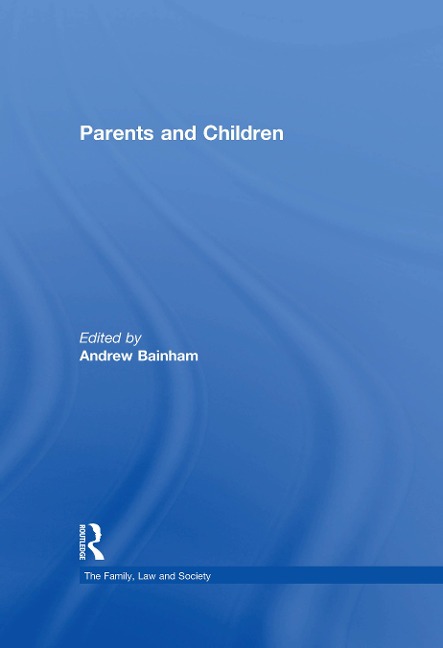
This volume brings together some of the best journal articles of the last twenty years which deal with various aspects of the relationship between parents and children. Adopting an inter-disciplinary and comparative approach, the book reproduces articles from a variety of journals in law and the social sciences. The book is divided into eight parts dealing, respectively, with becoming a parent; the status and obligations of parenthood; issues of upbringing; adolescence; child support; parental separation, divorce and children; child abuse and state intervention; social parenthood and adoption. The volume includes a substantial introduction by the editor.
Andrew Bainham is a Reader in Family Law and Policy at the University of Cambridge.
Contents: Introduction; Part I Becoming a Parent: The position of the father in European legislation, Marie-Thérèse Meulders-Klein; The French 'tradition' of anonymous birth: the lines of argument, Nadine Lefaucheur; Families, assisted reproduction and the law, Rebecca Probert; Do parents influence the sexual orientation of their children? Findings from a longitudinal study of lesbian families, Susan Golombok and Fiona Tasker. Part II The Status and Obligations of Parenthood: Are parents morally obliged to care for their own children?, John Eekelaar; Conceptions of parental autonomy, Colin M. Macleod; The myth of parental rights, Phillip Montague. Part III Issues of Upbringing: Whose life is it anyway?, Michael Freeman; Religion, culture and conviction - the medical treatment of young children, Caroline Bridge; Punishing parents for the crimes of their children, Raymond Arthur; Am I my child's keeper? Parental liability in negligence, Stanley Yeo; Family values in the classroom? Reconciling parental wishes and children's rights in state schools, Laura Lundy. Part IV Adolescence: Rearing adolescents in contemporary society, Stephen A. Small and Gay Eastman; The parenting of adolescents in Britain today, John C. Coleman; Rethinking Gillick, Michael Freeman. Part V Child Support: Unwilling fathers and abortion: terminating men's child support obligations, Sally Sheldon; A theory of child support, Scott Altman. Part VI Parental Separation, Divorce and Children: Parental predivorce relations and offspring postdivorce well-being, Alan Booth and Paul R. Amato; Inter-parental conflict and children's adaptation to separation and divorce: theory, research and implications for family law, practice and policy, Gordon T. Harold and Mervyn Murch; Child custody in the age of children's rights: the search for a just and workable standard, Barbara Bennett Woodhouse; Parent-child contact in Australia: exploring 5 different post-separation patterns of parenting, Bruce Smyth. Part
Dieses eBook wird im PDF-Format geliefert und ist mit einem Adobe Kopierschutz (DRM) versehen. Sie können dieses eBook mit allen Geräten lesen, die das PDF-Format und den Adobe Kopierschutz (DRM) unterstützen.
Zum Beispiel mit den folgenden Geräten:
• tolino Reader
Laden Sie das eBook direkt über den Reader-Shop auf dem tolino herunter oder übertragen Sie das eBook auf Ihren tolino mit einer kostenlosen Software wie beispielsweise Adobe Digital Editions.
• Sony Reader & andere eBook Reader
Laden Sie das eBook direkt über den Reader-Shop herunter oder übertragen Sie das eBook mit der kostenlosen Software Sony READER FOR PC/Mac oder Adobe Digital Editions auf ein Standard-Lesegeräte mit epub- und Adobe DRM-Unterstützung.
• Tablets & Smartphones
Möchten Sie dieses eBook auf Ihrem Smartphone oder Tablet lesen, finden Sie hier unsere kostenlose Lese-App für iPhone/iPad und Android Smartphone/Tablets.
• PC & Mac
Lesen Sie das eBook direkt nach dem Herunterladen mit einer kostenlosen Lesesoftware, beispielsweise Adobe Digital Editions, Sony READER FOR PC/Mac oder direkt über Ihre eBook-Bibliothek in Ihrem Konto unter „Meine eBooks“ - „online lesen“.
Schalten Sie das eBook mit Ihrer persönlichen Adobe ID auf bis zu sechs Geräten gleichzeitig frei.
Bitte beachten Sie, dass die Kindle-Geräte das Format nicht unterstützen und dieses eBook somit nicht auf Kindle-Geräten lesbar ist.